Trump admin’s cancellation of wind energy projects causes business turmoil
Seven northeastern states have sued US gov’t for paying TotalEnergies to withdraw from offshore wind projects.
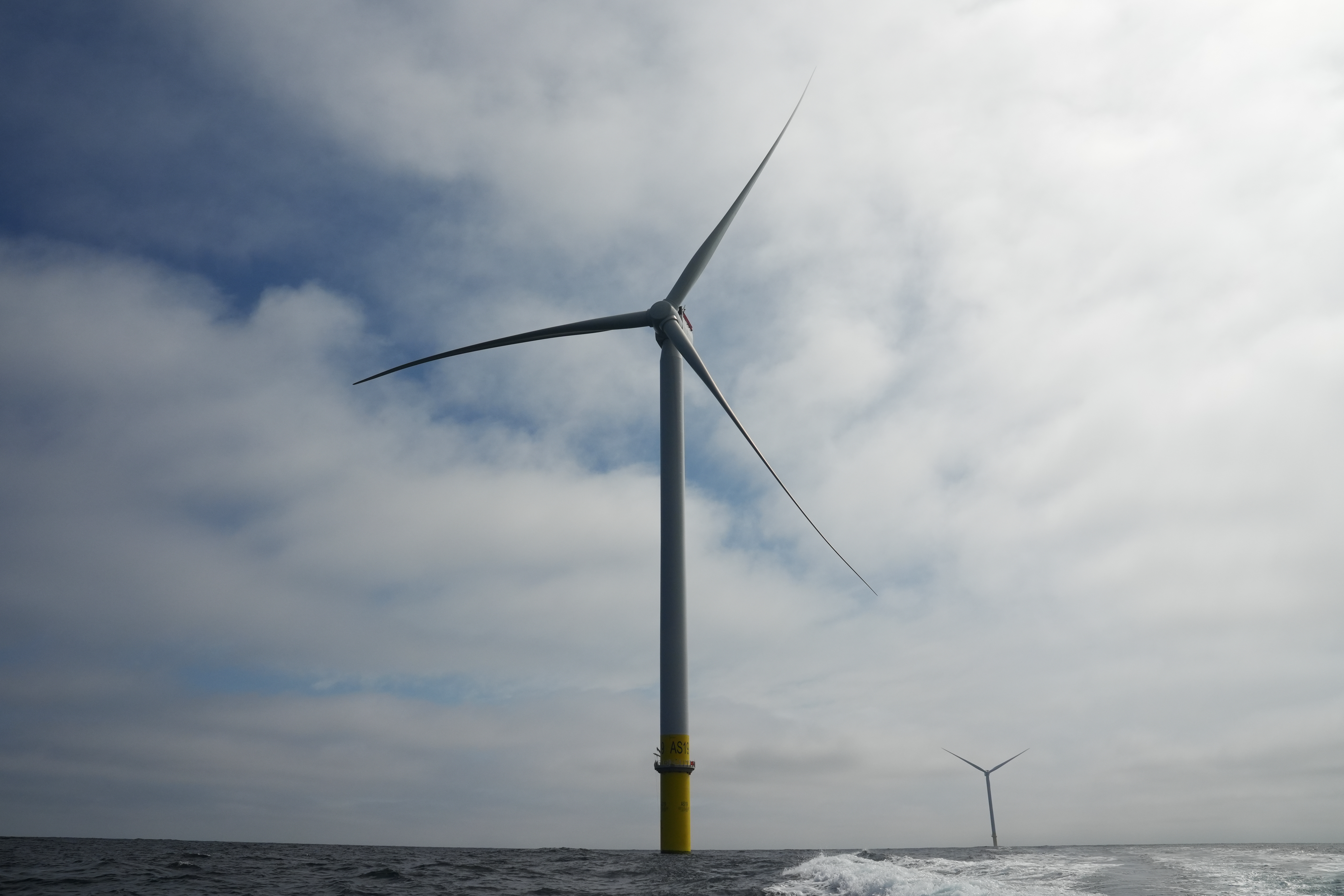
French energy giant TotalEnergies is embroiled in a lawsuit between seven US states and the federal government as the administration of President Donald Trump upends domestic energy policy, shutting down some wind energy projects while pushing fossil fuels.
It has also raised questions about the predictability of the business and investment environment under a president who has peddled back many policies that were set up under his predecessor, President Joe Biden, a Democrat, including on investing in renewable energy.
Recommended Stories
list of 4 items- list 1 of 4FIFA cancels World Cup tickets for about 60 fans who got them for free
- list 2 of 4Man City chair Al Mubarak will ‘say everything’ after verdict on finances
- list 3 of 4‘Red meat is a dream’: Iran inflation hits highest level since World War II
- list 4 of 4Why Washington is reducing visa processing across Africa
The case is tied to two offshore wind farms that TotalEnergies had planned in the US. The larger one, Attentive Energy, was to be built 54 miles (87km) south of Jones Beach, New York, and would have powered a million homes and businesses in New York and New Jersey. The smaller one, Carolina Long Bay, was meant to start operations in the early 2030s in North Carolina.
In March, TotalEnergies agreed a deal with the Trump administration to abandon those plans for $928m and invest in oil and gas projects instead. This week, seven northeastern states sued the Trump administration over that arrangement.
In their filing, the states’ attorneys general said New York “is in significant need of additional electricity”. The Attentive wind project off the states’ coast would have ensured it and the other northeastern states “the reliability of their grids and also helping them to meet their statutory climate goals”.
On March 23, the administration reached its agreement with TotalEnergies to end the offshore wind leases for Attentive and Carolina Long Bay. In April, it reached a similar deal to cancel the lease for Golden State Wind in Morro Bay, off the central coast of California, and Blue Point Wind, off the coast of New York. The department would pay the developers more than $2bn for withdrawing from the four leases and investing in oil and gas projects instead.
“Calling these deals unusual is a huge understatement,” said Dave Owens, Albert Abramson distinguished professor of Law at the University of California Law School in San Francisco.
“I am not aware of any precedence for this,” said Jordan Diamond of the Environmental Law Institute, a Washington, DC-based think tank. This is the first time developers have been paid to withdraw wind power leases.
The California Energy Commission has issued a subpoena to Golden State Wind asking it to produce all documents and emails relating to the deal. This may also lead to litigation against Golden State Wind or even the federal government by California, legal experts say
While the agreements to develop the offshore wind projects were reached between the interior department’s Bureau of Ocean Energy Management and the developers, the subpoena filed by California says it would cause a loss of more than $100m to the state for the ports, mooring and other infrastructure it has already built in preparation for the project.
According to the suit filed on Tuesday, the northeastern states say the interior department “failed to (1) provide a reasoned explanation for cancelling the Lease; (2) explain their change in position or account for New York’s reliance interests; (3) address alternative means of achieving their objectives; or objectives; or (4) provide a genuine justification for their actions.”
New technology
Trump has opposed offshore wind projects since he came to power. “We don’t allow windmills,” he said in August.
In December, the interior department cancelled five offshore wind projects under construction in the US northeast. The developers sued and courts allowed construction to continue.
Stephanie Francouer, a spokesperson for the Oceantic Network, an offshore wind power industry association, said ongoing projects in Massachusetts, New York, Rhode Island and Virginia are already providing one gigawatt of power, enough to power 500,000 homes.
Then between March and April, agreements were reached to withdraw leases for the four projects.
Congressmen Jared Huffman of California and Jamie Raskin of Maryland also launched an investigation into TotalEnergies asking why taxpayer money was used to reach such agreements that they called “unlawful”. They have asked for all documents related to the agreement and said “consider yourself on notice”.
When reached for comment, TotalEnergies pointed Al Jazeera to its statement in March when it agreed to withdraw from the projects.
It said at the time that it had withdrawn because the project was “not in the country’s interest” adding, “TotalEnergies’ studies on these leases have shown that offshore wind developments in the United States, unlike those in Europe, are costly and might have a negative impact on power for US customers. Since other technologies are available to meet the growing demand for electricity in the United States in a more affordable way, TotalEnergies considers there is no need to allocate capital to this technology in the US”.
But in April, TotalEnergies’ Chief Executive Patrick Pouyanne told Axios news that an offshore wind project “requires many years to develop…. If you have a change in the administration every four years and they change their minds, you invest every four years, you stop, it doesn’t work. I cannot do that.”
He also told CNBC news that this was the company’s money returned to it, not taxpayers.
The interior department cited security concerns raised by the Pentagon as reason for cancelling the leases. However, the suit filed by the northeastern states says that these projects had been examined and any possible security concerns had been considered before awarding them.
“We have to see this in the broad context of many actions to prioritise fossil fuels,” said Jordan Diamond, president of the Washington, DC-based Environmental Law Institute.
The Trump administration has so far cut subsidies for solar projects, electric vehicles and other renewable energy, but offshore wind projects may be particularly hard-hit because it is a relatively developing technology.
Wind turbines off the US east coast are on fixed platforms in the Atlantic Ocean, but on the other side of the country, sea beds can collapse dramatically in the Pacific Ocean, says Paul Gipe, a clean energy analyst and author.
As a result, turbines are fixed on floating platforms with mooring and anchoring systems connecting them to the ocean floor.
While this technology is relatively advanced in Europe, Golden State Wind, a joint venture between Ocean Winds and Reventus, would have been among the first such projects in the US.
Ocean Winds, which is a joint venture between Spanish renewable energy company EDP and French energy company Engie, owns the Golden State Wind projects along with the Canadian Pension Plan’s sustainable energy arm. Ocean Winds delivered its first offshore wind power project near the French coast in early May.
Oceanic Network’s Francoeur says offshore wind “is well-suited to serve geographically constrained coastal load centres that need new sources of energy to meet their demand”.
James Sallee, professor at the University of California at Berkeley’s Haas School of Business, says solar and onshore wind as sources of power are now the lowest levelised cost – the average cost of energy across the lifetime of an asset – while natural gas is very expensive.
Offshore wind costs between $70 to $157 per MWh, according to a recent report by Lazard, comparing favourably with gas and coal power but a little more expensive than solar and onshore wind.
But it could be part of a mix of power sources, says Mark Z Jacobson, professor of civil engineering at Stanford University, if it “captures peak energy demand in the afternoon and evenings”.
“I would like the US to be innovating and developing new technology,” says Berkeley’s Sallee. “Things like this make the investment environment uncertain for domestic and international companies. The US economy can hum along because AI investments have overwhelmed headwinds in other areas including renewables,” he said. “But under the surface, things like this make it harder to invest in other areas.”
More litigation
The suit filed by the seven states also questions the payments made to the developers through what is known as the Judgment Fund. For it to be drawn on “there must be a legitimate dispute over either liability or amount,” the state attorneys general say in their court filings.
However, there was no dispute here and the projects were progressing when the payments were agreed upon, they say.
“The use of the judgment fund could be seen as capricious,” said Tony Irish, senior counsel at the Public Employees for Environmental Responsibility, a non profit that works to protect the environment and public employees in environment-related agencies.
The suit also raises concerns over the interior department’s use of the Outer Continental Shelf Act to reach this agreement for the leases because it did not hold hearings to determine if there were valid security concerns.
“The same law handles leases for wind, mining and oil and gas leases,” in the ocean, says the Environment Law Institute’s Diamond. The precedent set here could impact leases given in those areas as well, she says.
After TotalEnergies reached its settlement to give up its offshore wind leases, one of its investors, the New York State Common Retirement Fund, said it is considering divesting from the company.
What these investigations “are signalling is, there is a cost to going with the Feds,” says UC Law’s Owens.
Owens expects more litigation as California’s Energy Commission seeks documents from Golden State Wind on its communication with the interior department on this agreement.
This could also have a signalling effect to other offshore wind developers. Industry analysts say other developers have also received offers to reach similar payment deals to withdraw from their leases.
Any more withdrawals from leases will further undermine investments made by states on building ports and other infrastructure, as well as training for people who would work there. The projects would have created skilled jobs for people in their states, the attorneys general say in their lawsuit.
“Those companies who remain resolute may fare better in the long term,” said Kit Kennedy managing director for power, climate and energy at the Washington, DC-based environment non-profit, National Resources Defense Council. “This moment will pass.”
