Skip linksSkip to Content
play
Live
Navigation menu
  • News
    • Africa
    • Asia
    • US & Canada
    • Latin America
    • Europe
    • Asia Pacific
  • Middle East
  • Explained
  • Opinion
  • Sport
  • Video
    • Features
    • Economy
    • Human Rights
    • Climate Crisis
    • Investigations
    • Interactives
    • In Pictures
    • Science & Technology
    • Podcasts
    • Travel
play
Live

In Pictures

Gallery|Humanitarian Crises

Struggling amid the ruins a month after Nepal quake

Millions of Nepalis are working hard to rebuild ahead of monsoon, following major earthquake and subsequent aftershocks.
Save

Share

facebooktwitterwhatsappcopylink
Brian Sokol Nepal/ DO NOT USE/ RESTRICTED
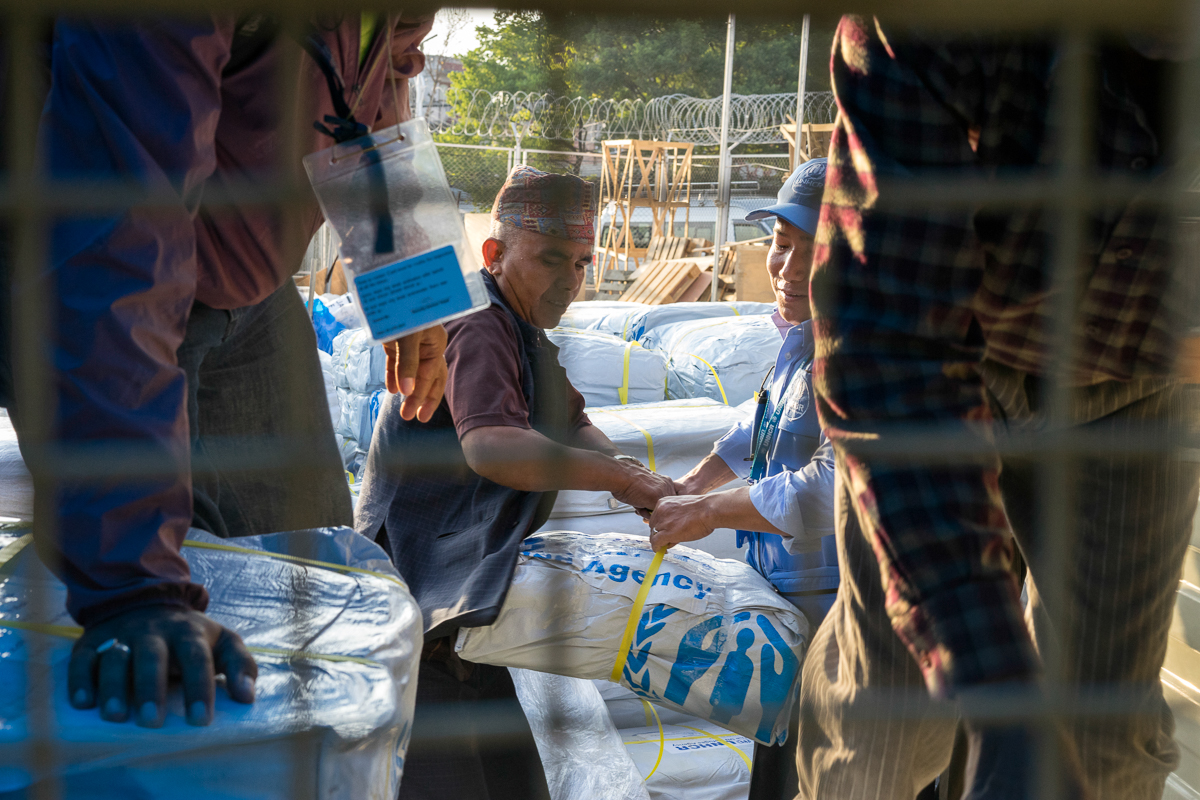
At Tribhuvahn International Airport in Kathmandu, Nepal, plastic tarps are unloaded to be distributed to quake-effected areas. On 25 April a magnitude 7.8 earthquake killed more than 8,000 people and destroyed massive amounts of property, including numerous temples that were on the list of UNESCO World Heritage Sites. [Brian Sokol/Al Jazeera]
By Brian Sokol
Published On 25 May 201525 May 2015

It has been one month since the first of two major earthquakes struck Nepal, killing more than 8,000 people in one of the world’s least developed countries. Around the worst-affected areas, there are signs of both ruin and fledgling reconstruction. Shattered hotels sit at odd angles as frightened pedestrians scurry through their lopsided shadows. Nearby, temporary shelters are springing up along roadsides, made of salvaged materials – mostly wooden frames covered in corrugated iron roofing, some partially draped in plastic tarps. Knowing that rebuilding their homes will be difficult during the rapidly-approaching monsoon, people are hurrying to find or make shelters that will hopefully see them through the long rainy season. While the immediacy of the emergency efforts may have passed, there is enormous work ahead before anything akin to normal life can start again for millions of Nepalis. 
BRIAN NEPAL/ DO NOT USE/ RESTRICTED
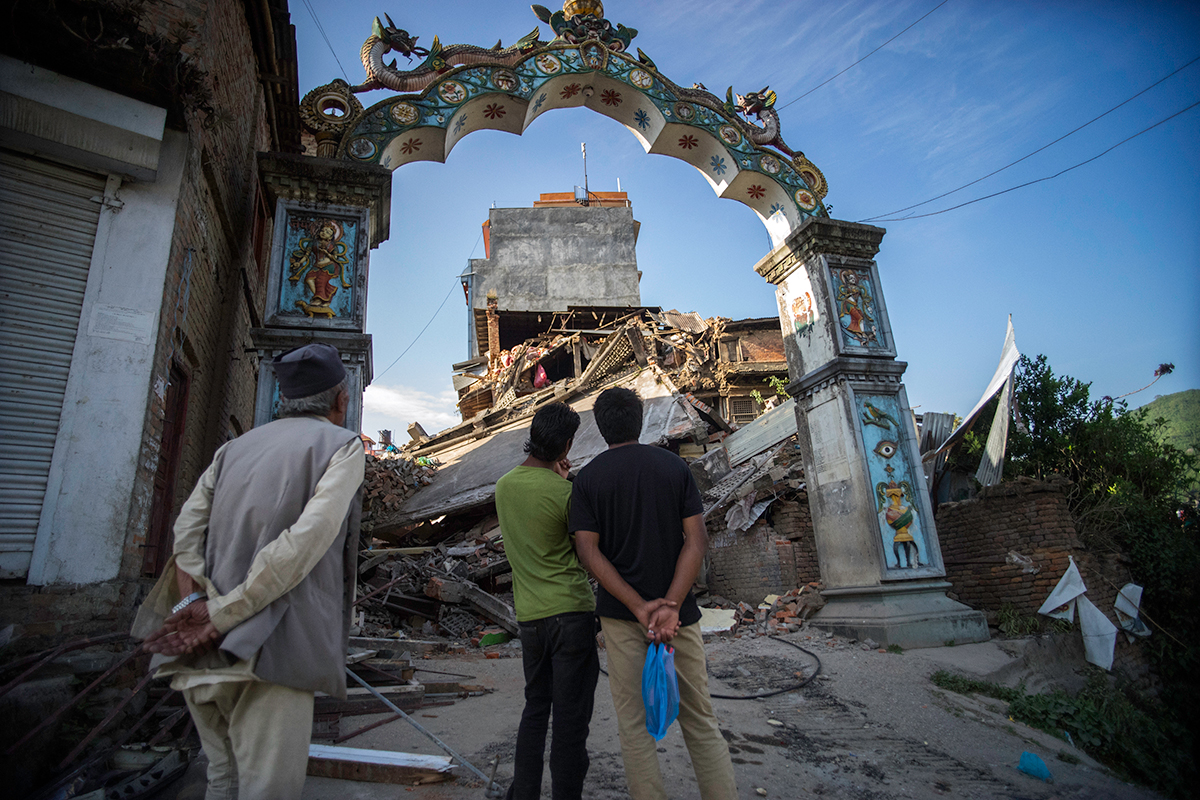
Locals from Sankhu village, Kathmandu Valley, stand near rubble created when buildings collapsed during Nepal's second major earthquake. [Brian Sokol/Al Jazeera]
Advertisement
Brian Sokol Nepal/ DO NOT USE/ RESTRICTED
Sarod Tamang, 12, right, and Ramesh Ghalan, 7, carry bags of relief supplies past a Buddhist stupa, following aid distribution in the village of Jhankridanda, Lalitpur District. With the monsoon approaching, the situation is likely to deteriorate in the coming weeks, and far more assistance is rapidly needed. [Brian Sokol/Al Jazeera]
Brian Sokol Nepal/ DO NOT USE/ RESTRICTED
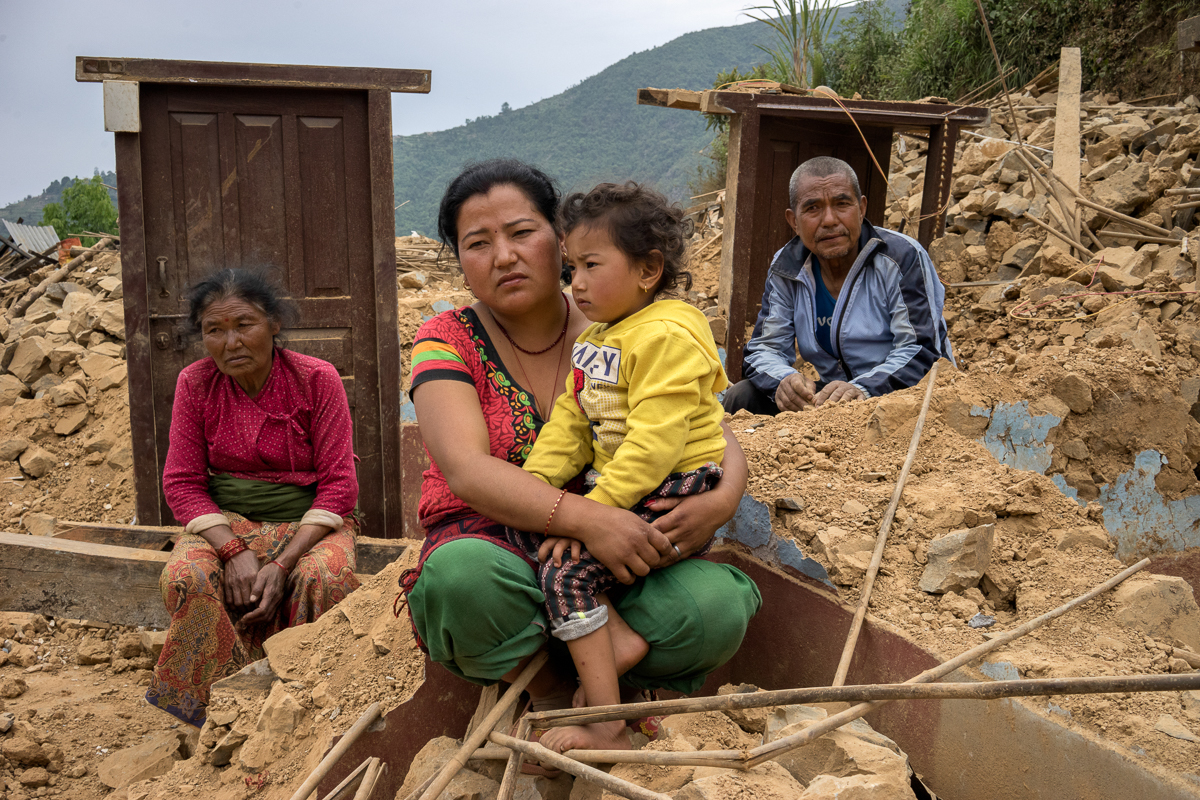
The family of Dan Bahadur Tamang, 66, right, sits in the rubble of their family's home in the village of Jhankridanda, Lalitpur District. Nepal's government estimates reconstruction costs of $7bn, a third of the country's GDP. [Brian Sokol/Al Jazeera]
Brian Sokol Nepal/ DO NOT USE/ RESTRICTED
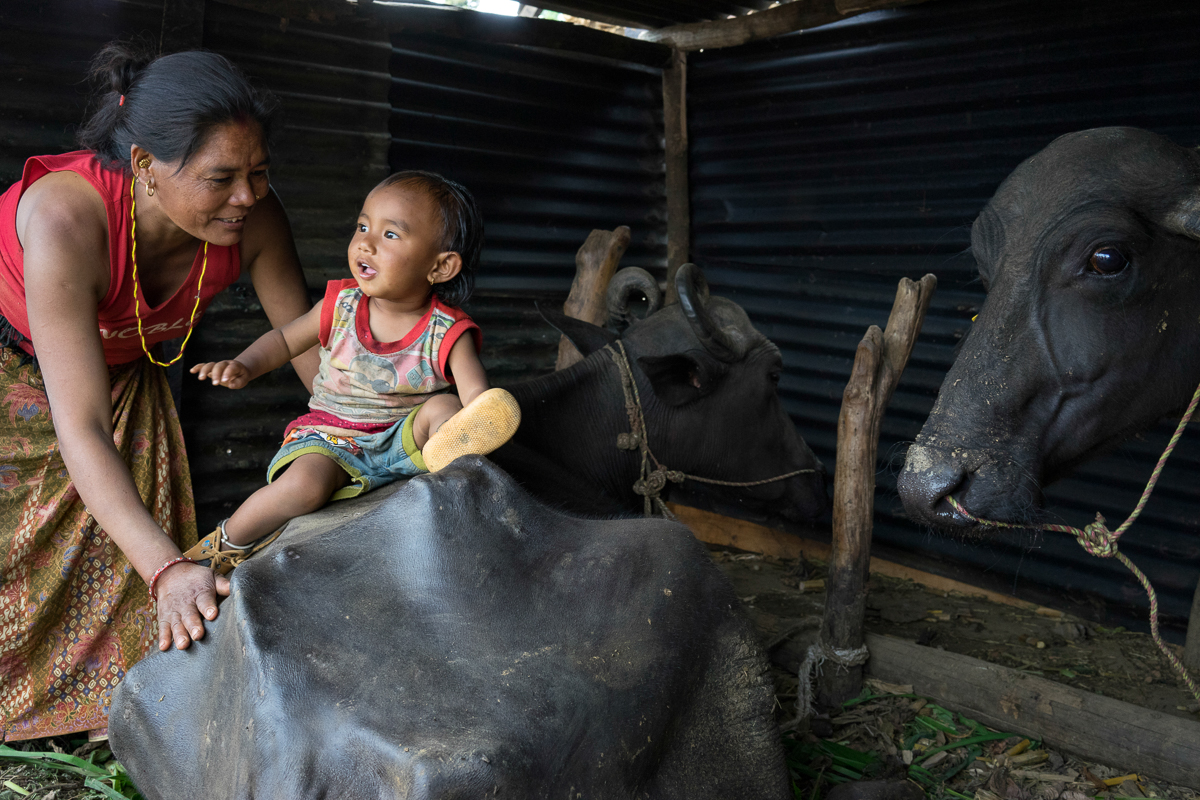
Antari Maya Jimba, born in 1933, rests inside the shelter made of salvaged corrugated iron roofing that her family constructed in the village of Jhankridanda, Lalitpur District. Antari Maya wasn't able to flee the quake and was partially buried in rubble when the home she was inside collapsed. Her grandson pulled her free of the ruins and she sustained no significant injuries. [Brian Sokol/Al Jazeera]
Brian Sokol Nepal/ DO NOT USE/ RESTRICTED
Nepal's information minister, Minendra Rijal, told Al Jazeera that help was on its way and people across the country would be getting money and temporary shelters in time for the monsoon season. [Brian Sokol/Al jazeera]
Brian Sokol Nepal/ DO NOT USE/ RESTRICTED
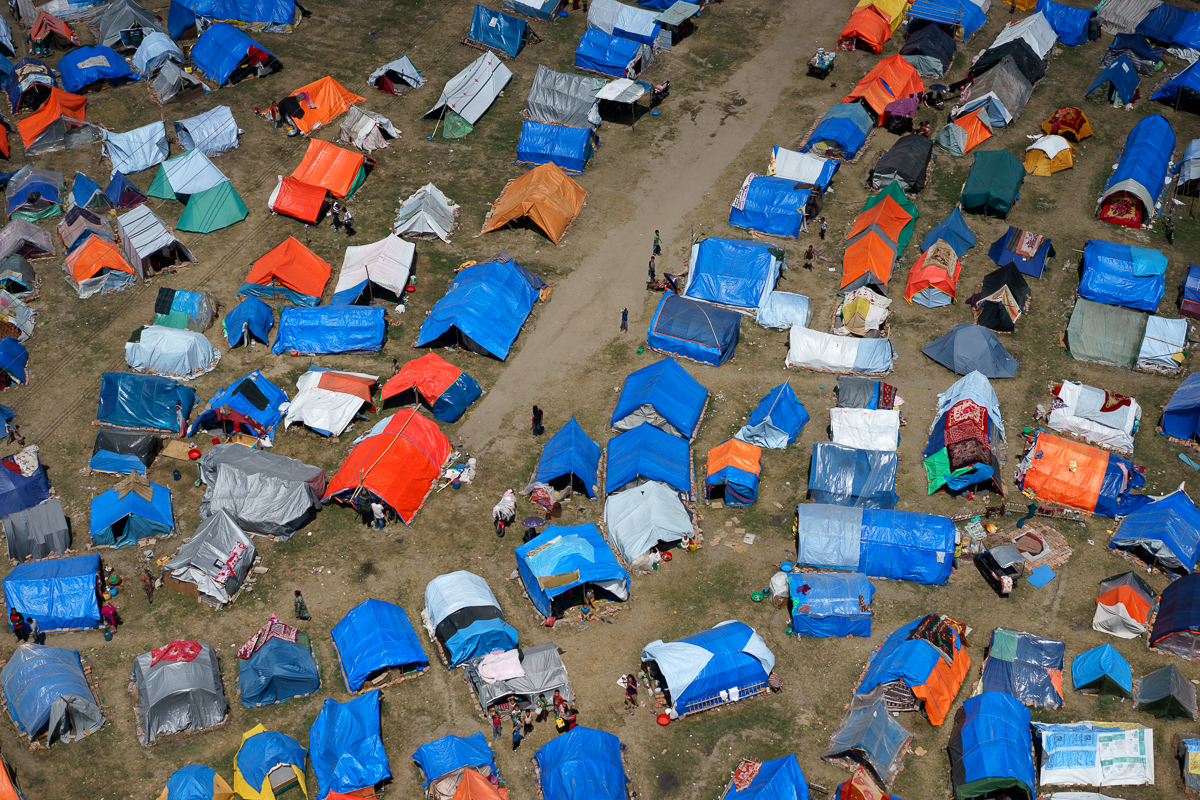
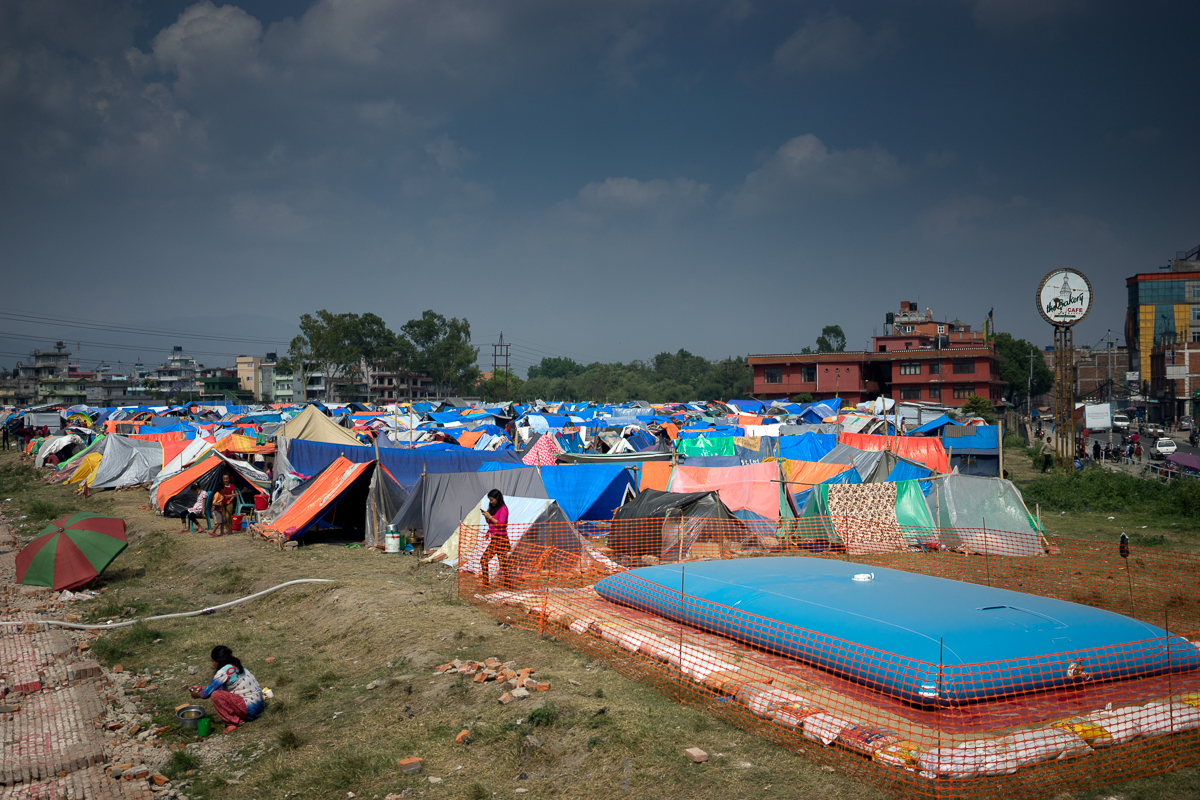
An aerial overview of the Chuchepati relief camp where Nepali people, displaced from their homes by earthquakes, are taking shelter in Kathmandu, Nepal. [Brian Sokol/Al Jazeera]
Advertisement
Brian Sokol Nepal/ DO NOT USE/ RESTRICTED
Aid organisations are worried about the possible spread of disease and the risk of further displacement in a country ill-equipped to help those most in need. [Brian Sokol/Al Jazeera]
Brian Sokol Nepal/ DO NOT USE/ RESTRICTED
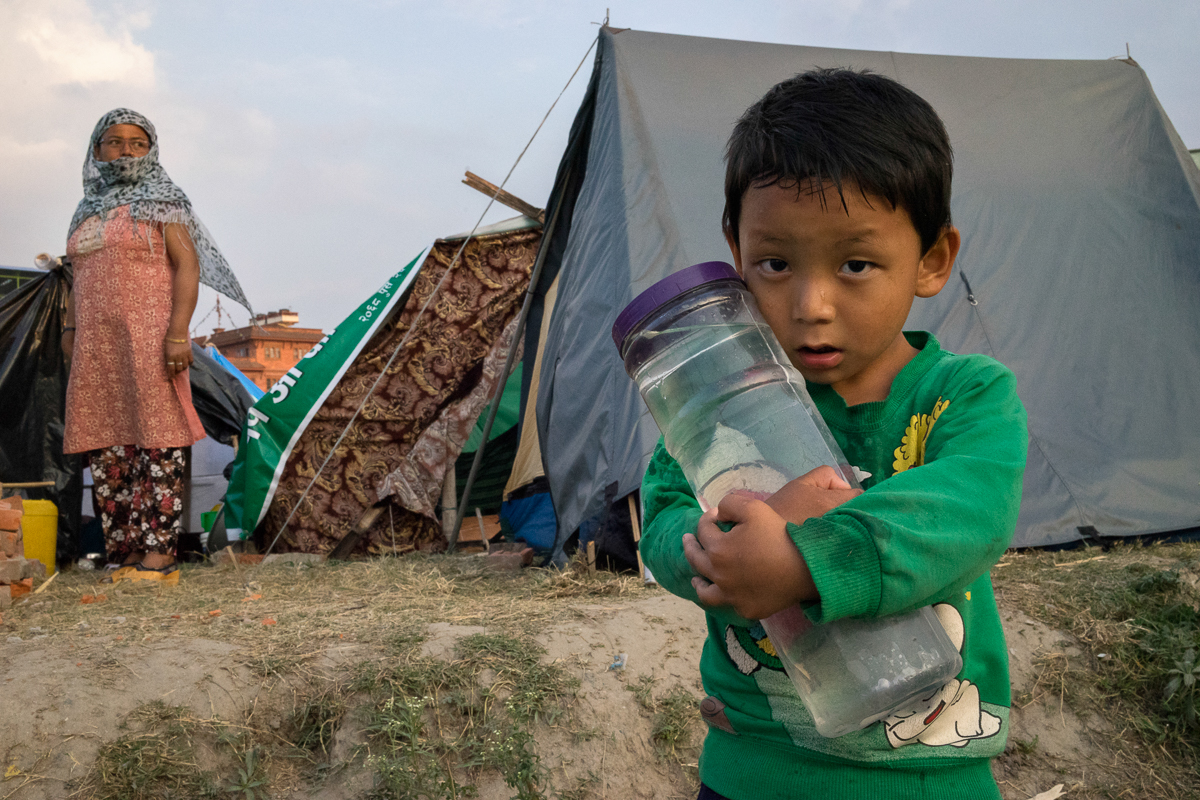
Bikesh carries a jar of water in Chuchepati relief camp, Kathmandu. [Brian Sokol/Al Jazeera]
Brian Sokol Nepal/ DO NOT USE/ RESTRICTED
In Chuchepati relief camp, Kathmandu, MSF has installed two water bladders, each with a capacity of 15,000 litres, to provide for the needs of earthquake survivors now residing in temporary shelters, most without any form of flooring. [Brian Sokol/Al Jazeera]


  • About

    • About Us
    • Code of Ethics
    • Terms and Conditions
    • EU/EEA Regulatory Notice
    • Privacy Policy
    • Cookie Policy
    • Cookie Preferences
    • Accessibility Statement
    • Sitemap
    • Work for us
  • Connect

    • Contact Us
    • User Accounts Help
    • Advertise with us
    • Stay Connected
    • Newsletters
    • Channel Finder
    • TV Schedule
    • Podcasts
    • Submit a Tip
    • Paid Partner Content
  • Our Channels

    • Al Jazeera Arabic
    • Al Jazeera English
    • Al Jazeera Investigative Unit
    • Al Jazeera Mubasher
    • Al Jazeera Documentary
    • Al Jazeera Balkans
    • AJ+
  • Our Network

    • Al Jazeera Centre for Studies
    • Al Jazeera Media Institute
    • Learn Arabic
    • Al Jazeera Centre for Public Liberties & Human Rights
    • Al Jazeera Forum
    • Al Jazeera Hotel Partners

Follow Al Jazeera English:

  • facebook
  • twitter
  • youtube
  • instagram-colored-outline
  • rss
Al Jazeera Media Network logo
© 2026 Al Jazeera Media Network

You might also like:

live israeli attacks kill 76 no aid relief yet for... | thailand readies homecoming for stolen ancient sta... | russia ukraine war list of key events day 1185... | german woman arrested after mass stabbing at hambu... | vietnam orders ban on popular messaging app... | need answers will sri lankas tamils find war closu... | live israeli attacks kill 85 in gaza as starvation... | florida court orders ex mexican security chief to ...