Skip linksSkip to Content
play
Live
Navigation menu
  • News
    • Africa
    • Asia
    • US & Canada
    • Latin America
    • Europe
    • Asia Pacific
  • Middle East
  • Explained
  • Opinion
  • Sport
  • Video
    • Features
    • Economy
    • Human Rights
    • Climate Crisis
    • Investigations
    • Interactives
    • In Pictures
    • Science & Technology
    • Podcasts
    • Travel
play
Live

In Pictures

Gallery|Coronavirus pandemic

Rubbish scavengers who help keep cities clean plead for vaccine

Millions of informal workers worldwide have been excluded from the vaccination rollout risking spread of pandemic.
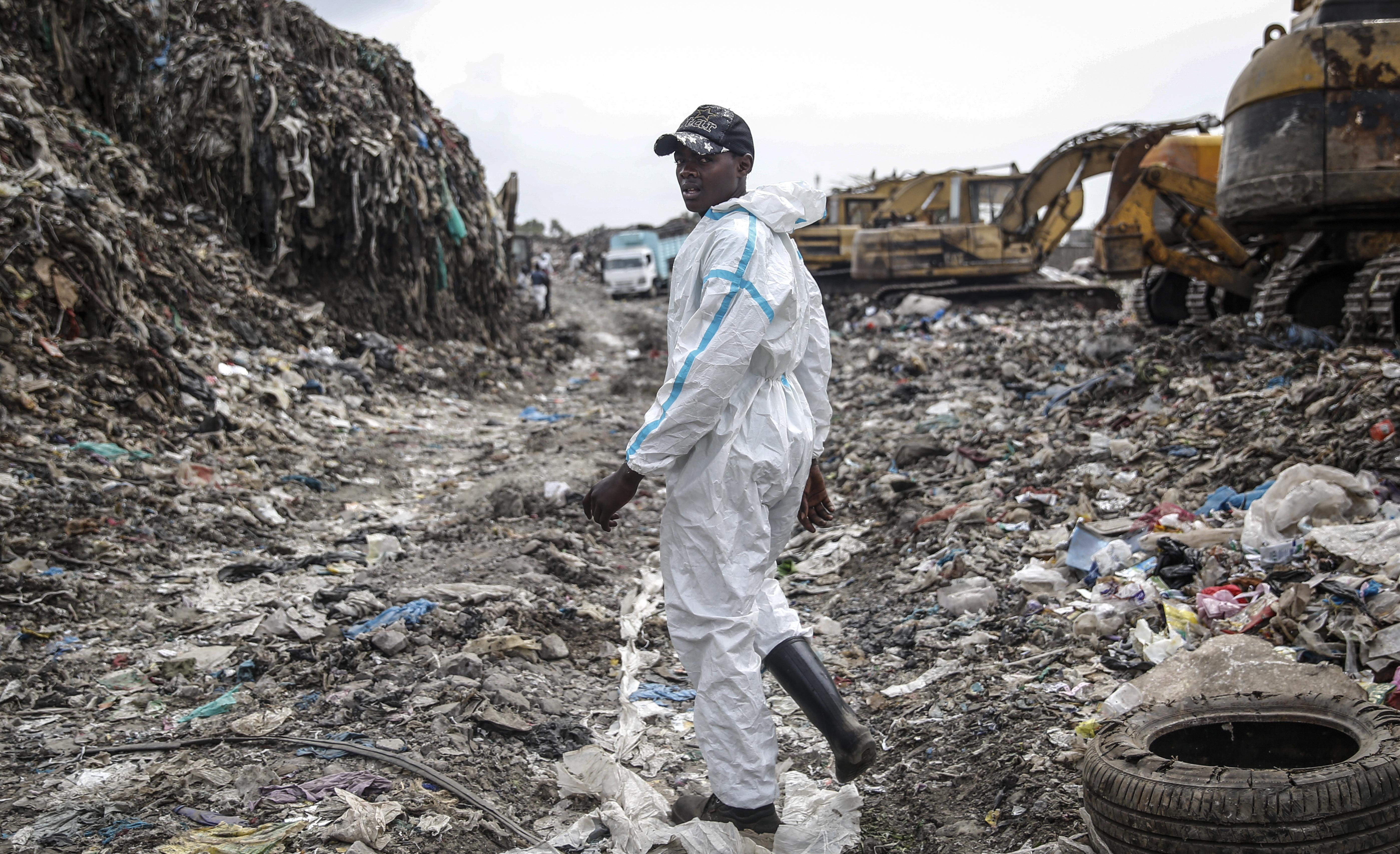
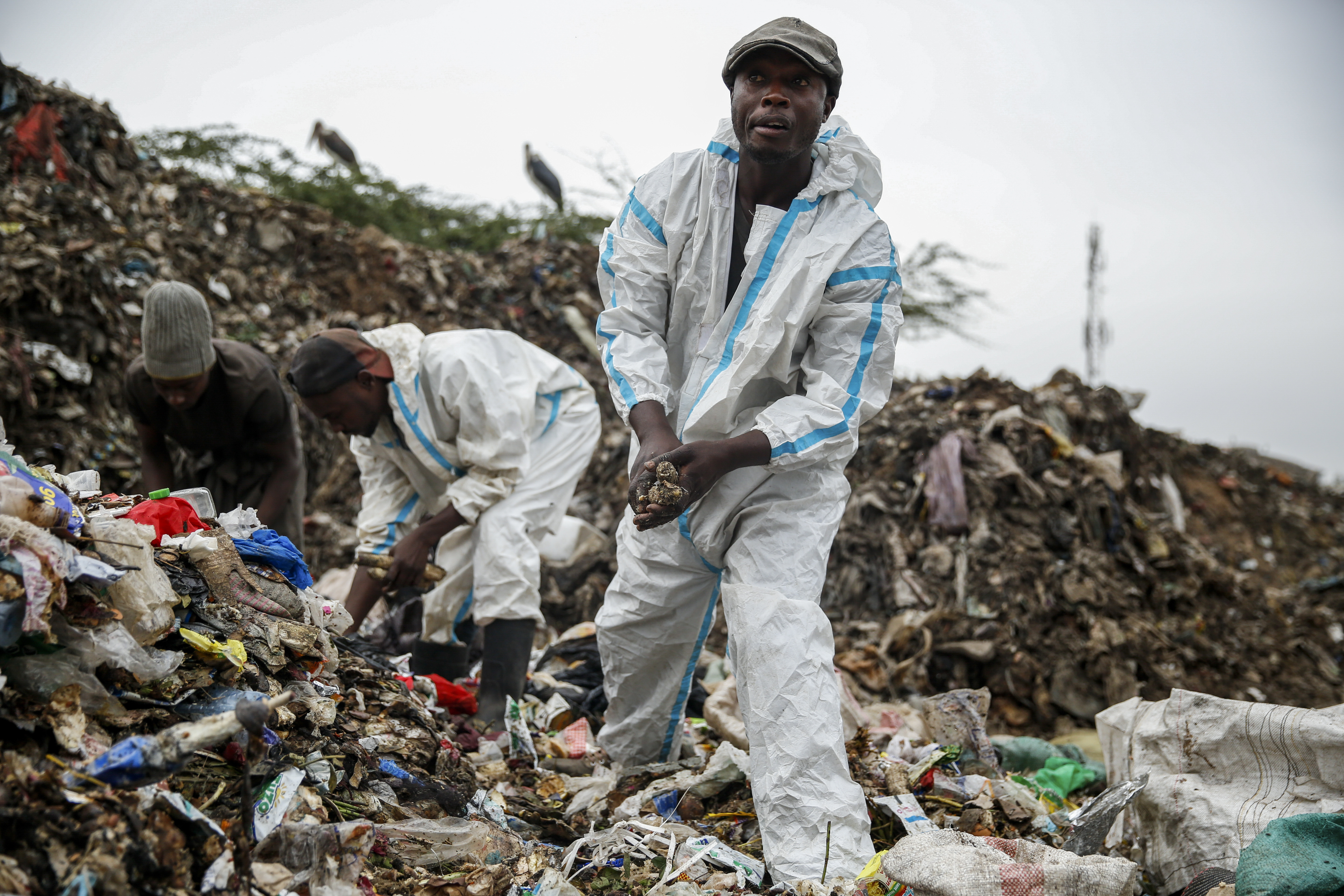
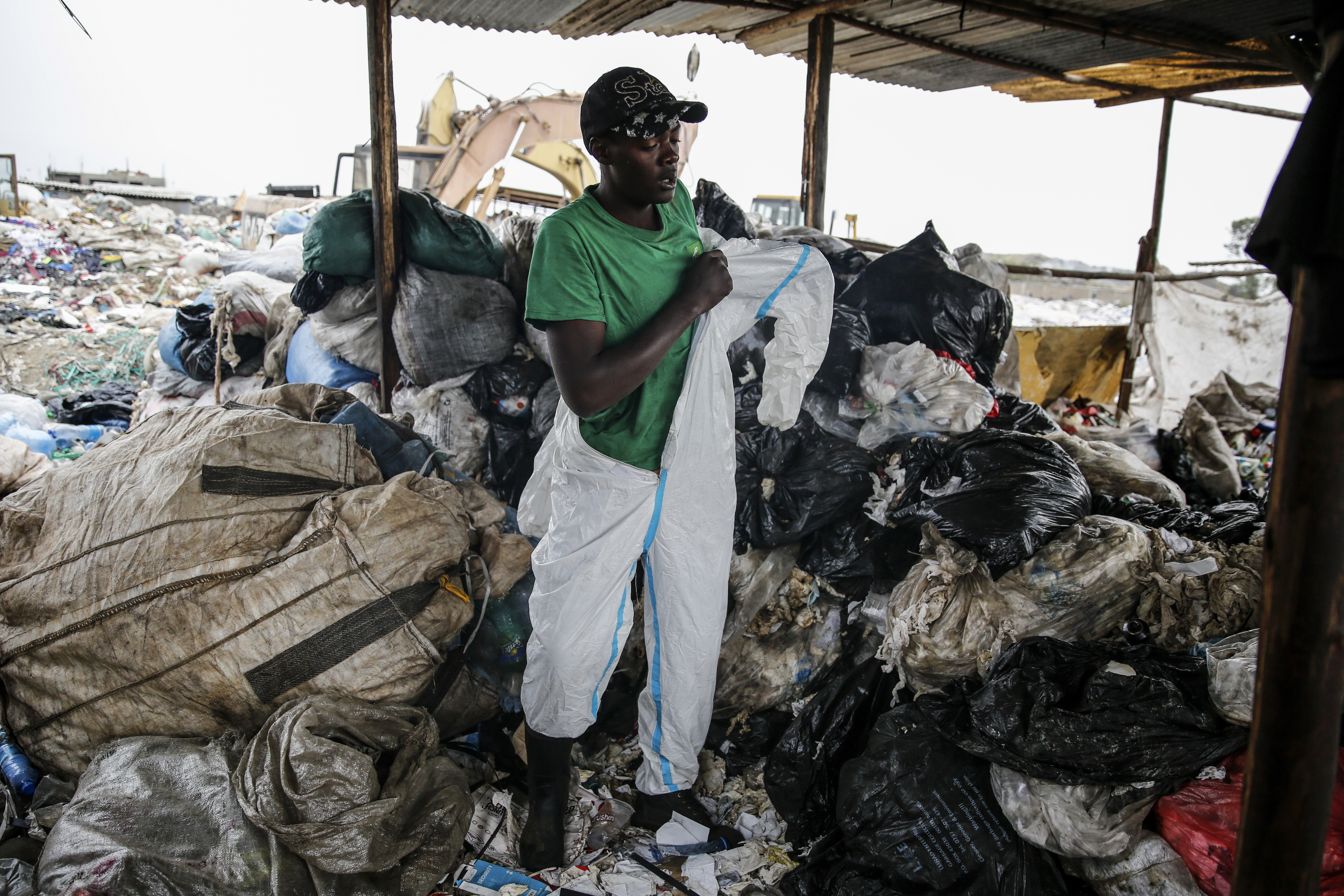
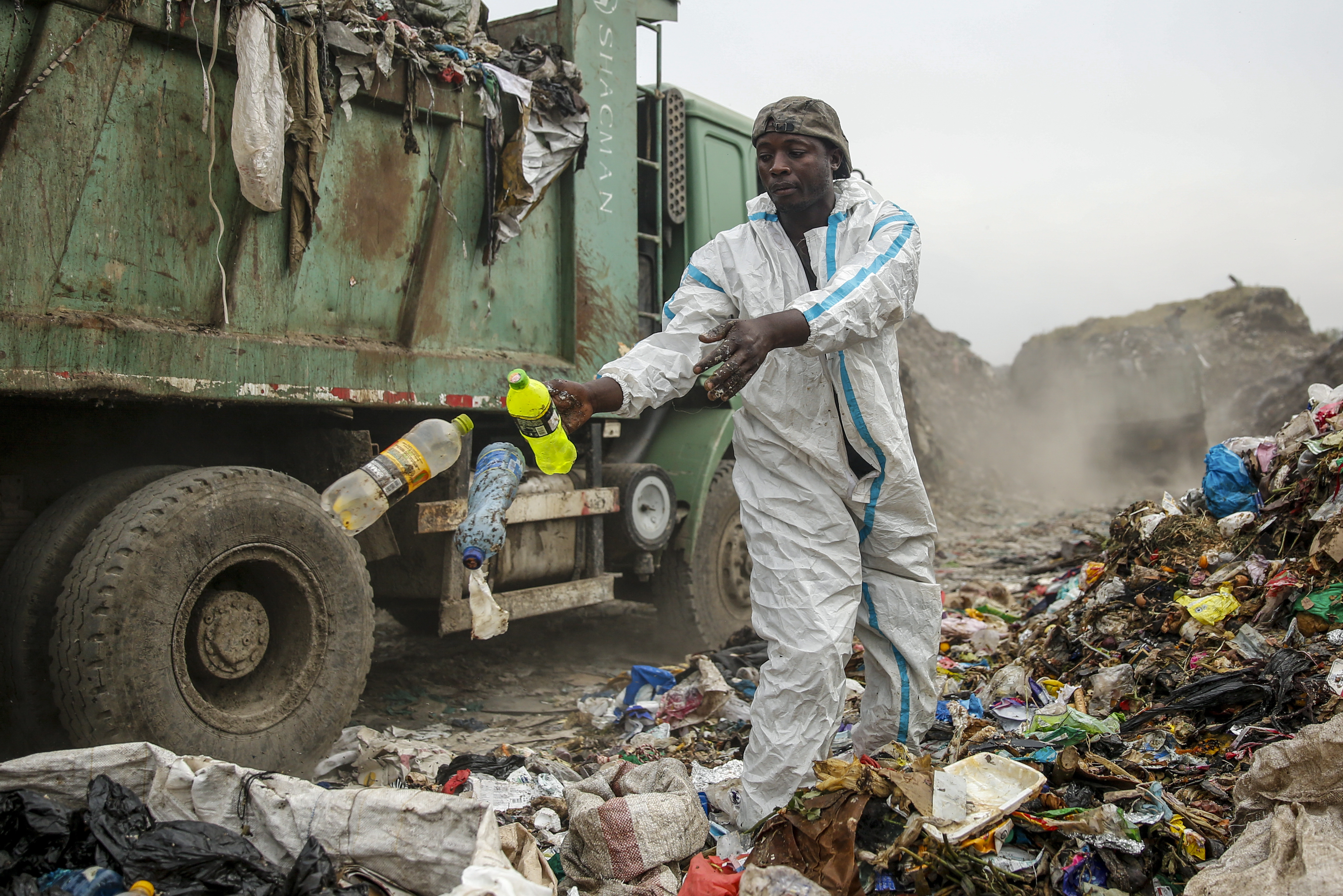
Isaac Kivai scavenges recyclable materials for a living at Dandora, the largest rubbish dump in the Kenyan capital of Nairobi, Sunday, March 28, 2021. He wears a protective medical suit he and his friends had found in the rubbish. The waste pickers say the gear protects them from the weather during the rainy season. (AP Photo/Brian Inganga)
By AP
Published On 30 Mar 202130 Mar 2021

Share

facebooktwitterwhatsappcopylink

Save

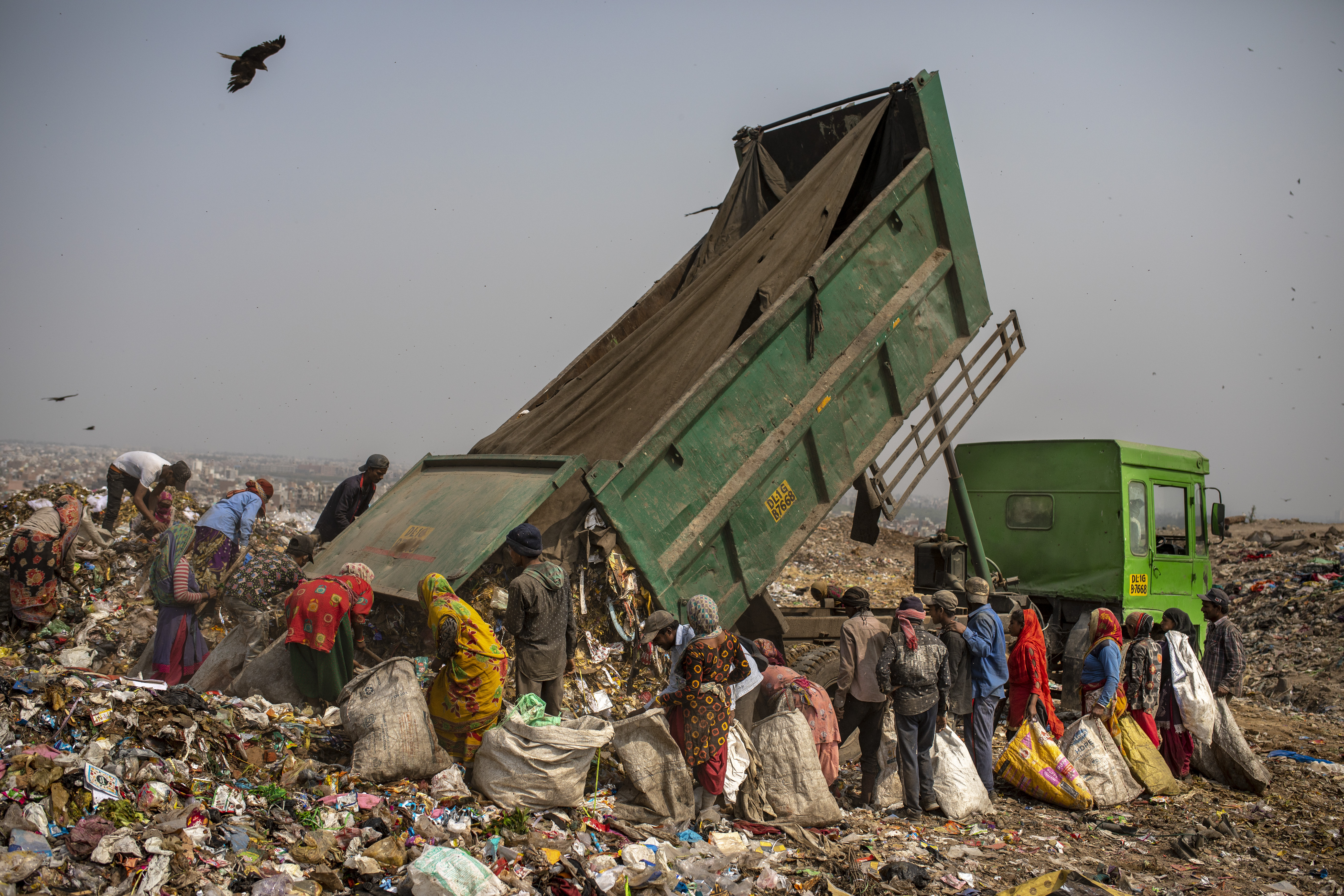
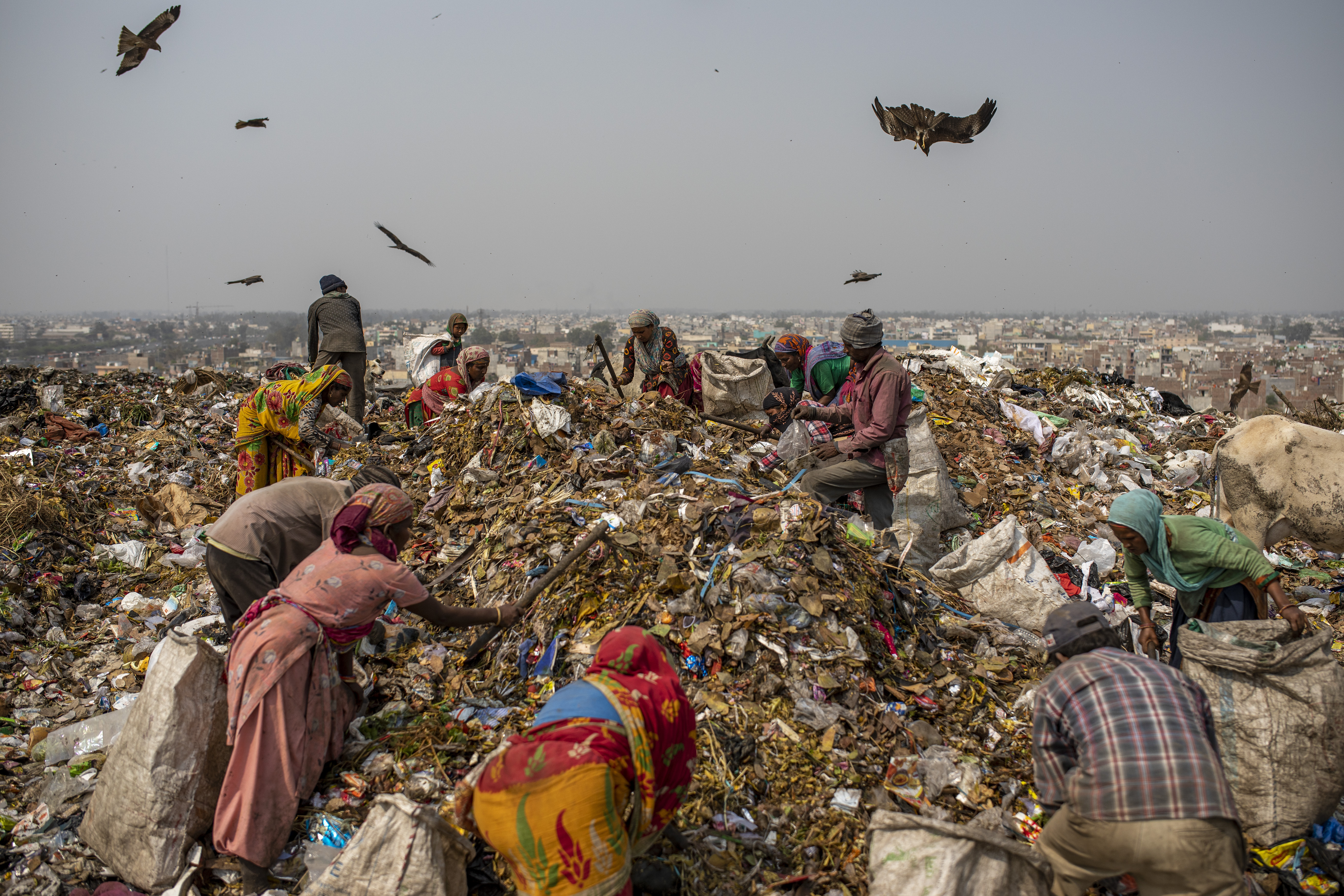
The scavengers wait patiently for a dump truck to tip the rubbish on the summit of the landfill outside India’s capital New Delhi. Armed with plastic bags, they plunge their bare hands into the rubbish and start sorting it.

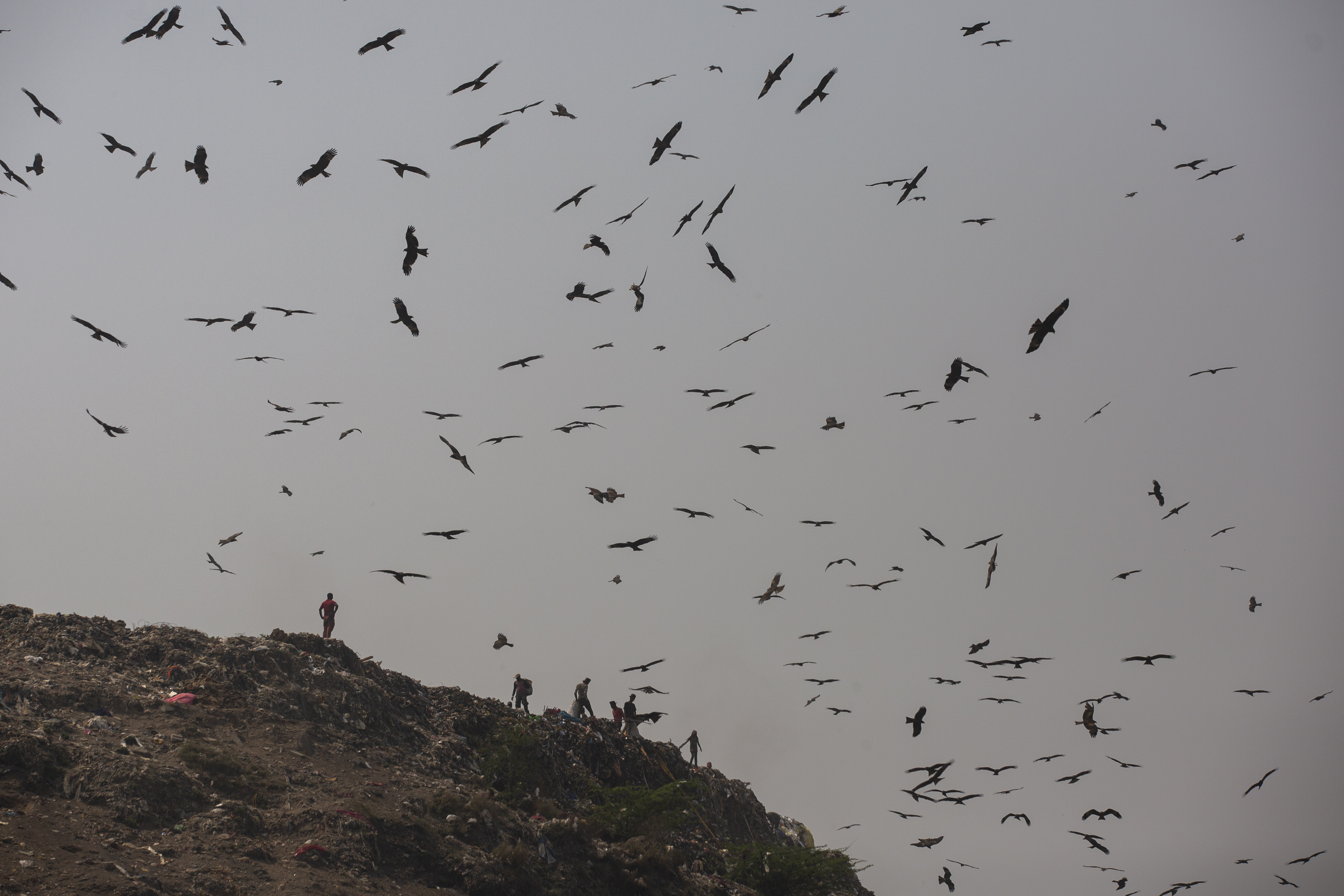
Every day, more than 2,300 tonnes of waste is dumped at the landfill at Bhalswa that covers an area bigger than 50 football fields, with a pile taller than a 17-storey building. And every day, thousands of these informal workers climb the precarious slopes to pick through what can be salvaged.

They are among the estimated 20 million people around the world who are pivotal in keeping cities clean, alongside paid sanitation employees. But unlike those municipal workers, they usually are not eligible for the coronavirus vaccine and are finding it hard to get the shots.

The pandemic has amplified the risks that these informal workers face. Few have their own protective gear or even clean water to wash their hands, said Chitra Mukherjee of Chintan, a non-profit environmental research group in New Delhi.

“If they are not vaccinated, then the cities will suffer,” Mukherjee said.

Manuwara Begun, 46, lives in a cardboard hut behind a five-star hotel in the heart of New Delhi and feels the inequity keenly. Chintan estimates that each year, those like her save the local government more than $50m and eliminate more than 900,000 tonnes of carbon dioxide by diverting waste away from landfills.

Still, they are they not considered “essential workers” and thus are ineligible for vaccinations.

Advertisement

Begun has started an online petition pleading for vaccines and asking, “Are we not human?”

Sanitation workers employed by local governments in South Africa and Zimbabwe are likely to be in line for the COVID-19 vaccine after health workers, unlike those who sort through the rubbish.

At the Dandora landfill in Kenya’s capital of Nairobi, some of the scavengers who are not eligible for a shot don medical gear discarded by hospitals and health clinics, saying it especially protects them from the weather during the rainy season.

There is no doubt that these people provide an essential service, says Louise Guibrunet, a researcher at the National Autonomous University of Mexico who has studied the issue.

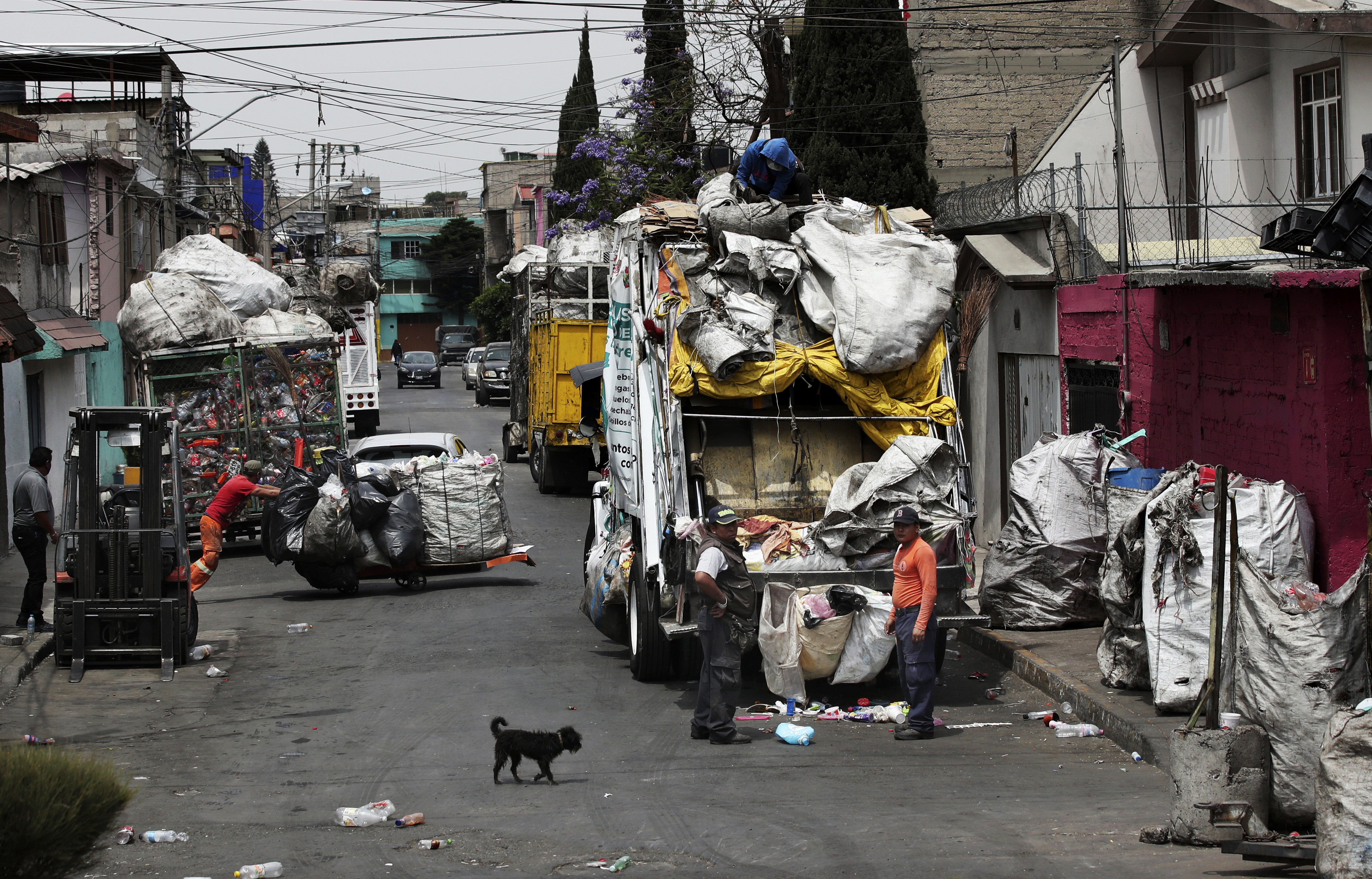
In Mexico, scavengers help municipal workers on rubbish trucks and often collect waste from neighbourhoods not served by the authorities. The work is dangerous, and injuries are common, so governments have an incentive to not recognise them or provide benefits like healthcare, she said.

They often are already poor, moving to unfamiliar cities to eke out a living by sorting garbage, says Robin Jeffrey, a professor at the Institute of South Asian Studies at the National University of Singapore. That many of these workers in India belong to poor Muslim or Dalit communities adds another layer of prejudice. Dalits once were known as “untouchables” are at the bottom of the country’s hierarchical caste system.

“The vaccine is just another, and very dramatic, example of an exclusion that has prevailed before COVID-19 came on the horizon,” said Jeffrey, who co-authored a book on waste in India in 2018.

India said it will give vaccines to everyone more than 45 of age starting on April 1. At private hospitals, each shot is sold for 250 rupees ($3.45), but they are free at government hospitals.

[File photo: Manish Swarup/AP]
Manuwara Begun, 46, sorts out rubbish collected from households in New Delhi, India. Begun lives in a cardboard hut behind a five-star hotel in the heart of New Delhi and feels the inequity keenly. [Manish Swarup/AP Photo]
Advertisement
Workers surround a municipal garbage truck dumping rubbish at the Bhalswa landfill on the outskirts of New Delhi. [Altaf Qadri/AP Photo]
Birds hover as rubbish pickers look for recyclable waste at Bhalswa landfill on the outskirts of New Delhi. Every day, more than 2,300 tonnes of garbage is dumped at Bhalswa. [Altaf Qadri/AP Photo]
Duncan Wanjohi (right) and Kelvin Kimani scavenge for recycled materials in Dandora, the largest garbage dump in Kenya's capital of Nairobi. [Brian Inganga/AP Photo]
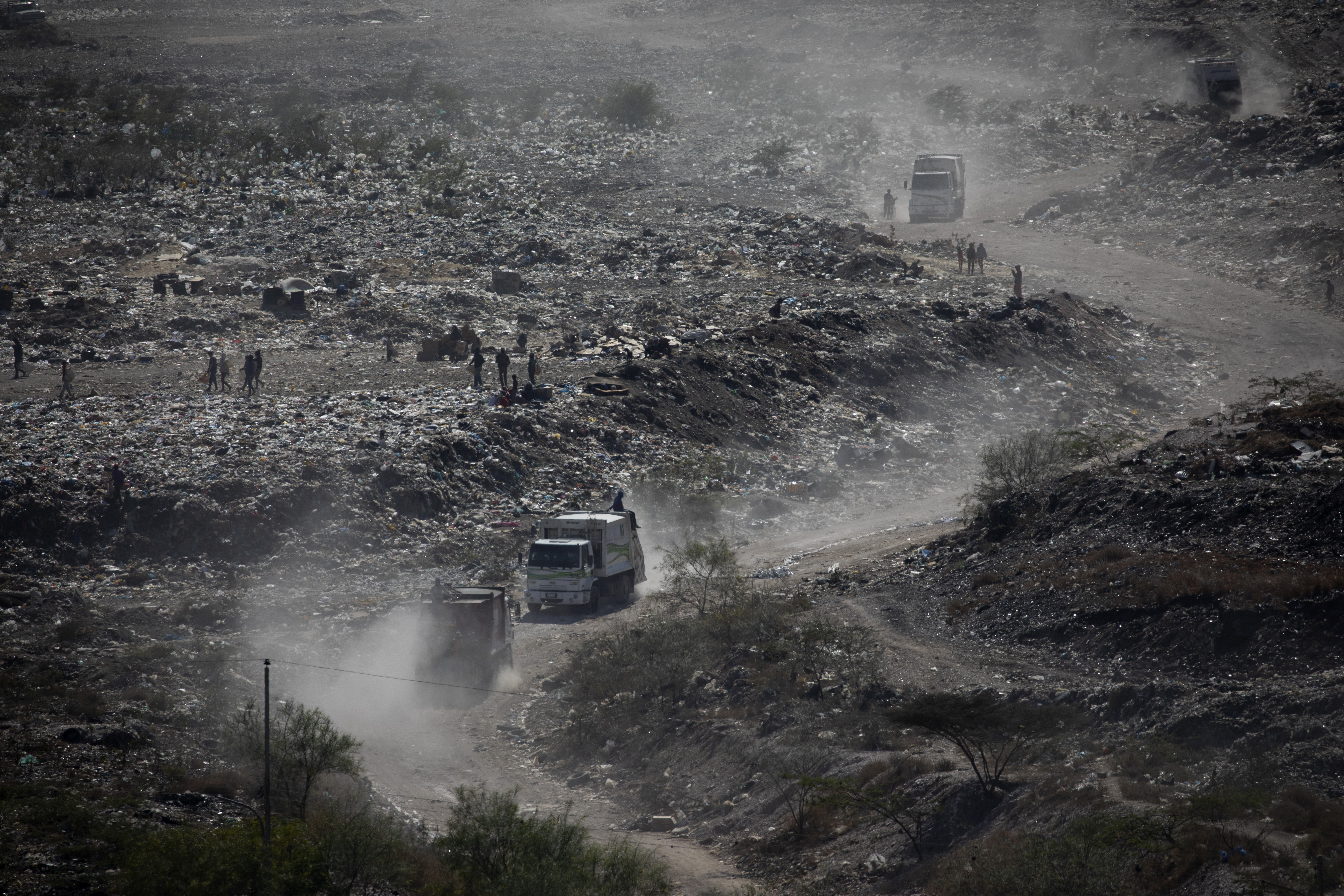
Rubbish trucks drive through the Pavia dump in Barquisimeto, Venezuela. Experts say these trash pickers, who sometimes toil alongside paid municipal sanitation workers, provide a vital service, yet they usually are not on a priority list for vaccines against the coronavirus. [Ariana Cubillos/AP Photo]
Rubbish collectors look for recyclable materials at Bhalswa landfill on the outskirts of New Delhi. [Altaf Qadri/AP Photo]
Advertisement
Isaac Kivai, who scavenges recyclables for a living, puts on a protective suit found in the rubbish at Dandora. [Brian Inganga/AP Photo]
Waste pickers unload rubbish in Mexico City. [Marco Ugarte/AP Photo]
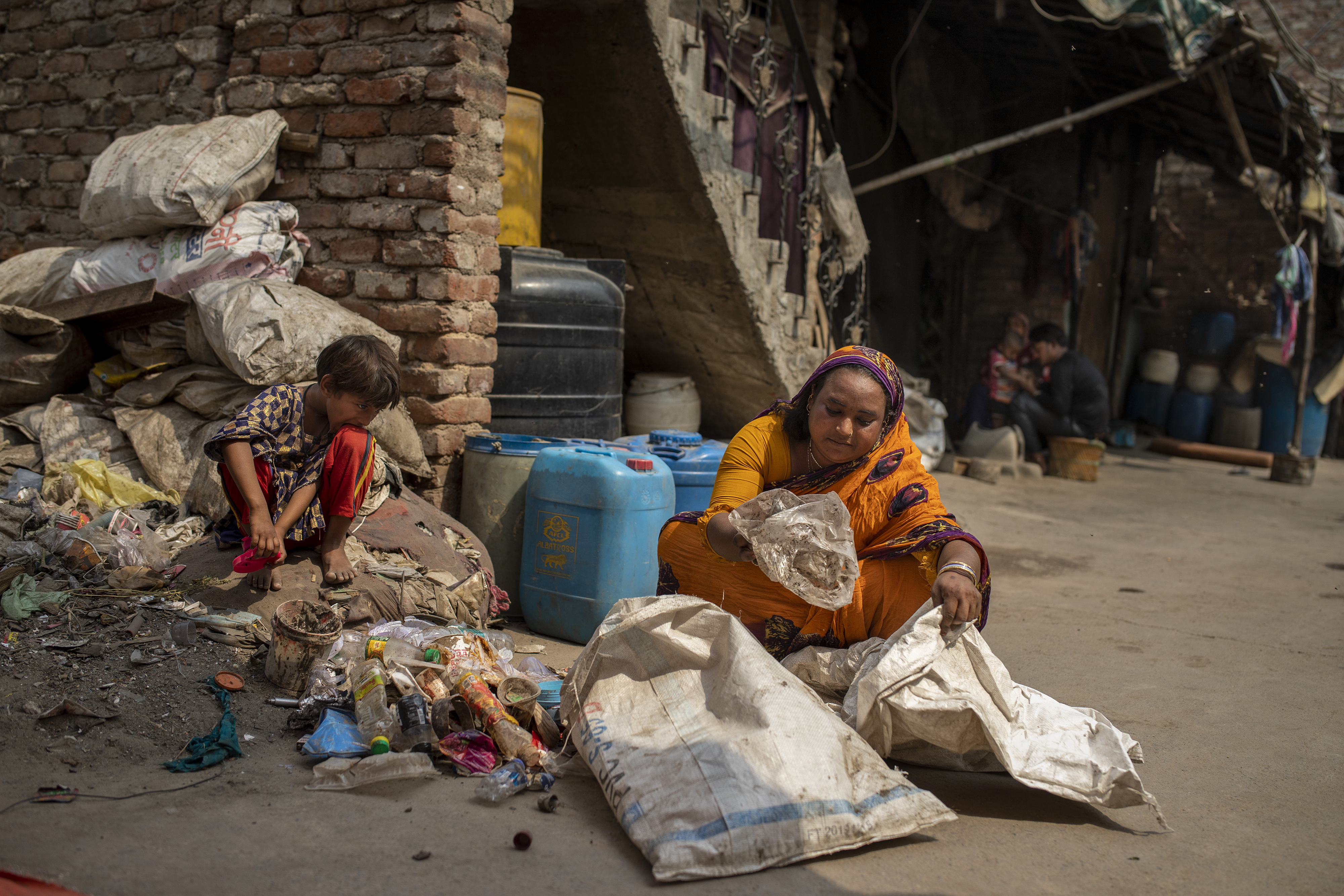
Sahra Bano sorts reusable items from the Bhalswa landfill on the outskirts of New Delhi. [Altaf Qadri/AP Photo]
Duncan Wanjohi scavenges recyclable materials for a living at a garbage dump at Dandora, on the outskirts of Nairobi. [Brian Inganga/AP Photo]


  • About

    • About Us
    • Code of Ethics
    • Terms and Conditions
    • EU/EEA Regulatory Notice
    • Privacy Policy
    • Cookie Policy
    • Cookie Preferences
    • Accessibility Statement
    • Sitemap
    • Work for us
  • Connect

    • Contact Us
    • User Accounts Help
    • Advertise with us
    • Stay Connected
    • Newsletters
    • Channel Finder
    • TV Schedule
    • Podcasts
    • Submit a Tip
    • Paid Partner Content
  • Our Channels

    • Al Jazeera Arabic
    • Al Jazeera English
    • Al Jazeera Investigative Unit
    • Al Jazeera Mubasher
    • Al Jazeera Documentary
    • Al Jazeera Balkans
    • AJ+
  • Our Network

    • Al Jazeera Centre for Studies
    • Al Jazeera Media Institute
    • Learn Arabic
    • Al Jazeera Centre for Public Liberties & Human Rights
    • Al Jazeera Forum
    • Al Jazeera Hotel Partners

Follow Al Jazeera English:

  • facebook
  • twitter
  • youtube
  • instagram-colored-outline
  • rss
Al Jazeera Media Network logo
© 2026 Al Jazeera Media Network

You might also like:

live israeli attacks kill 76 no aid relief yet for... | thailand readies homecoming for stolen ancient sta... | russia ukraine war list of key events day 1185... | german woman arrested after mass stabbing at hambu... | vietnam orders ban on popular messaging app... | need answers will sri lankas tamils find war closu... | live israeli attacks kill 85 in gaza as starvation... | florida court orders ex mexican security chief to ...