Skip linksSkip to Content
play
Live
Navigation menu
  • News
    • Africa
    • Asia
    • US & Canada
    • Latin America
    • Europe
    • Asia Pacific
  • Middle East
  • Explained
  • Opinion
  • Sport
  • Video
    • Features
    • Economy
    • Human Rights
    • Climate Crisis
    • Investigations
    • Interactives
    • In Pictures
    • Science & Technology
    • Podcasts
    • Travel
play
Live

In Pictures

Features|In Pictures

The displaced Afghans making gruelling journeys to survive

More than 40 years of war, violence and poverty have created one of the world’s most uprooted populations.
Save

Share

facebooktwitterwhatsappcopylink
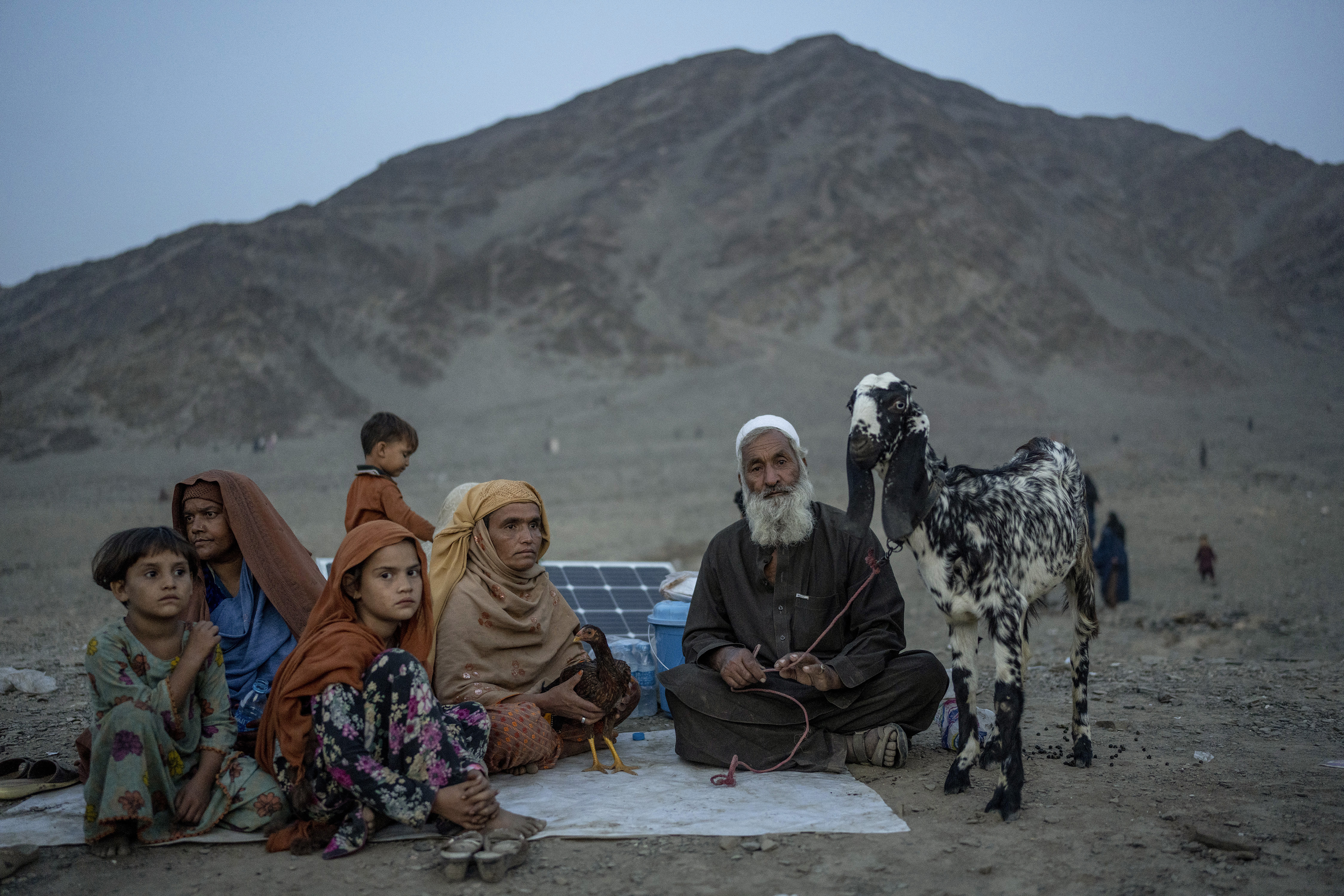
Afghan refugees sit in a camp near the Pakistan-Afghanistan border, in Torkham, Afghanistan. Many Afghan refugees arrived at the Torkham border to return home shortly before the expiration of a Pakistani government deadline for those who are in the country 'illegally' to leave or face deportation. [Ebrahim Noroozi/AP Photo]
By AP
Published On 31 Dec 202331 Dec 2023

The barren desert plain among the mountains of eastern Afghanistan is filled with hundreds of thousands of people.

Some live in tents. Others live out in the open, among the piles of the few belongings they managed to take as they were forced from neighbouring Pakistan.

The sprawling camp of people returning to Afghanistan through the Torkham border crossing is the latest facet of Afghans’ long, painful search for a stable home.

More than 40 years of war, violence and poverty in Afghanistan have created one of the world’s most uprooted populations.

Some 6 million Afghans are refugees outside the country. Another 3.5 million people are displaced within the country of 40 million, driven from their homes by war, earthquakes, drought or resources that are being depleted.

Pakistan’s decision earlier this year to deport undocumented Afghans has struck them hard.

Many Afghans have lived for decades in Pakistan, driven there by successive wars at home. When the order was announced, hundreds of thousands feared arrest and fled back to Afghanistan. Often, Pakistani authorities prevented them from taking anything with them, they say.

Their first stop has been the camp in Torkham, where they might spend days or weeks before Taliban officials send them to a camp elsewhere.

The expulsions from Pakistan have swelled the already large numbers of Afghans who are trying to migrate to Iran, hoping to find work.
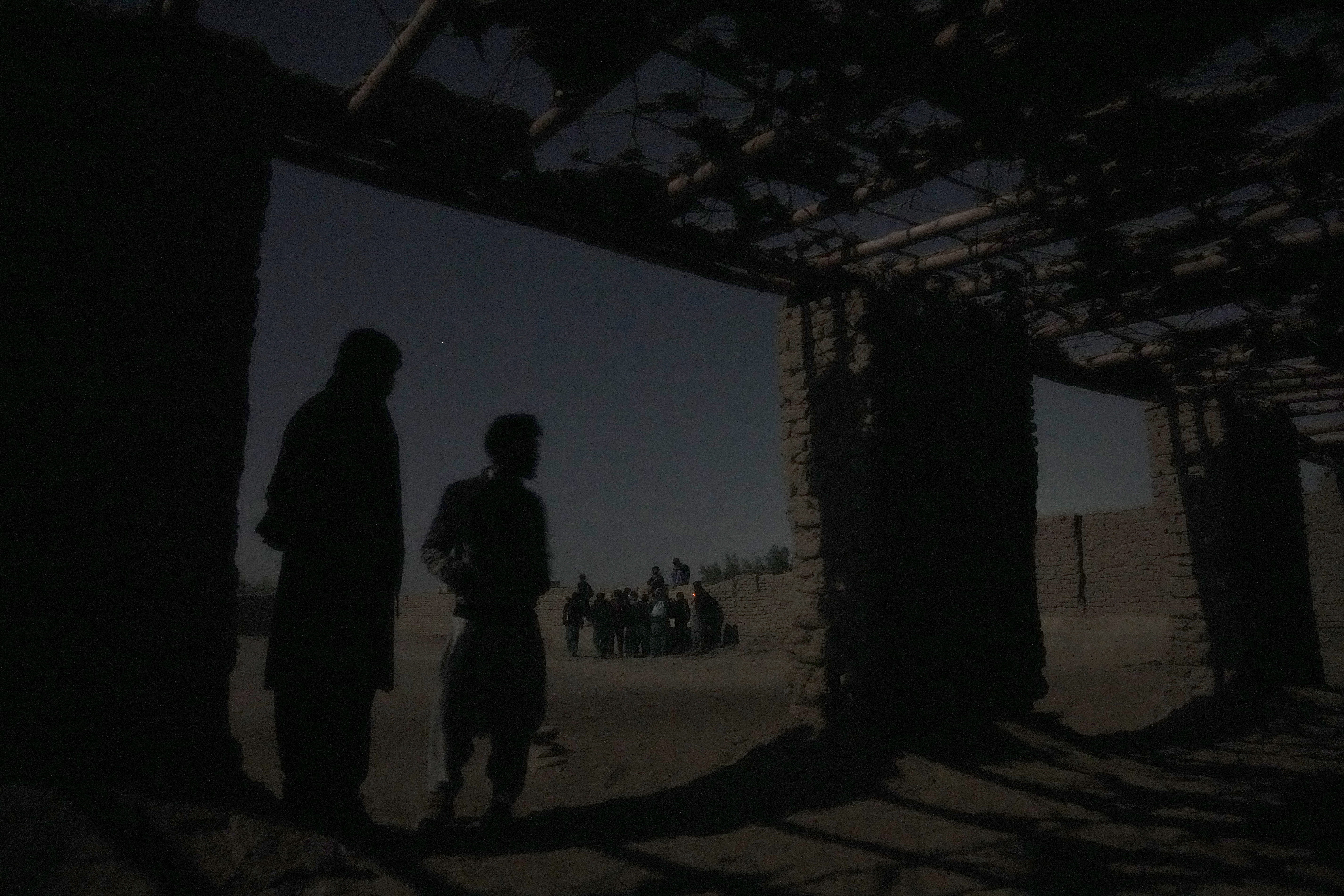
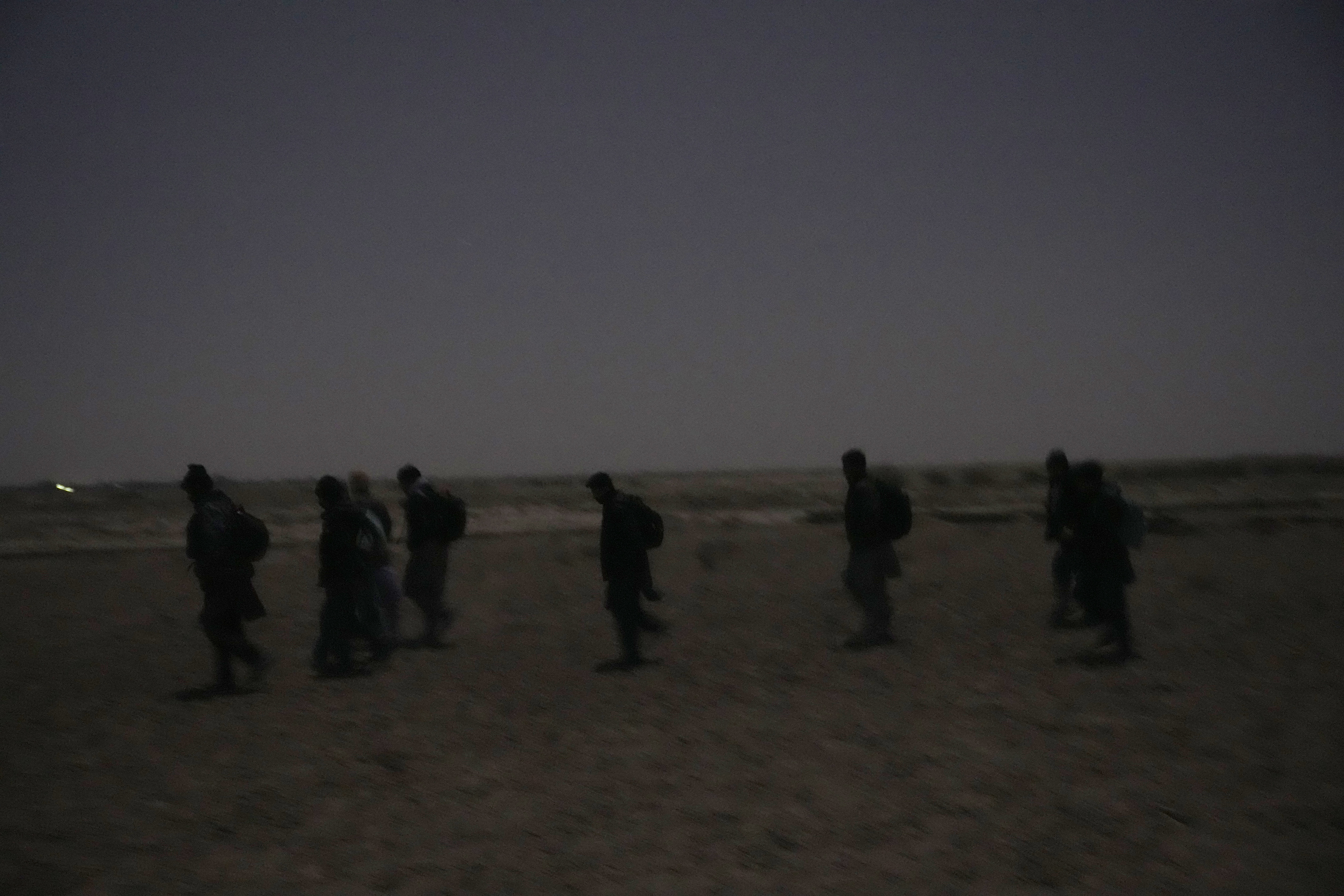
Young Shiite Afghan immigrants wait for midnight in ruins in the desert around the city of Zaranj, Afghanistan, near the the Iran-Afghanistan border wall, to try to cross over the Iranian border wall into Iran, Monday, Dec. 25
Young Shia Afghan immigrants wait for midnight in ruins in the desert around the city of Zaranj, Afghanistan, near the Iran-Afghanistan border, to try to cross over the border wall into Iran. [Ebrahim Noroozi/AP Photo]
Advertisement
Young Shiite Afghan immigrants treck towards the the Iran-Afghanistan border wall in the desert around the city of Zaranj, Afghanistan, near the the Iran-Afghanistan border wall, to try to cross over the Iranian border wall into Iran, Monday, Dec. 25
Every month, thousands cross into Iran at the border near Zaranj. It’s a risky route: in the dark of night, with the help of smugglers, they clamber over the border wall using ladders and jump down the other side. [Ebrahim Noroozi/AP Photo]
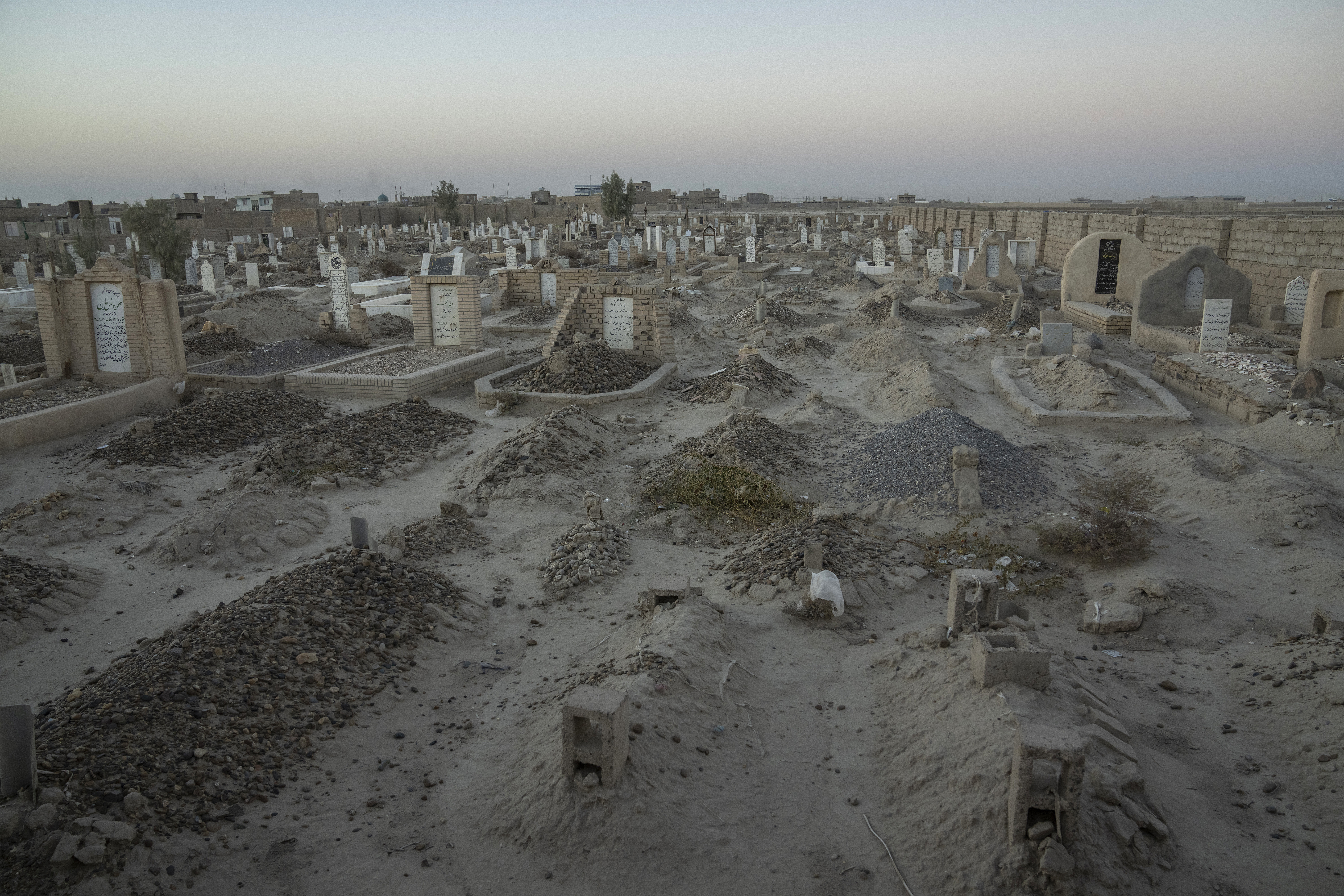
An Afghan Shiite cemetery, where a large number of Shiite migrants who were killed while trying to cross the border are buried, lies on the outskirts of Zaranj city, Afghanistan, Monday, Dec. 25
An Afghan Shia cemetery, where a large number of Shia migrants who were killed while trying to cross the border are buried, lies on the outskirts of Zaranj city. According to locals, when Shias cross the border into Pakistan, they are attacked by the Jundallah group, taken hostage and released after paying a lot of money, or killed. To avoid the Jundallah, Shia immigrants try to cross over the border wall, although it is much more difficult and usually unsuccessful. [Ebrahim Noroozi/AP Photo]
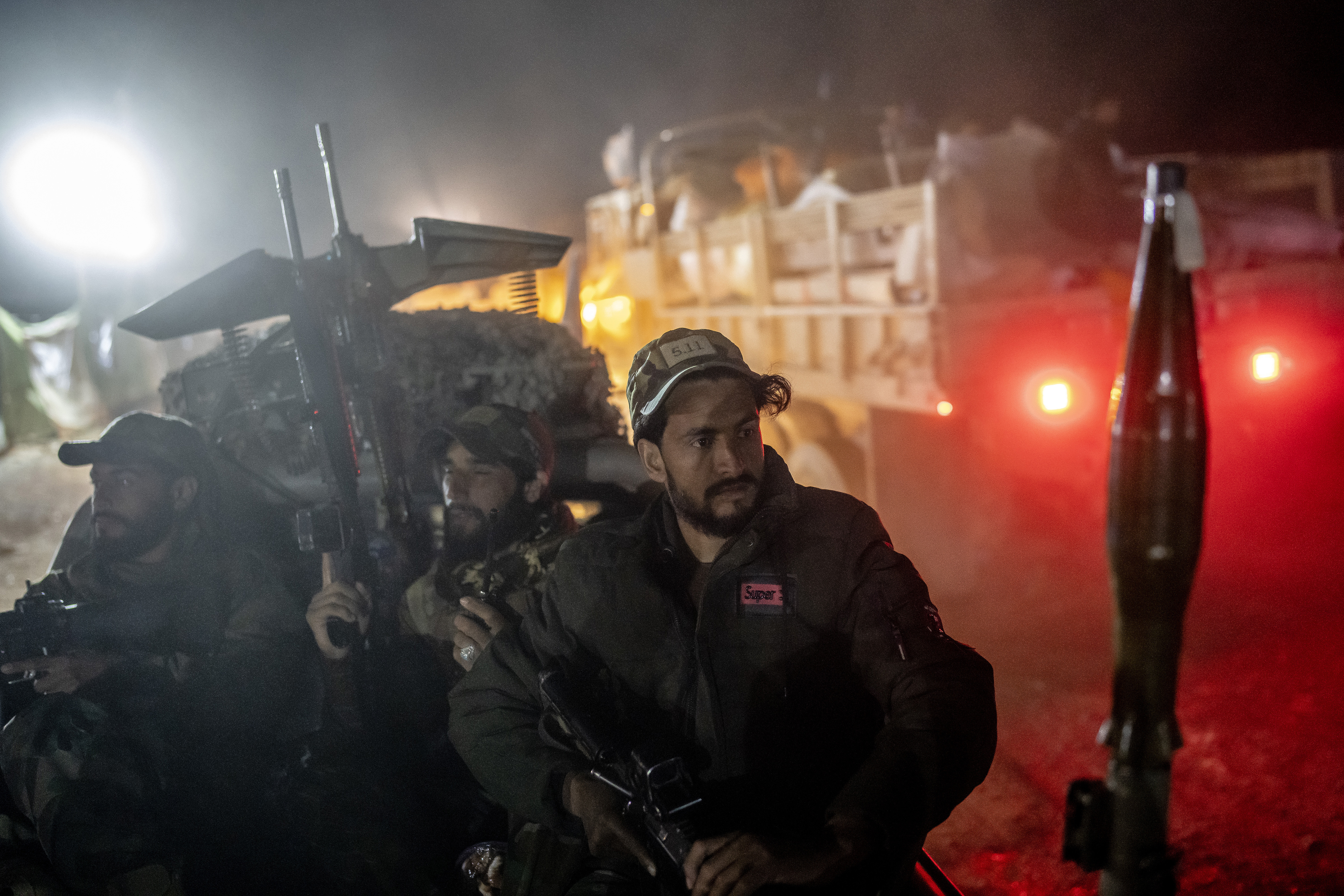
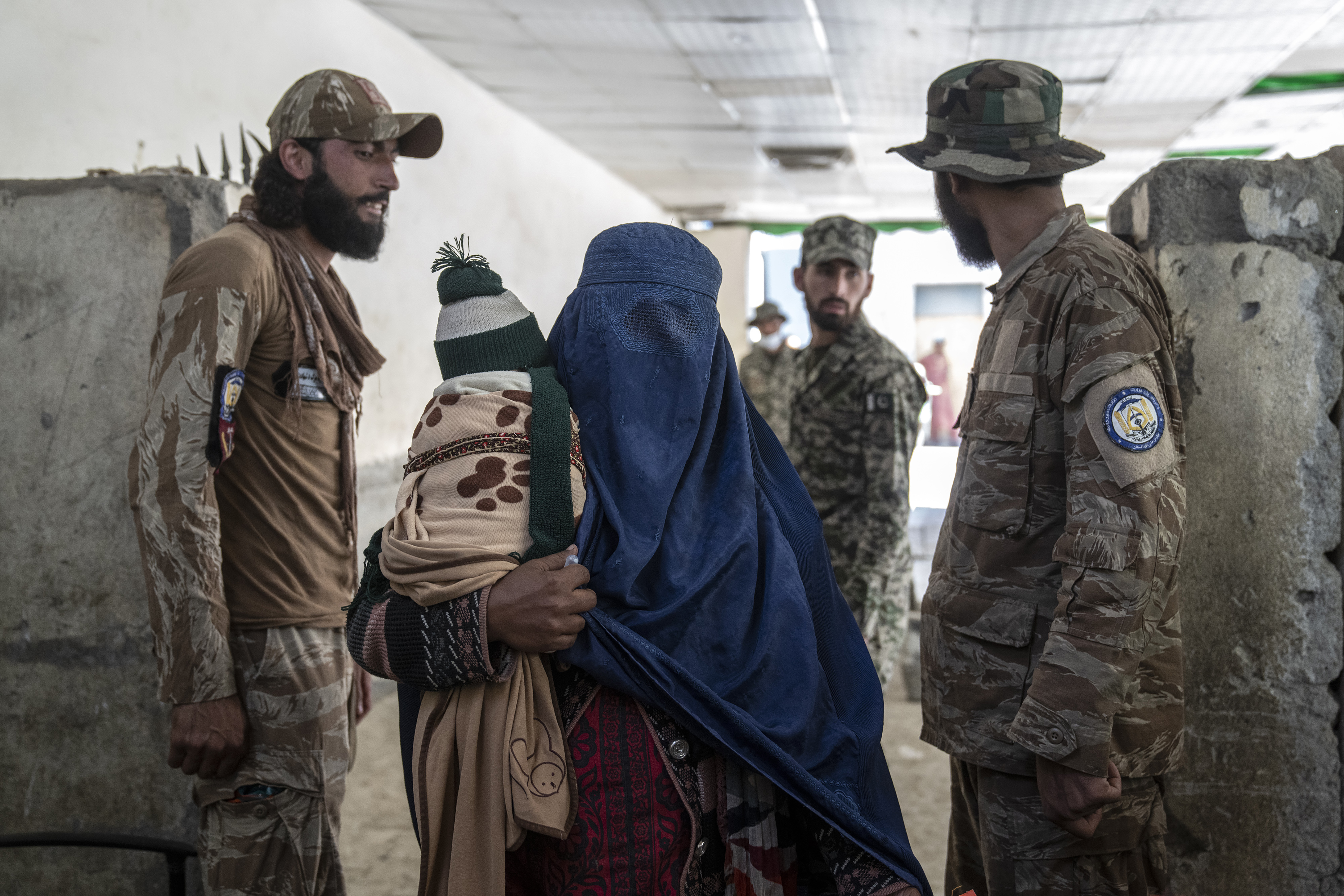
Taliban fighters patrol as Afghan refugees arrive at a camp near the Torkham Pakistan-Afghanistan border, in Torkham, Afghanistan, Friday, Nov. 17
Taliban fighters patrol as Afghan refugees arrive at a camp near the Pakistan-Afghanistan border, in Torkham, Afghanistan. Many Afghan refugees entered the Torkham border to return home shortly before the expiration of a Pakistani government deadline for them to leave. [Ebrahim Noroozi/AP Photo]
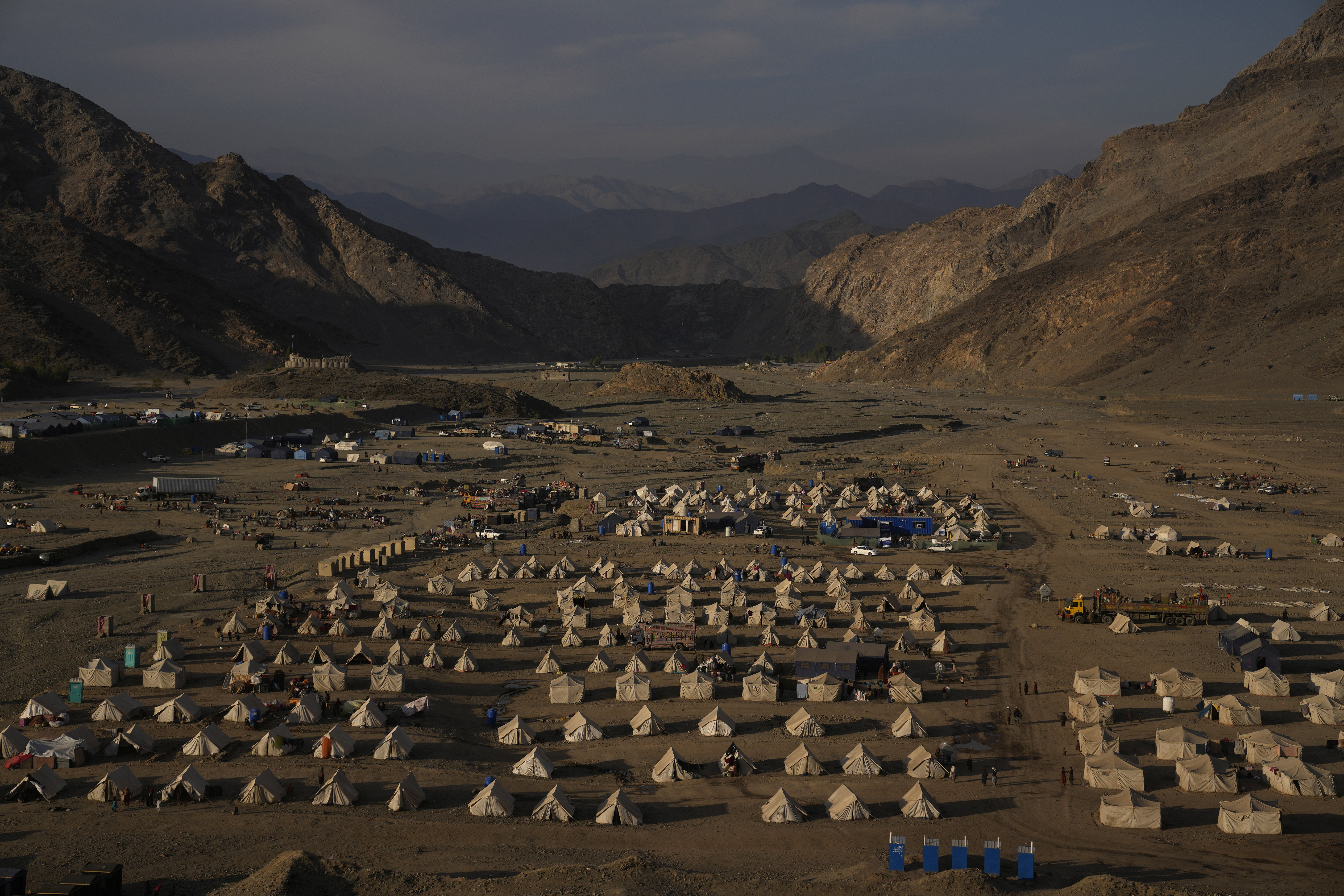
Tents stand in a migrant camp at the Pakistan-Afghanistan border in Torkham, Afghanistan, Friday, Nov. 17
Tents stand in a migrant camp at the Pakistan-Afghanistan border in Torkham. Pakistan’s decision to deport undocumented Afghans has struck them hard. Many Afghans have lived for decades in Pakistan, driven there by successive wars at home. [Ebrahim Noroozi/AP Photo]
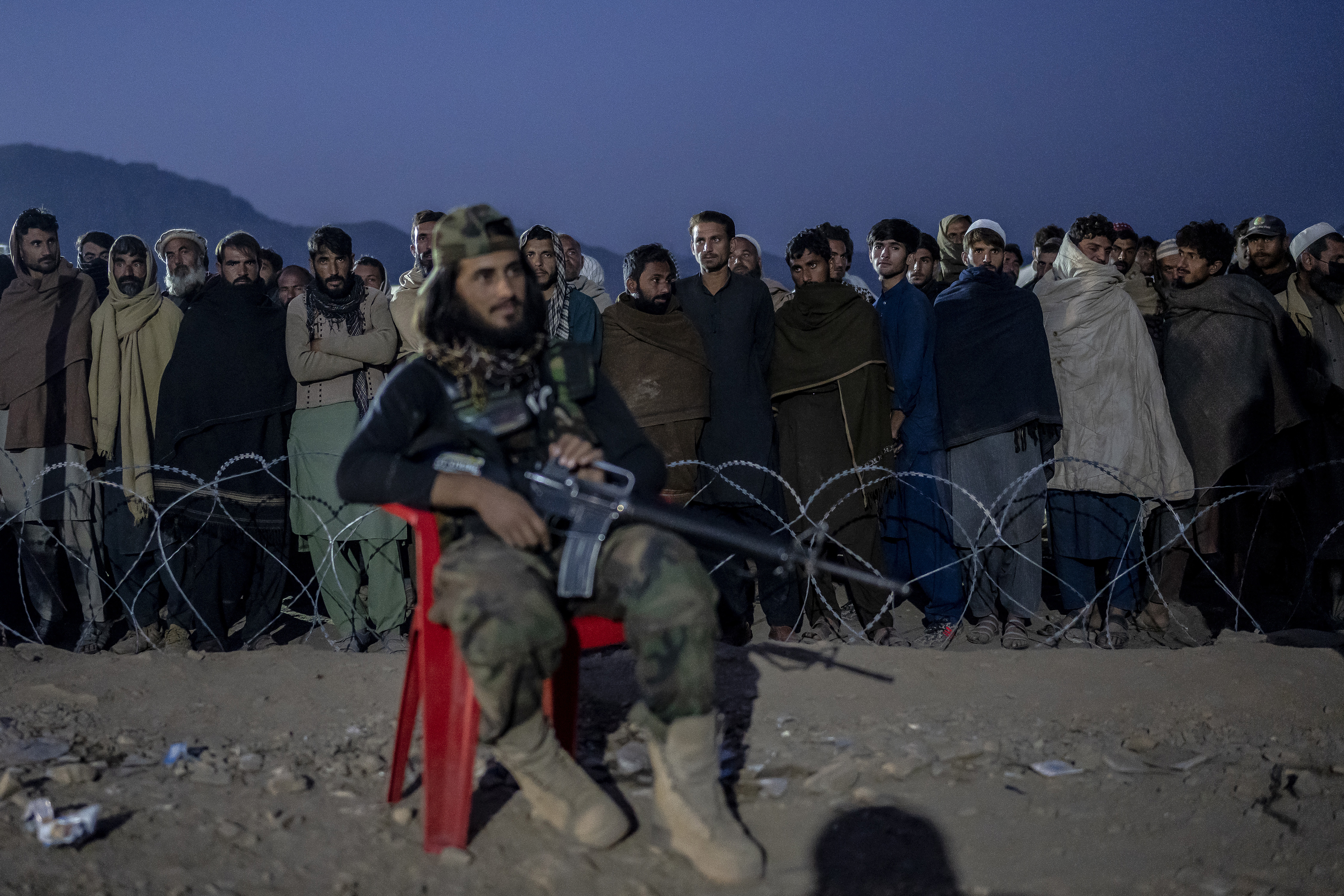
A Taliban fighter stands guard as Afghan refugees line up to register in a camp near the Pakistan-Afghanistan border in Torkham, Afghanistan, Saturday, Nov. 4,
A Taliban fighter stands guard as Afghan refugees line up to register in a camp near the Pakistan-Afghanistan border in Torkham. When the order was announced, hundreds of thousands feared arrest and fled from Pakistan to Afghanistan. Often Pakistani authorities prevented them from taking anything with them, they say. [Ebrahim Noroozi/AP Photo]
Advertisement
An Afghan refugee woman returns to Afghanistan through the Pakistan-Afghanistan border in Torkham, Afghanistan, Friday, Nov. 3, 2023
An Afghan refugee woman returns to Afghanistan through the Pakistan-Afghanistan border in Torkham. [Ebrahim Noroozi/AP Photo]
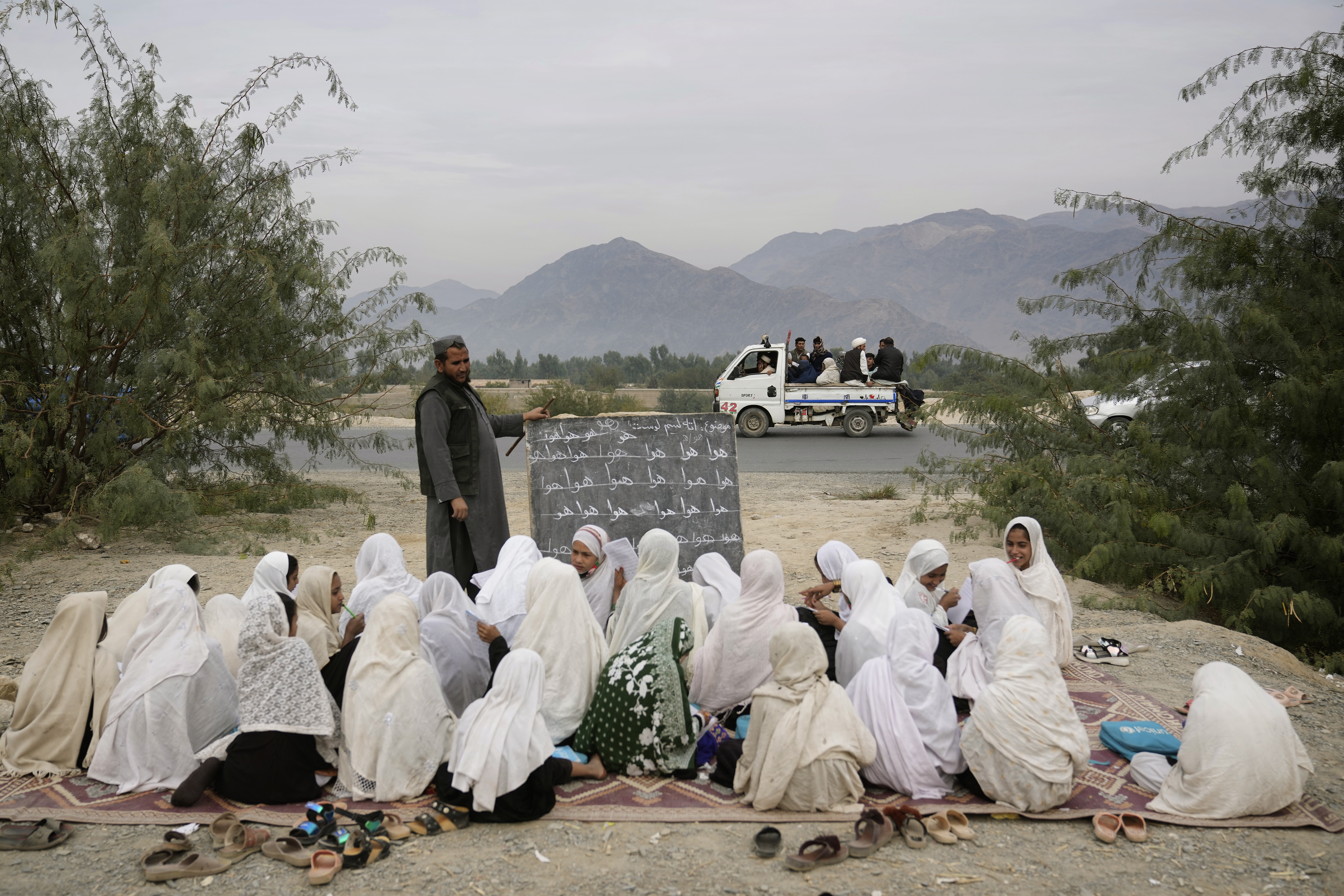
Afghan refugees pass by an outdoor girls classroom in Torkham, Afghanistan, Saturday, Nov. 18
Afghan refugees pass by an outdoor classroom for girls in Torkham. Afghanistan is already a poor country, especially after the economic collapse that followed the takeover by the Taliban two years ago. More than 28 million people - two-thirds of the population - rely on international aid to survive. [Ebrahim Noroozi/AP Photo]
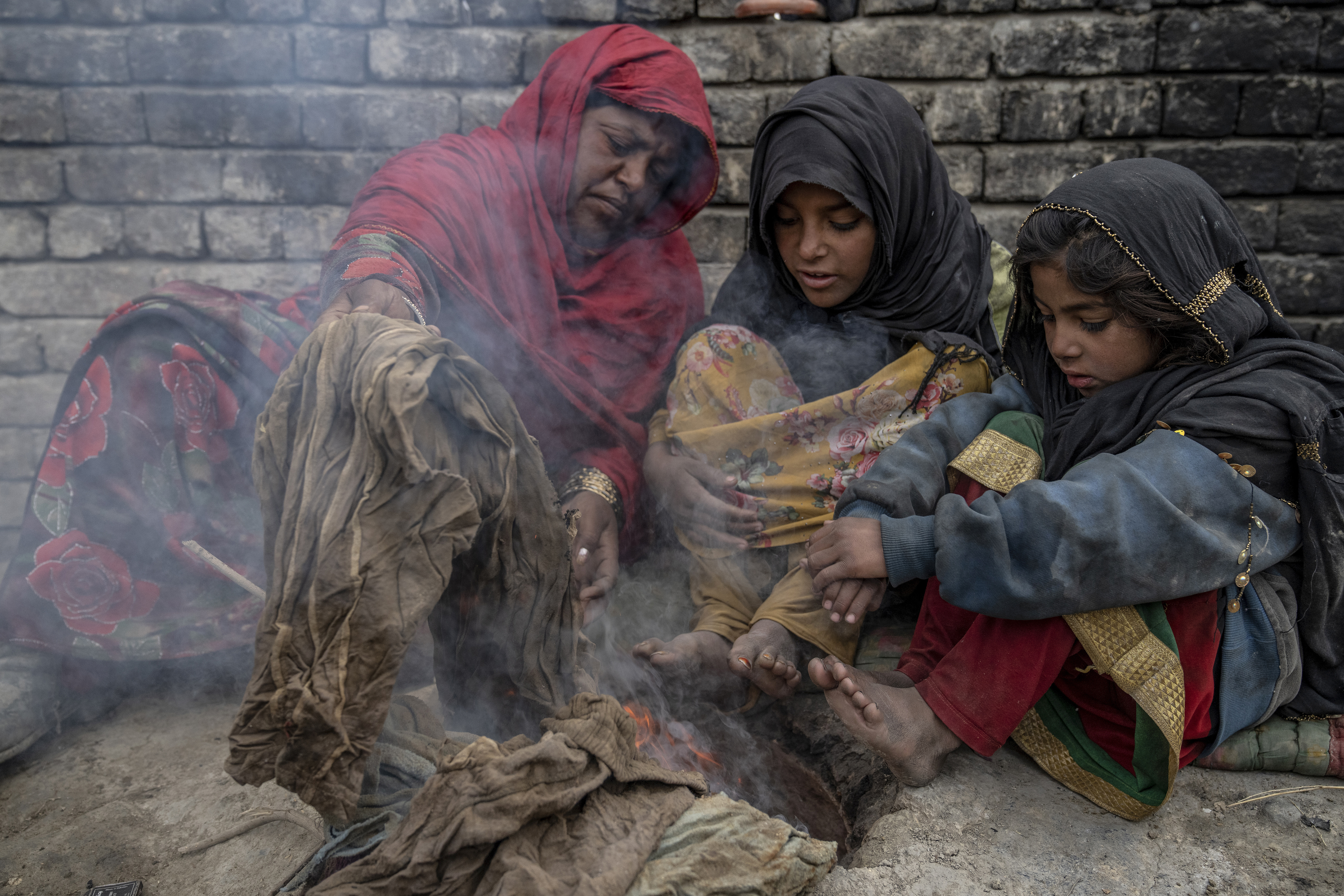
A family who were forced to leave their home, warms up by burning garbage in a camp on the outskirts of Kabul, Afghanistan, Sunday, Jan 22
A family forced to leave their home warms up by burning garbage in a camp on the outskirts of Kabul. The displaced are among the poorest of the poor. Many live in camps around the country, unable to afford enough food or firewood for heat in the winter. [Ebrahim Noroozi/AP Photo]
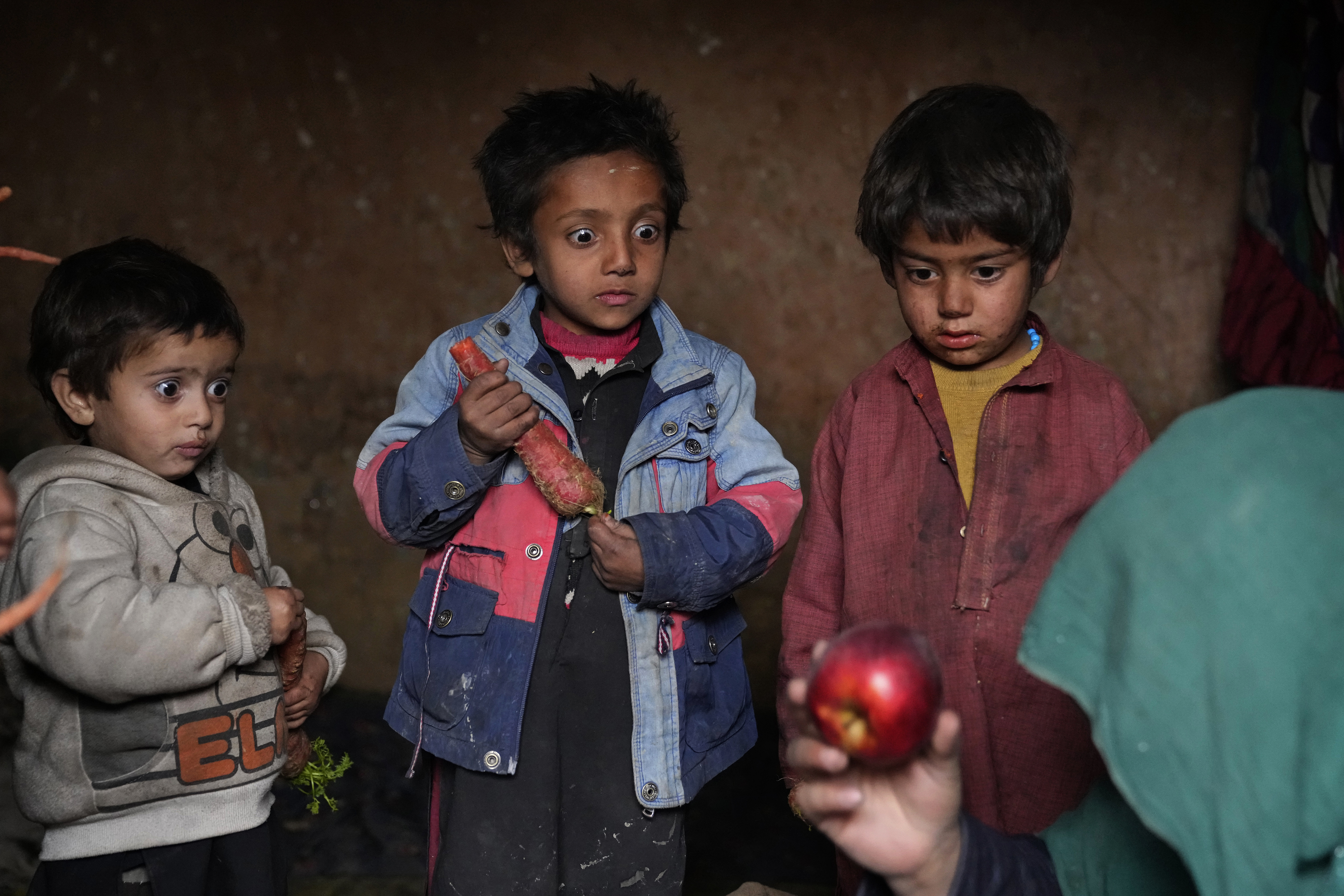
Three internally displaced children look with surprise at an apple that their mother brought home after begging, in a camp on the outskirts of Kabul, Afghanistan, Thursday, Feb 2
Three internally displaced children look with surprise at an apple that their mother brought home after begging, in a camp on the outskirts of Kabul. Since the chaotic Taliban takeover of Kabul on August 15, 2021, an already war-devastated economy once kept alive by international donations alone is now on the verge of collapse. [Ebrahim Noroozi/AP Photo]
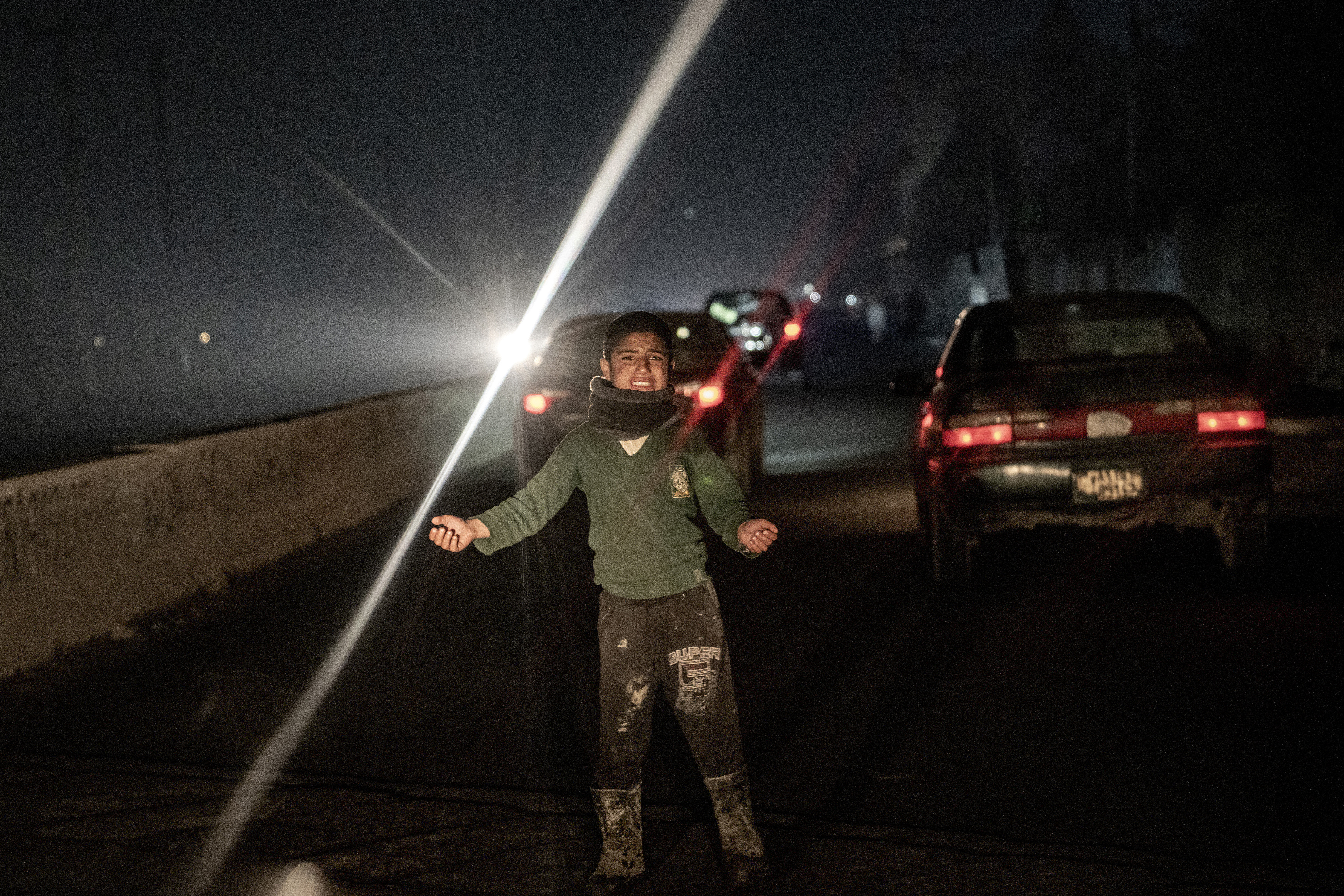
A boy begs in a road near the camp for internally displaced people where he lives in Kabul, Afghanistan, Thursday, Feb. 2
A boy begs in a road near the camp for internally displaced people where he lives in Kabul. The World Health Organization is warning of millions of children suffering malnutrition, and the United Nations says 97 percent of Afghans will soon be living below the poverty line. [Ebrahim Noroozi/AP Photo]
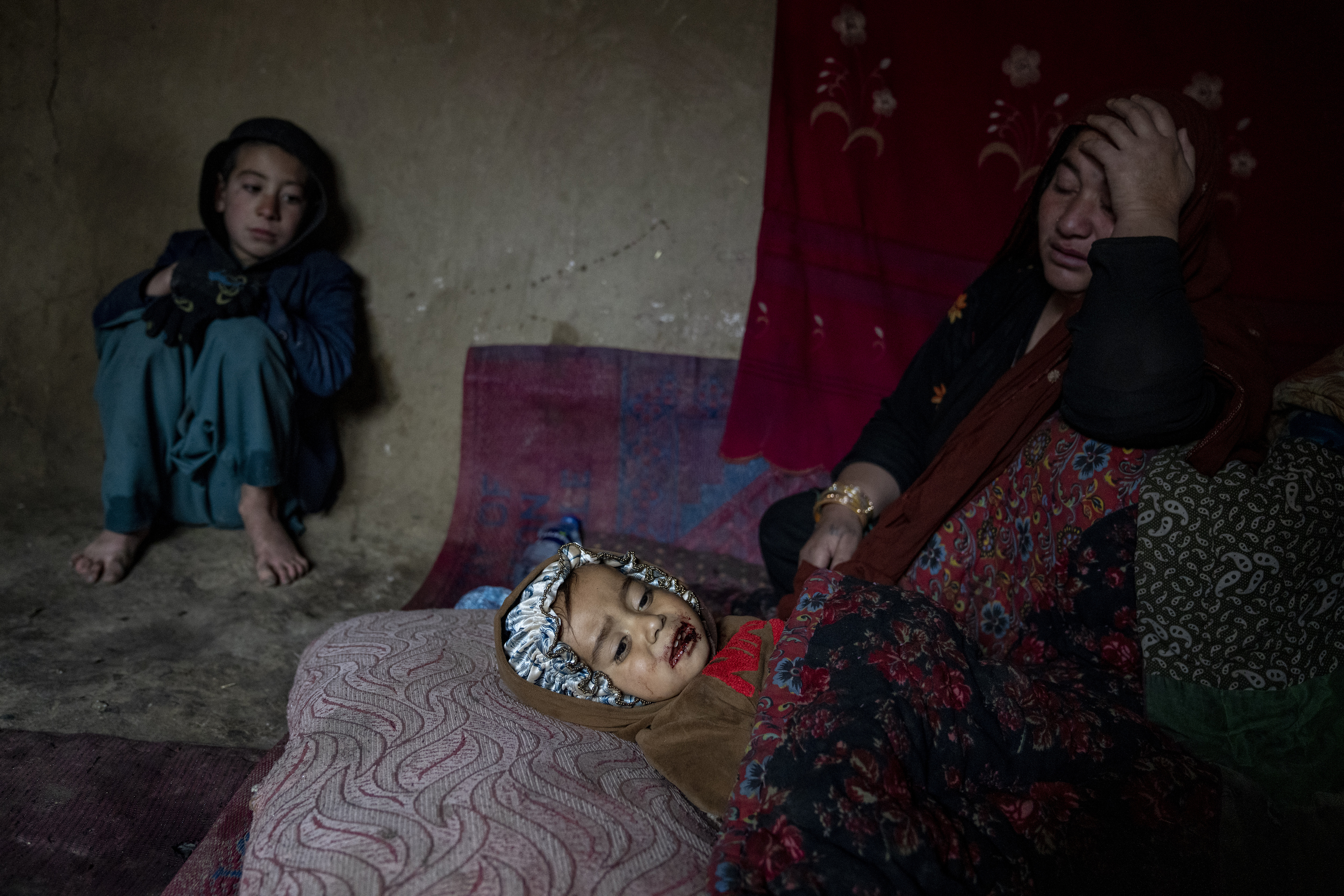
An internally displaced woman takes care of her sick child in a camp on the outskirts of Kabul, Afghanistan, Thursday, Feb. 9
An internally displaced woman takes care of her sick child in a camp on the outskirts of Kabul. She has no money to treat the child. [Ebrahim Noroozi/AP Photo]
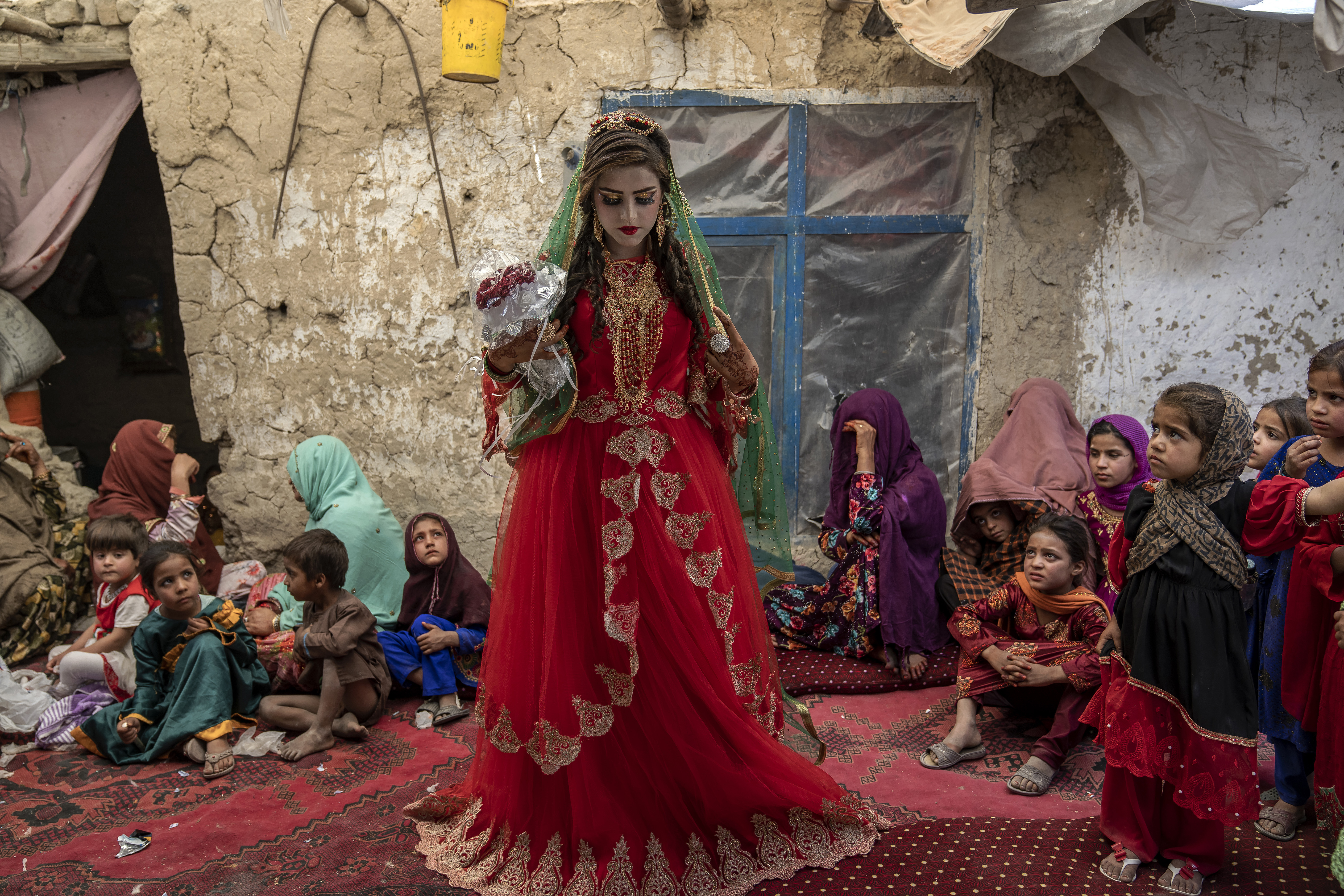
Shamila, 15, from an internally displaced family, adjusts her wedding dress in an old mud house yard, on her wedding day, on the outskirts of Kabul, Afghanistan, Friday, May 19
Shamila, 15, from an internally displaced family, adjusts her wedding dress in an old mud house yard, on her wedding day, on the outskirts of Kabul. “I have no choice. If I don’t accept, my family will be hurt,” she says of her wedding. Due to poverty and debt, her father had to marry her to a boy at a young age. Her father said "If I did not do this, I might have to give my daughter to someone that I owe. Now, with the money I received from the boy's family, I can pay my debt and treat my son." [Ebrahim Noroozi/AP Photo]


  • About

    • About Us
    • Code of Ethics
    • Terms and Conditions
    • EU/EEA Regulatory Notice
    • Privacy Policy
    • Cookie Policy
    • Cookie Preferences
    • Accessibility Statement
    • Sitemap
    • Work for us
  • Connect

    • Contact Us
    • User Accounts Help
    • Advertise with us
    • Stay Connected
    • Newsletters
    • Channel Finder
    • TV Schedule
    • Podcasts
    • Submit a Tip
    • Paid Partner Content
  • Our Channels

    • Al Jazeera Arabic
    • Al Jazeera English
    • Al Jazeera Investigative Unit
    • Al Jazeera Mubasher
    • Al Jazeera Documentary
    • Al Jazeera Balkans
    • AJ+
  • Our Network

    • Al Jazeera Centre for Studies
    • Al Jazeera Media Institute
    • Learn Arabic
    • Al Jazeera Centre for Public Liberties & Human Rights
    • Al Jazeera Forum
    • Al Jazeera Hotel Partners

Follow Al Jazeera English:

  • facebook
  • twitter
  • youtube
  • instagram-colored-outline
  • rss
Al Jazeera Media Network logo
© 2026 Al Jazeera Media Network

You might also like:

live israeli attacks kill 76 no aid relief yet for... | thailand readies homecoming for stolen ancient sta... | russia ukraine war list of key events day 1185... | german woman arrested after mass stabbing at hambu... | vietnam orders ban on popular messaging app... | need answers will sri lankas tamils find war closu... | live israeli attacks kill 85 in gaza as starvation... | florida court orders ex mexican security chief to ...