Seven police officers killed after riots in three Guatemalan prisons
Officials say 37 workers still held as gang members behind the riots seek better conditions.
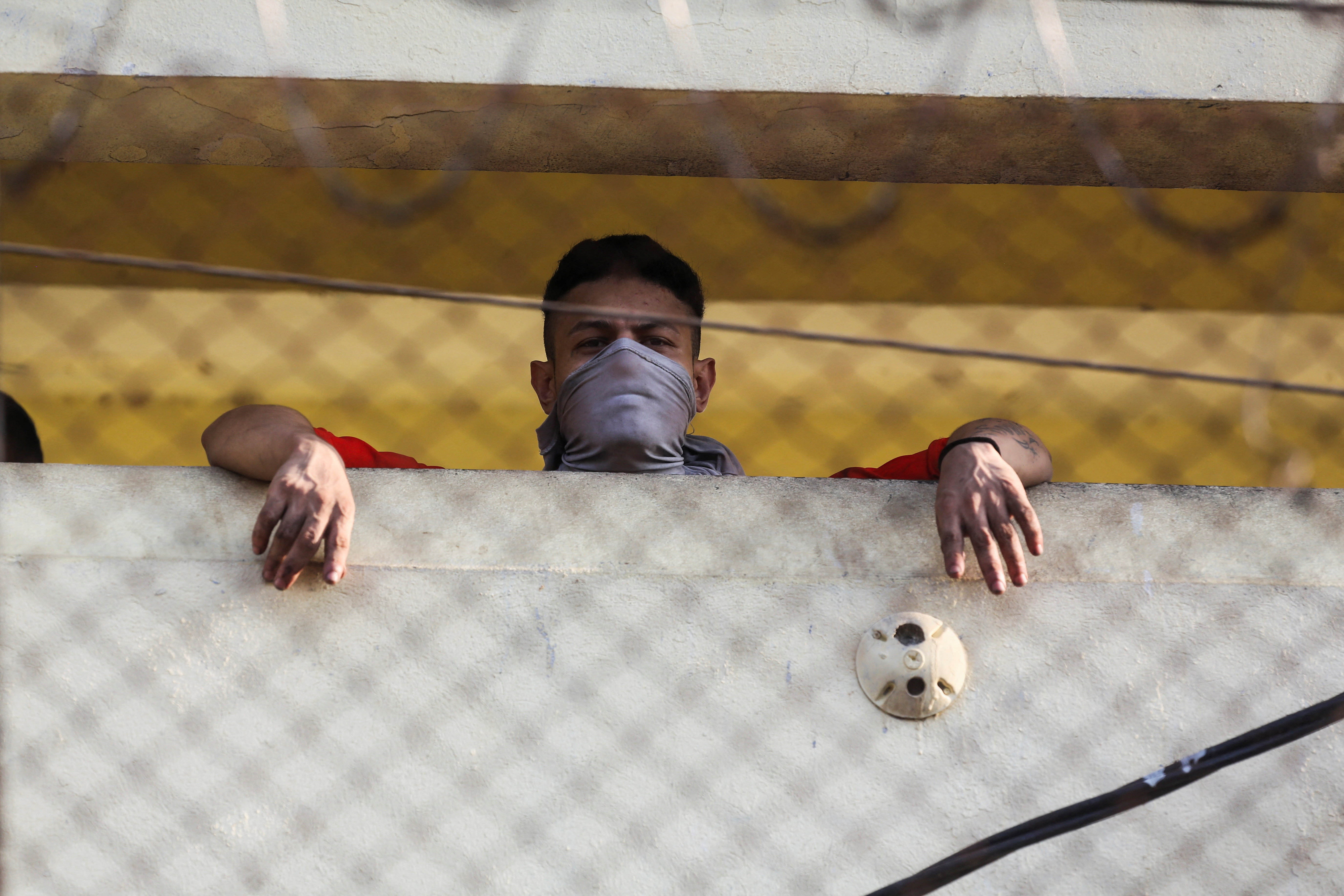
Seven police officers in Guatemala have been killed in gang-related violence, authorities have said, hours after police regained control of a maximum-security prison that was overtaken by rioting prisoners.
Interior Minister Marco Antonio Villeda told reporters on Sunday that the attacks took place in and around the capital, Guatemala City, resulting in the deaths of seven officers and one gang member. Ten more police officers have been injured.
Recommended Stories
list of 3 items- list 1 of 3US judge blocks government from deporting unaccompanied Guatemalan minors
- list 2 of 3Photos: Women in remote Guatemala find strength in shared voices
- list 3 of 3Amid Trump threats, what has the US’s ‘war on drugs’ achieved in 50 years?
The education ministry cancelled school across the country on Monday in light of the violence, while capital officials called off recreational and cultural activities scheduled for Sunday.
“We have spoken with President Bernardo Arevalo, and joint operations with the army will be launched to secure urban centers and guarantee public safety,” Villeda said, reiterating that he was “not making pacts with gangs”.
The National Civil Police said at least 10 attacks on police unfolded Sunday. Five people involved in the attacks were arrested, Police Director David Custodio Boteo said.
In a message posted to social media platform X, Boteo wrote that authorities would increase security protections for officers and police stations and encouraged police to stand together.
“We will not allow fear to dictate our actions; on the contrary, these attacks only reaffirm our commitment to protect and serve,” he said.
In the early hours of Sunday, hundreds of police swept into the the Renovacion 1 maximum security prison to release hostages from prisoners. They also subdued Aldo Duppie, a top Barrio 18 gang leader also known as El Lobo.
Images from the civil police showed authorities leading Duppie out of the facility with a bloodied shoulder. He is currently serving a sentence totalling some 2,000 years.
Thirty-seven hostages remain held at two other facilities, however.
Riots overtake three prisons
Officials said at least 46 workers were taken captive in riots across the three detention centres, which began on Saturday and continued into Sunday. They said the riots appeared to be coordinated by Barrio 18 members in response to their leader seeking a transfer to another facility with better conditions.
There were no reported deaths or injuries among the hostages, Villeda said at a previous news conference.
The Ministry of Interior described the unrest as a “direct reaction” to its moves to revoke privileges from gang leaders.
“I am not going to make any deals with any terrorist group. I will not give in to this blackmail, and I will not restore their privileges in exchange for them stopping their actions,” Villeda said.
The hostages are mostly guards but also include a psychologist, a prison official said.
Earlier, at the Renovacion 1 prison in Escuintla in southern Guatemala, police and soldiers formed a perimeter around the prison as ambulances and firetrucks were standing by to intervene if necessary.
Inmates, some wearing jumpsuits but most in tank tops and shorts with their faces covered by masks improvised with pieces of clothing, watched from above, perched in the prison’s patrol towers.
One masked inmate, speaking from behind barbed wire, said they were not safe at the prison and were demanding to be moved.
“They can’t even guarantee their own security, so how are they supposed to guarantee ours?” he said, referring to prison authorities.
Guatemala has struggled to control its prison population in recent years amid rampant gang influence. Inmates, meanwhile, have reported harsh and dangerous conditions.
In October, Arevalo accepted the resignations of three top security officials after 20 gang members escaped.
“The link between the prison system and the criminality outside has to be cut,” Arevalo said in an interview with The Associated Press news agency this week.
“That’s why all this effort to regain control of the prison system is very important.”
