Sudan army says two-year RSF siege of key town broken
Dilling, a key route for supply lines, had been under the paramilitary group’s control for nearly two years.
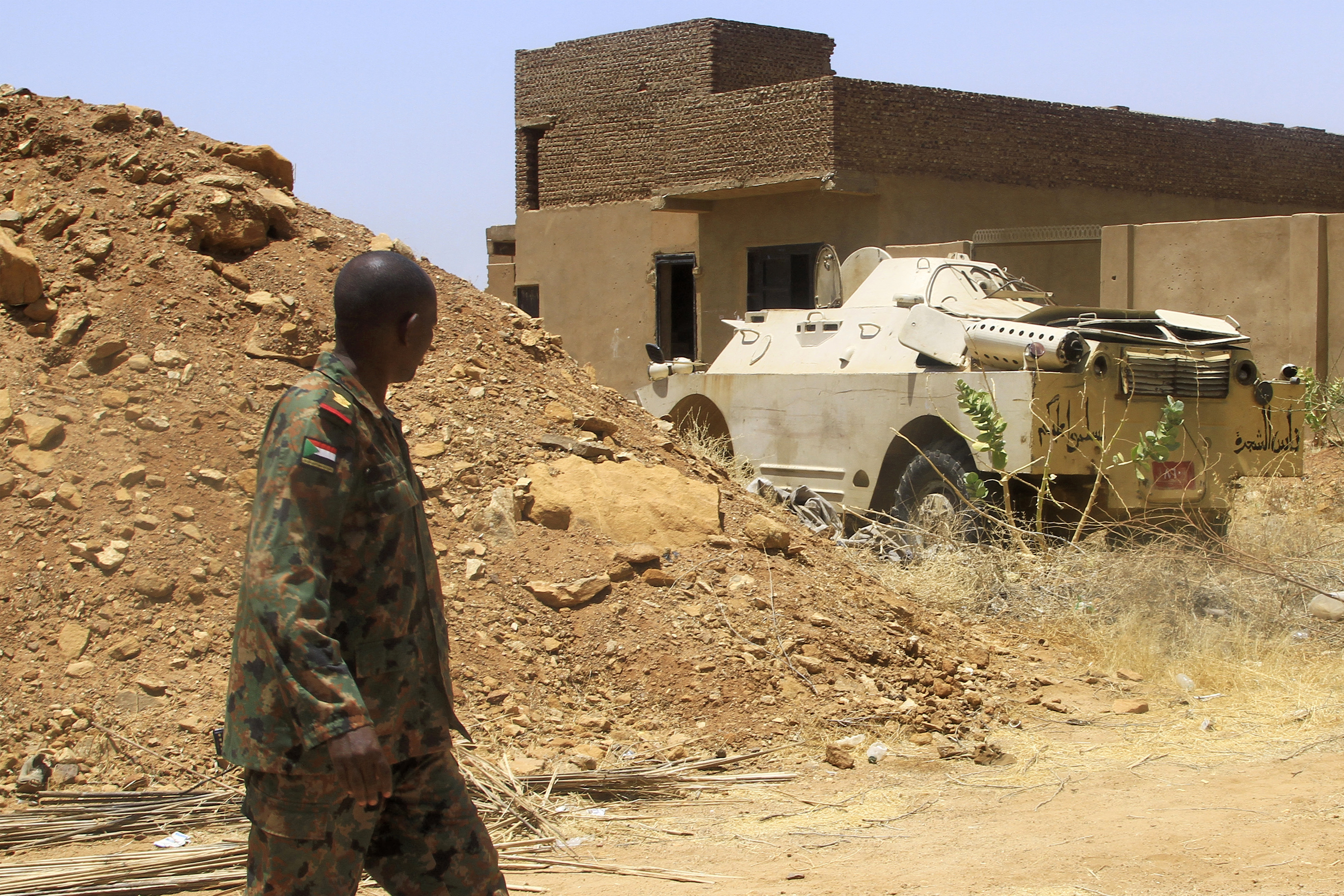
Sudan’s military says it has broken a nearly two-year siege by the paramilitary Rapid Support Forces (RSF) on a key town in the Kordofan region, gaining control over major supply lines.
In a statement late on Monday, the military said it had opened a road leading to South Kordofan province’s Dilling town.
Recommended Stories
list of 4 items- list 1 of 4Sudan’s army renewing military effort to retake Kordofan, Darfur from RSF
- list 2 of 4Sudan’s people endure ‘horror and hell’ in war, says UN rights chief
- list 3 of 4Sudan’s women break ‘traditional rules’ to survive
- list 4 of 4Sudan: A truce of separation
“Our forces inflicted heavy losses on the enemy, both personal and equipment,” the statement said.
There was no immediate comment from the RSF, which has been at war with the army for control of Sudan for nearly three years.
Dilling lies halfway between Kadugli – the besieged state capital – and el-Obeid, the capital of neighbouring North Kordofan province, which the RSF has sought to encircle.
Meanwhile, the head of the government-aligned Sudanese Armed Forces (SAF), General Abdel Fattah al-Burhan, met Qatar’s Emir Sheikh Tamim bin Hamad Al Thani in Doha on Tuesday as part of the army’s efforts to find regional support.
Al Jazeera’s Hiba Morgan, reporting from the Sudanese capital Khartoum, said al-Burhan had been visiting countries in the region in recent weeks, including Saudi Arabia, Egypt and Turkiye, “to cement the ties with these countries so that he can focus more on trying to win the battle against the RSF”.
“The fact that he visited Qatar this time round is quite significant because it shows that there are some special ties between the emir of Qatar and al-Burhan’s government. Qatar has supported the Sudanese government by providing humanitarian aid,” she said.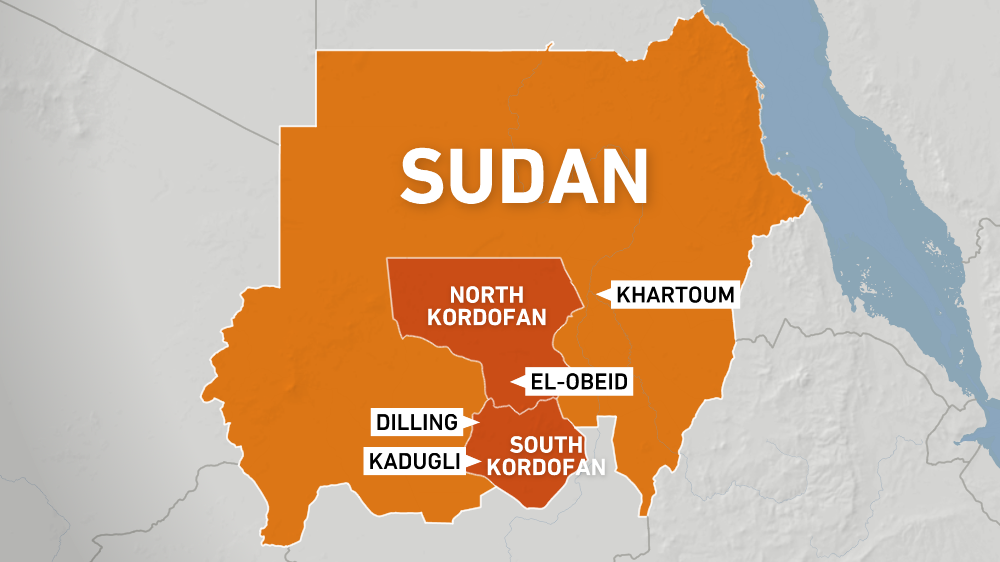
Morgan described the Sudanese army’s takeover of Dilling as a “very significant gain” that may lead to more advances in the province.
“The army is trying to make use of this momentum to take territory not just from the RSF, but also from its ally, the SPLM-N, led by Abdelaziz al-Hilu, which controls territory and has forces in South Kordofan,” she said.
Paramilitary troops were likely to fight back and attempt to retake the lost territory by relocating fighters from el-Obeid and Kadugli, according to Morgan.
Morgan added that the humanitarian situation in Dilling would likely improve as the army will now be able to bring in medical supplies, food and other commercial goods that had been prevented from entering during the RSF’s siege.
![Displaced people ride an animal-drawn cart in the town of Tawila, North Darfur, Sudan [Reuters]](/wp-content/uploads/2025/12/2025-04-18T180041Z_49408371_RC27YDA5JBQY_RTRMADP_3_SUDAN-POLITICS-ZAMZAM-1766571843.jpg?w=770&resize=770%2C513&quality=80)
After being forced out of Khartoum in March, the RSF has focused on Kordofan and the city of el-Fasher, which was the military’s last stronghold in the sprawling Darfur region until the RSF seized it in October.
Reports of mass killings, rape, abductions and looting emerged after el-Fasher’s paramilitary takeover, and the International Criminal Court launched a formal investigation into “war crimes” by both sides.
Dilling has reportedly experienced severe hunger, but the world’s leading authority on food security, the Integrated Food Security Phase Classification, did not declare famine there in its November report because of a lack of data.
A United Nations-backed assessment last year already confirmed famine in Kadugli, which has been under RSF siege for more than a year and a half.
More than 65,000 people have fled the Kordofan region since October, according to the latest UN figures.
The conflict has killed tens of thousands of people and created what the UN describes as the world’s largest displacement and hunger crisis. At its peak, the war had displaced about 14 million people, both internally and across borders.
