US protesters hold nationwide strike against Trump’s immigration policies
Protesters call for ‘no work, no school, no shopping’ in response to Trump’s deadly immigration enforcement crackdown.
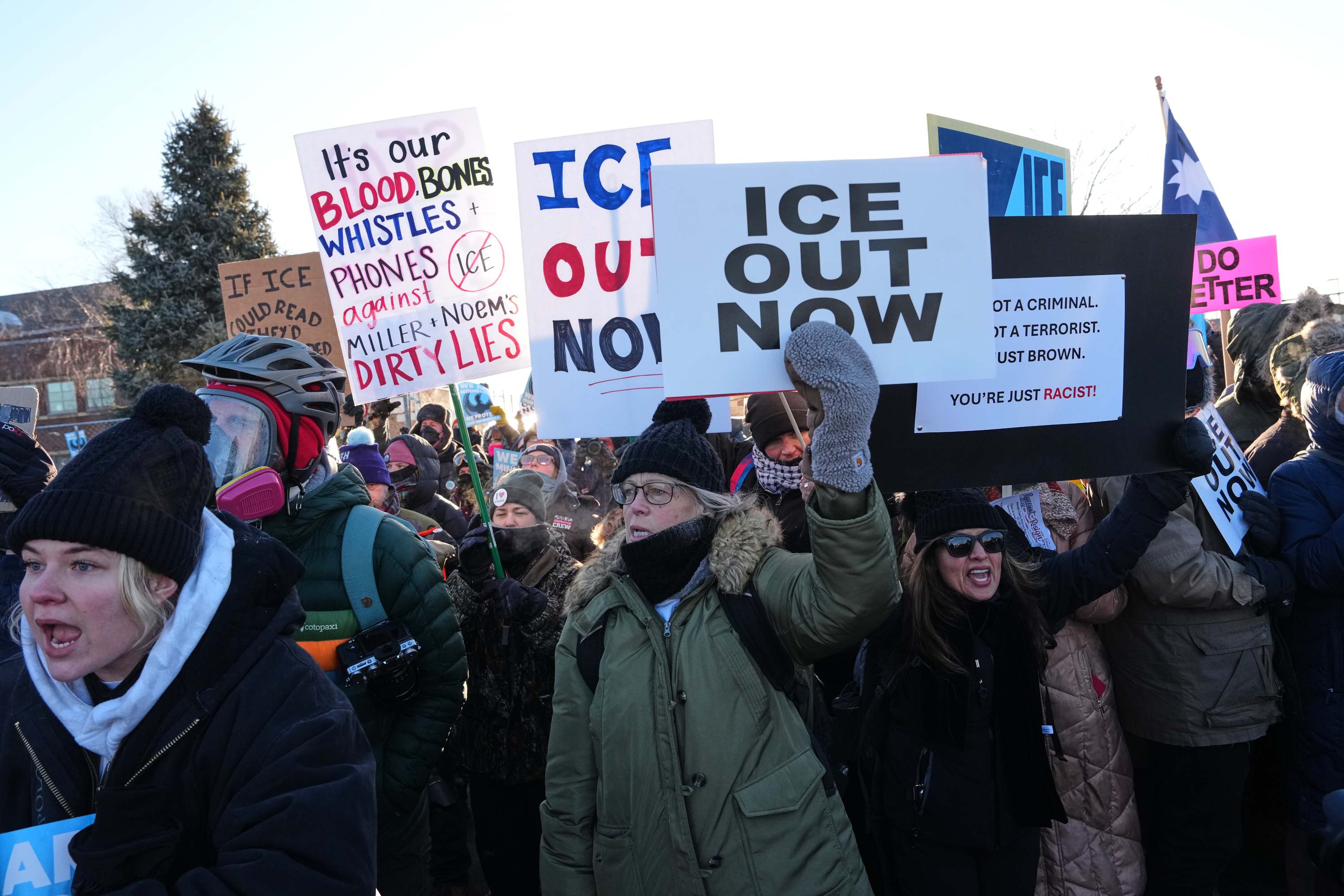

Protesters across the United States have held “no work, no school, no shopping” strikes to oppose President Donald Trump’s immigration crackdown.
The demonstrations took place on Friday amid widespread outrage over the killing Alex Pretti, an intensive care nurse who was shot multiple times after he used his cellphone to record Border Patrol officers conducting an immigration enforcement operation in Minneapolis.
Recommended Stories
list of 3 items- list 1 of 3Minnesota judge orders ICE chief to appear in court
- list 2 of 3Somalis in Minnesota
- list 3 of 3Trump border security chief Homan doubles down on Minnesota operations
The death heightened scrutiny over the administration’s tactics after the January 7 death of Renee Good, who was fatally shot behind the wheel of her vehicle by an Immigration and Customs Enforcement (ICE) officer.
The nationwide strike, which followed a strike in Minnesota state last week, came as the US Department of Justice announced it would open a civil rights probe into the killing of 37-year-old Pretti. However, it has still not moved to investigate possible rights violations in the fatal shooting of Good, also 37.
United States Representative Ilhan Omar, who represents Minneapolis, was among the elected officials promoting Friday’s strike.
“Solidarity with every single person participating in today’s general strike against ICE’s terror campaign,” Omar wrote on X. “You’re changing the world,” she said.
Meanwhile, the White House on Friday said the demonstrators were “paid insurrectionists” and “paid troublemakers”, citing the “professionally made” signs they were carrying as evidence.
Al Jazeera correpondent Manuel Rapalo attended one of the demonstrations in Minneapolis, where Pretti was killed, which he said was one of the largest the city had seen since the killings.
“There is anger about the immigration raids, despite these promises from federal officials that there will be a drawdown of federal agents,” Rapalo said, adding that the demonstrators said they would continue until the immigration agents withdrew from the city.
Civil rights probe
The killings of Good and Pretti followed the Trump administration’s surge of immigration agents to Minnesota to specifically target alleged fraud in the Somali American community.
The deployment came amid a wider deportation drive that observers say has seen immigration agents use dragnet techniques to reach dramatically increased detention quotas.
Earlier this week, border security chief Tom Homan, officially dubbed the “border tsar” by the White House, pledged that enforcement operations would continue in the state, but said increased cooperation with local officials could lead to a “drawdown”.
On Friday, Deputy Attorney General Todd Blanche confirmed that the agency was conducting a civil rights investigation into Pretti’s killing, saying, “We’re looking at everything that would shed light on what happened that day and in the days and weeks leading up to what happened.”
Blanche did not give details as to why the department was not also opening a civil rights probe into Good’s killing, saying only that the division does not get involved in every law enforcement shooting and that there have to be circumstances that “warrant an investigation”.
Trump officials had immediately labelled Good a “domestic terrorist” who was trying to run over an ICE agent when she was fatally shot. Video of analyses of the killing indicated that Good was trying to drive away from the officer when she was killed.
Federal authorities have barred local and state authorities from conducting their own independent investigations into the killings.
‘Dissent is democratic’
Earlier on Friday, protesters also gathered at Howard University in Washington, DC, in a planned march to the White House.
“I think that it just goes to show how many people are against this, and how this is jeopardising our country,” one student told Al Jazeera. “I think us all coming together and speaking out against this shows our government that we are not OK with this, and we won’t let it slide.”
Arizona and Colorado, meanwhile, were among the states where schools were cancelled in anticipation of mass absences. Dozens of students walked out of morning classes at Groves High School in Birmingham, Michigan.
“We’re here to protest ICE and what they’re doing all over the country, especially in Minnesota,” Logan Albritton, a 17-year-old high school senior, told The Associated Press news agency. “It’s not right to treat our neighbours and our fellow Americans this way.”
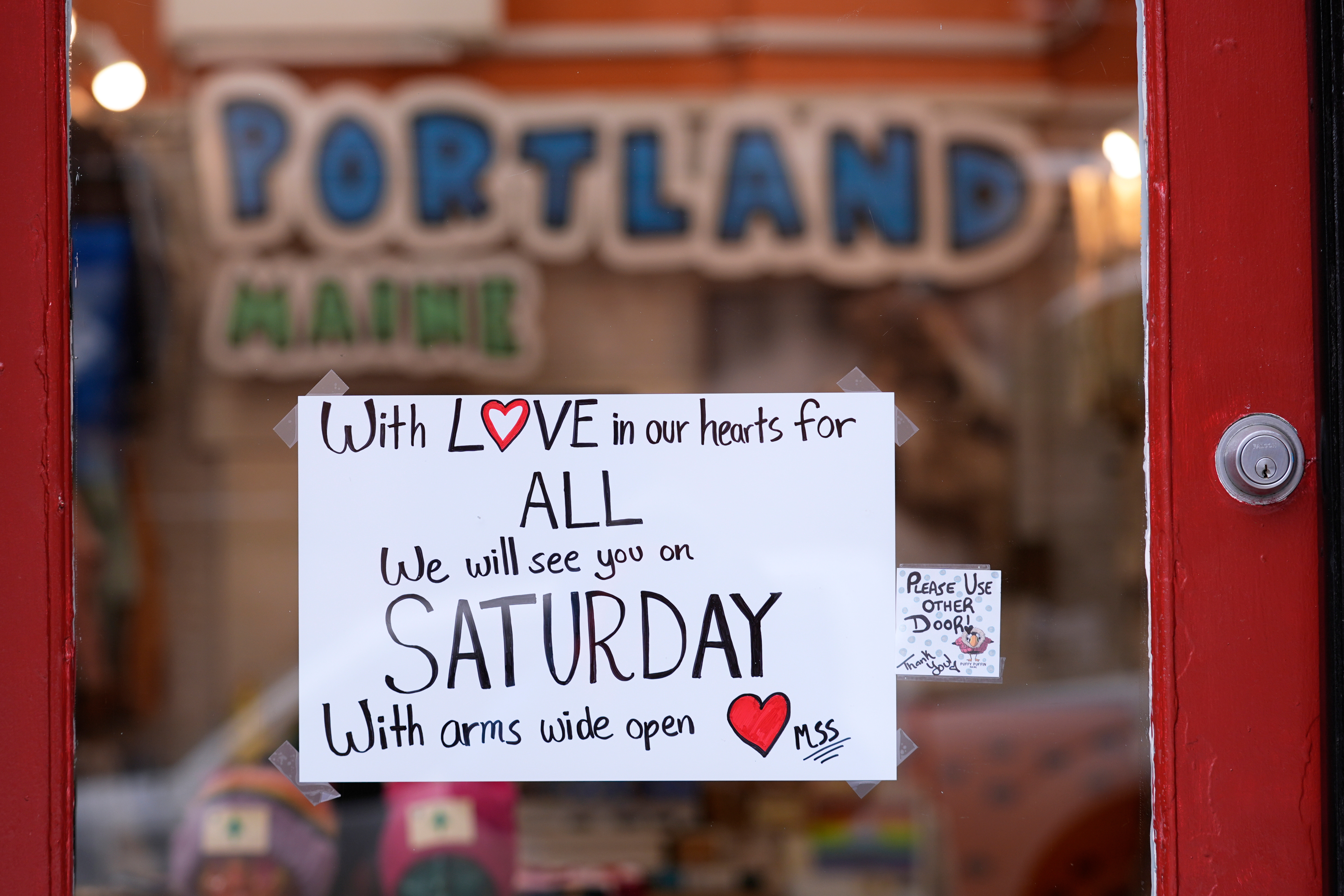
Protests were also held in other cities like Atlanta, Georgia, and Portland, Oregon, where the mayor, Mark Dion, urged people to show their discontent.
“Dissent is Democratic. Dissent is American. It’s the cornerstone of our democracy,” Dion said.
Some businesses, reeling from a recent snowstorm that hit the eastern US last week, found other ways to show their objection to the administration’s actions.
In a post on social media, Otway Bakery in New York said it would remain open and donate half of its proceeds to the New York Immigration Coalition, a local nonprofit.
In a post on X, New York City Mayor Zohran Mamdani called the strike a “direct challenge to ICE’s brutality”. “Your courage is inspiring the world. The power is with the people. Solidarity with everyone striking,” he said.
Speaking to Al Jazeera, Duchess Harris, a professor of American studies at Macalester College in St Paul, Minnesota, said public pressure can change the administration’s approach, even as other avenues fail.
She pointed to the Justice Department’s move to open an investigation into Pretti’s killing as evidence.
“I think that history teaches us that these moments can either deepen division or become turning points toward reform, and sometimes the division comes before the reform,” Harris said.
“I think that if you study the history of the United States of America … we’ve only made the gains that we’ve made through resistance,” she said.
