US, Iran signal talks to avert military conflict amid tensions in the Gulf
Trump says Iran is ‘seriously talking to us’ as Tehran indicates progress on a framework for negotiations.
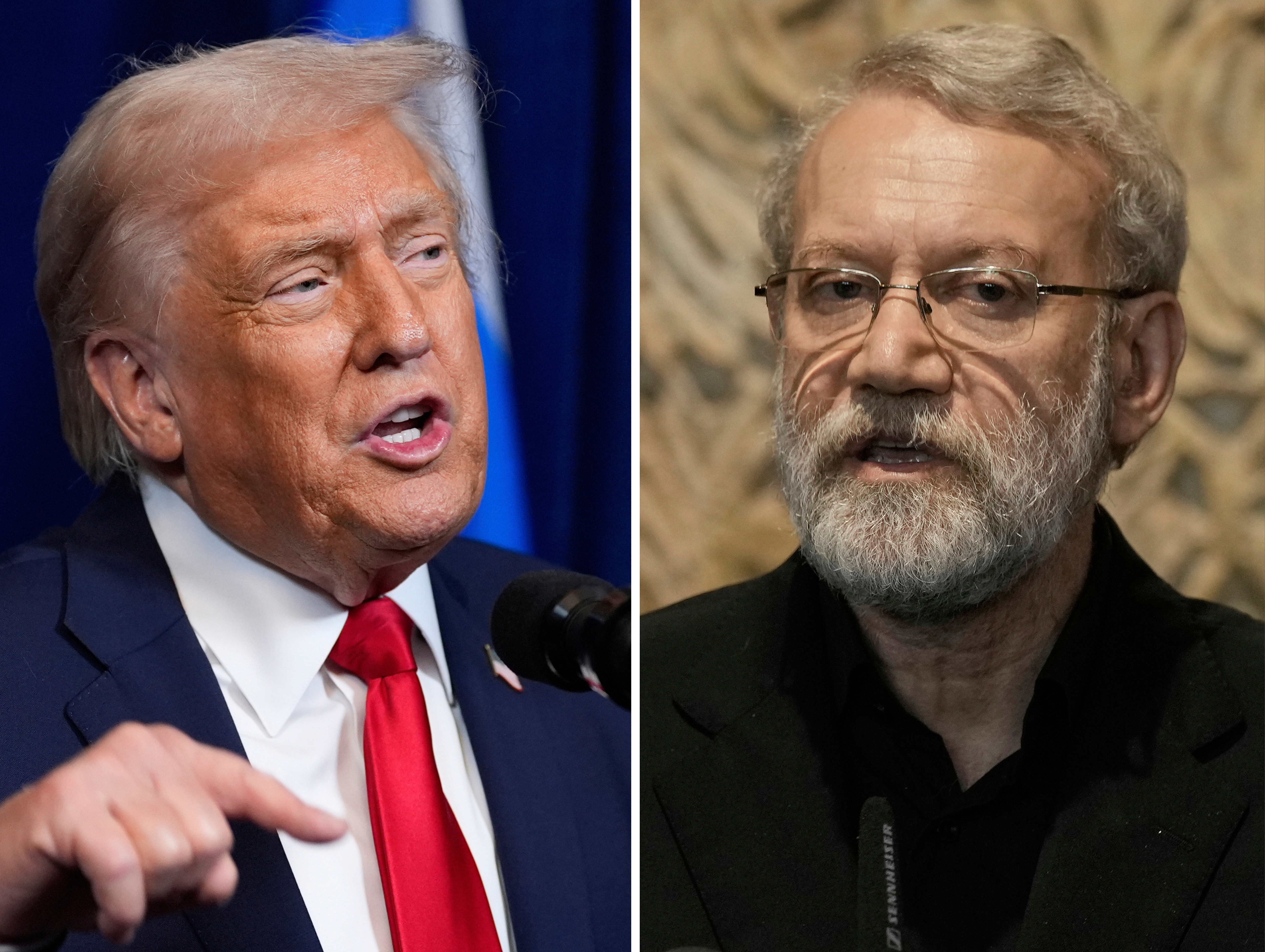
Trump says Iran and US are talking to avert military escalation
Iran and the United States have confirmed opening lines of communication to work out a deal and avoid military action as tensions rise in the Gulf and regional powers ramp up diplomacy to prevent conflict.
US President Donald Trump told reporters on Saturday that Iran was “seriously talking” with Washington, hours after Iran’s top national security official said arrangements for negotiations were progressing.
Recommended Stories
list of 3 items- list 1 of 3Iran’s president says Trump, Netanyahu, EU stirred tensions during protests
- list 2 of 3Deadly blast in Iran’s Bandar Abbas caused by gas leak, official says
- list 3 of 3Iran says ready for ‘fair’ talks with US but not ‘under shadow of threats’
Trump, speaking on board Air Force One, said he believed Iran should agree to a deal with “no nuclear weapons” but that he did not know if Tehran would sign up to such an accord.
“But they are talking to us,” he said. “Seriously talking to us.”
He also referred to the US “armada” heading towards Iran, led by the USS Abraham Lincoln aircraft carrier, saying “we do have very big, powerful ships heading in that direction”.
“I hope they negotiate something that’s acceptable,” he added.
Hours earlier, the head of Iran’s Supreme National Security Council, Ali Larijani, said Tehran was preparing for talks with the US.
“Contrary to the artificially manufactured media war narrative, the formation of a framework for negotiations is progressing,” he wrote on X.
Larijani did not provide further details.
The developments come amid weeks of rising tensions, with Trump repeatedly threatening to attack Iran over a crackdown on recent antigovernment protests, and his push to curtail Iran’s nuclear programme.
Earlier this week, Trump said the US vessels being sent to Iran were ready to use “violence, if necessary”, if Iran refused to sit down for talks on its nuclear programme.
The US Central Command (CENTCOM) also warned Iran’s Islamic Revolutionary Guard Corps (IRGC) on Friday over its plans to hold a two-day naval exercise in the Strait of Hormuz, a Gulf maritime passage critical to global trade.
“Any unsafe and unprofessional behavior near US forces, regional partners or commercial vessels increases risks of collision, escalation, and destabilization,” CENTCOM said in a statement.
Senior Iranian leaders have said they are open to negotiations with Washington, but only once Trump stops threatening to attack the country.
Foreign Minister Abbas Araghchi also hit back on Saturday, saying in a social media post that the US military, operating off Iran’s shores, “is now attempting to dictate how our Powerful Armed Forces should conduct target practice on their own turf”.
“CENTCOM is also requesting ‘professionalism’ from a national military the U.S. Government has listed as a ‘terrorist organization’, all while recognizing the right of that same ‘terrorist organization’ to conduct military drills!” Araghchi wrote.
The US designated the IRGC, an elite branch of the Iranian military, as a “terrorist” organisation in 2019, during Trump’s first term in office.
Araghchi added, “The presence of outside forces in our region has always caused the exact opposite of what is declared: promoting escalation instead of de-escalation.”
Al Jazeera’s Tohid Asadi, reporting from the Iranian capital, said the situation remains “quite fragile and delicate”.
Still, he said, Larijani’s statement on Saturday about progress being made on efforts to hold negotiations was a “positive” sign.
“Diplomatic [efforts] are [on]going,” Asadi said, noting that senior Iranian officials have held talks with allies in recent days amid a push to prevent a confrontation between Washington and Tehran.
Meanwhile, the Qatari Ministry of Foreign Affairs said Prime Minister Sheikh Mohammed bin Abdulrahman bin Jassim Al Thani met Larijani in Tehran on Saturday to discuss “efforts to de-escalate tensions in the region”.
Sheikh Mohammed reiterated Qatar’s “support for all efforts aimed at reducing tensions and achieving peaceful solutions that enhance security and stability in the region”, the ministry said of the talks in a statement.
“He also stressed the need for concerted efforts to spare the peoples of the region the consequences of escalation and to continue coordination with brotherly and friendly countries to address differences through diplomatic means,” the statement added.
Turkiye, the United Arab Emirates, and Saudi Arabia have also been engaging in diplomatic efforts to prevent a military confrontation between Washington and Tehran.
Turkiye, which is a member of NATO, shares a border with Iran and opposes any foreign intervention there. It has called for US-Iran dialogue to avoid further destabilisation and has been in touch with both sides to seek a solution.
Saudi Crown Prince Mohammed bin Salman also told Iranian President Masoud Pezeshkian on Tuesday that Riyadh would not allow its airspace or territory to be used for military actions against Tehran, according to the SPA state news agency.
