'Act fast and break things'
How speed defined the first year of Donald Trump’s second term
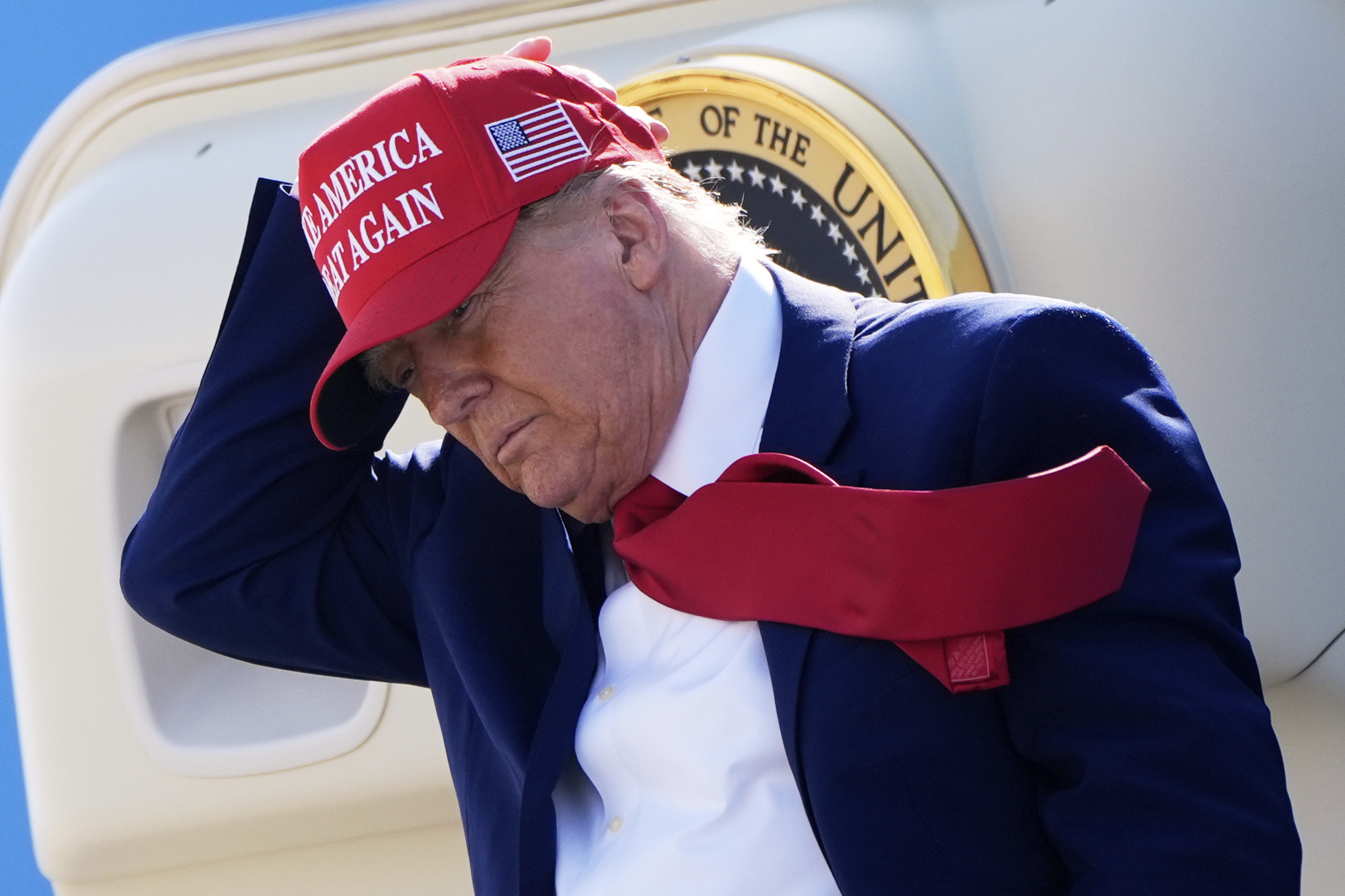

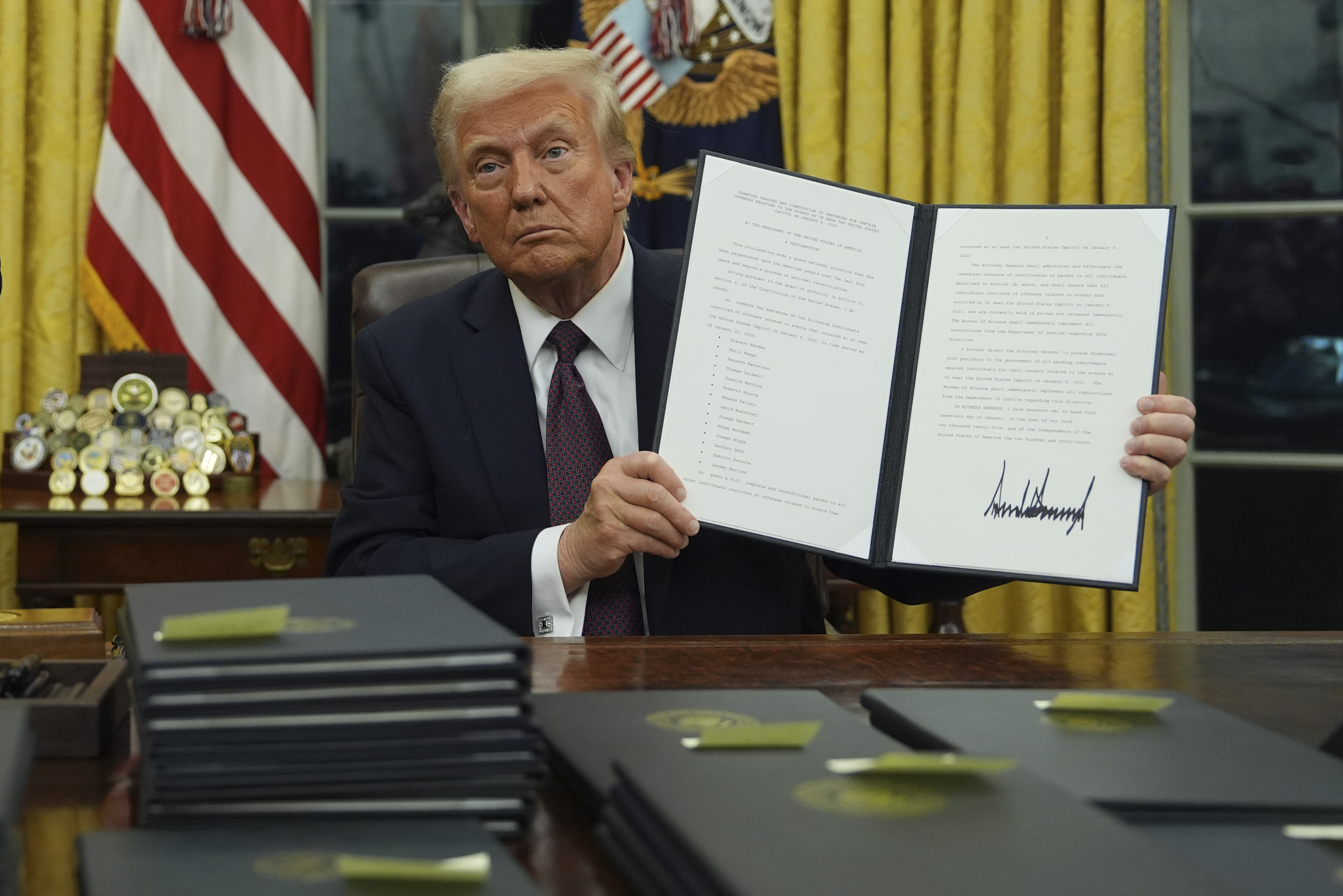
More than 225 executive orders. At least 1,740 acts of clemency. And deadly military strikes in at least seven foreign countries, plus 35 more in international waters.
Few presidents in United States history have tallied as many dramatic changes as Donald Trump has in the first year of his second term.
But historians warn the whirlwind pace of the past year has tested the bounds of democracy, plunging the US into an unprecedented period of presidential might.
Disrupting the status quo in the federal government appears to be the aim, according to Russell Riley, a professor at the University of Virginia’s Miller Center.
He explained that Trump’s tenure could even be seen as “one of the least conservative presidencies in American history”, when judged by the speed and scope of its upheavals.
“‘Act fast and break things’ seems to be the strategy, which is appealing to those who consider their political inheritance completely ineffective or corrupt,” Riley said.
“This is the modern-day equivalent of the famous Vietnam War dictum: Destroy the village in order to save it.”
Still, the rat-a-tat tempo of Trump’s second term was not without warning.
As far back as 2018, Trump adviser Steve Bannon outlined a strategy that involved overwhelming the public — and the news media in particular — with a maelstrom of activity.
“The real opposition is the media,” Bannon told interviewer Michael Lewis. “And the way to deal with them is to flood the zone with sh**.”
The pacing, he later indicated, should be akin to muzzle velocity: the speed at which bullets leave a gun barrel.
While journalists are distracted with one news item, “we’ll get all our stuff done, bang, bang, bang”, Bannon told the investigative show Frontline.
Executing that strategy arguably became easier thanks to the gap between Trump’s first and second terms.
No other president in US history, except Grover Cleveland in the 19th century, has been elected non-consecutively. And Trump’s allies used his four years out of office to construct policy documents like Project 2025, a 920-page blueprint for his second term.
Still, it is not unusual for presidents to begin new terms with a flurry of action.
Presidential historian Mark Updegrove points to the first election of Franklin Delano Roosevelt in 1932 as ushering in another period of fast-paced federal change.
“America, for the first time, was creating a robust federal government to alleviate the plight of our citizens around the ravages of the Great Depression,” Updegrove explained.
Roosevelt, he added, was aided by a “very compliant legislative branch” that allowed him to swiftly enact his agenda, which included financial reforms, large-scale public works and the creation of new government commissions.
“Because Americans were suffering, I think they were rubber-stamping a lot of these policies and getting them signed into law as soon as possible,” Updegrove said.
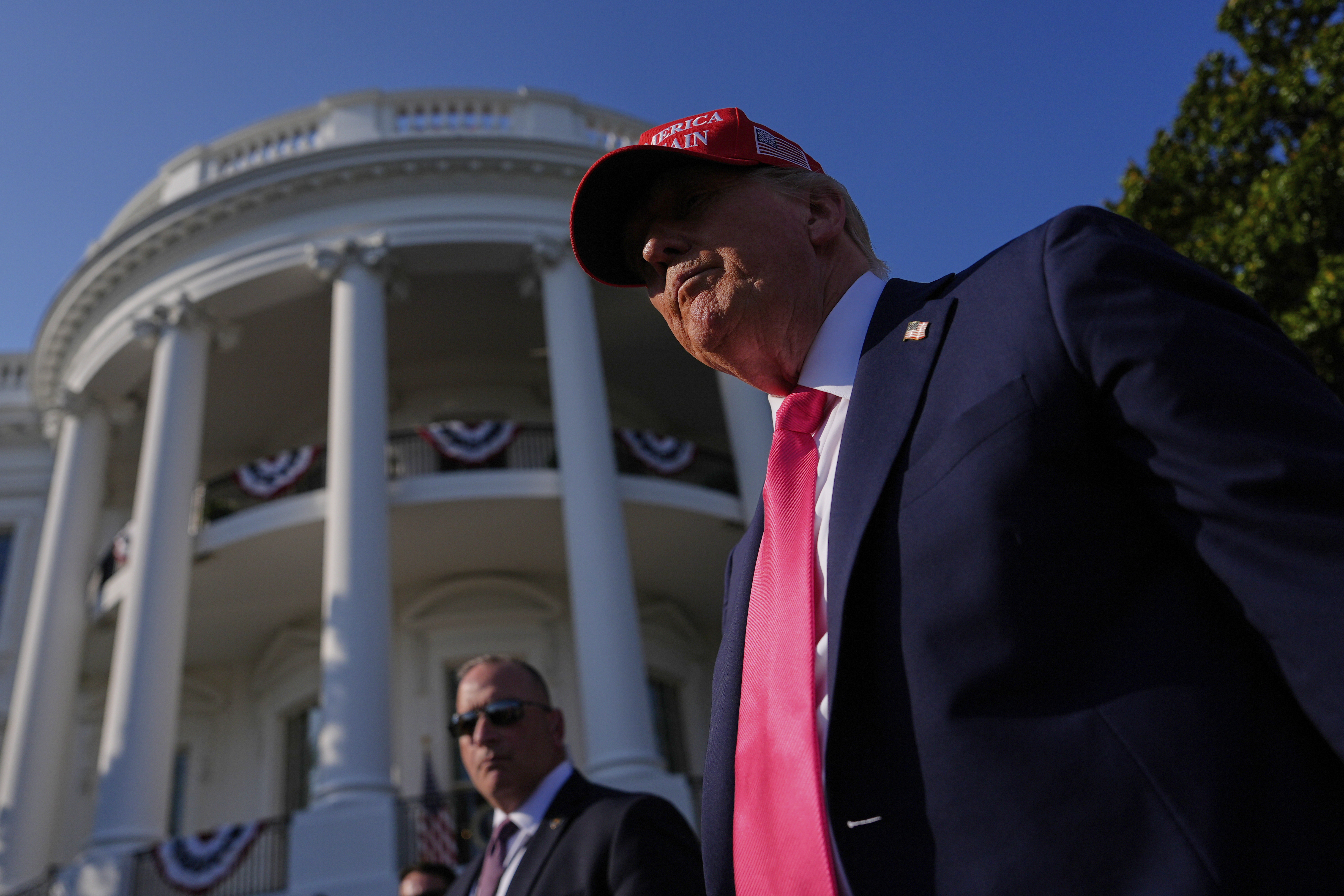
But Updegrove considers the present-day circumstances to be “profoundly different” from Roosevelt’s time. For starters, he said, “The change is far more radical.”
“I think any comparisons you might draw to previous presidents are false, in a sense, because they don't even remotely approach the same scale on which Trump is doing these things,” Updegrove explained.
“That’s the difference. You can call them apples and oranges, but that's not the right analogy. It's more watermelons and raisins. They're minor compared to what we see from Donald Trump.”
One of the departures from presidential precedent is Trump’s heavy reliance on executive orders.
Trump has signed no fewer than 228 since taking his second oath of office on January 20, 2025. Not since 1942, during World War II, have so many executive orders been signed in a single year.
“It's hard to keep track of everything that's going on and the ramifications, given the sheer volume of activity,” Updegrove said. “And this has been a very conscious strategy.”
The number of executive orders over the past year even outstrips the total number from all four years of Trump’s first term.
Back then, he only issued 220 executive orders overall. But from the very first hours of term two, Trump adopted a different stride: He signed a record 26 orders in a single day.
Updegrove believes that Trump’s new approach is partly a distillation of his past as a businessman, leading the real-estate empire he inherited from his father.
As the sole owner of the Trump Organization, a private company, Trump does not have to answer to shareholders or a board of directors for his business decisions.
Nor is he bound by the corporate governance rules designed to prevent self-dealing in publicly traded companies.
“He was able to do things without consulting other people,” Updegrove explained. “He didn't have the things that would even slow down a corporate executive.”
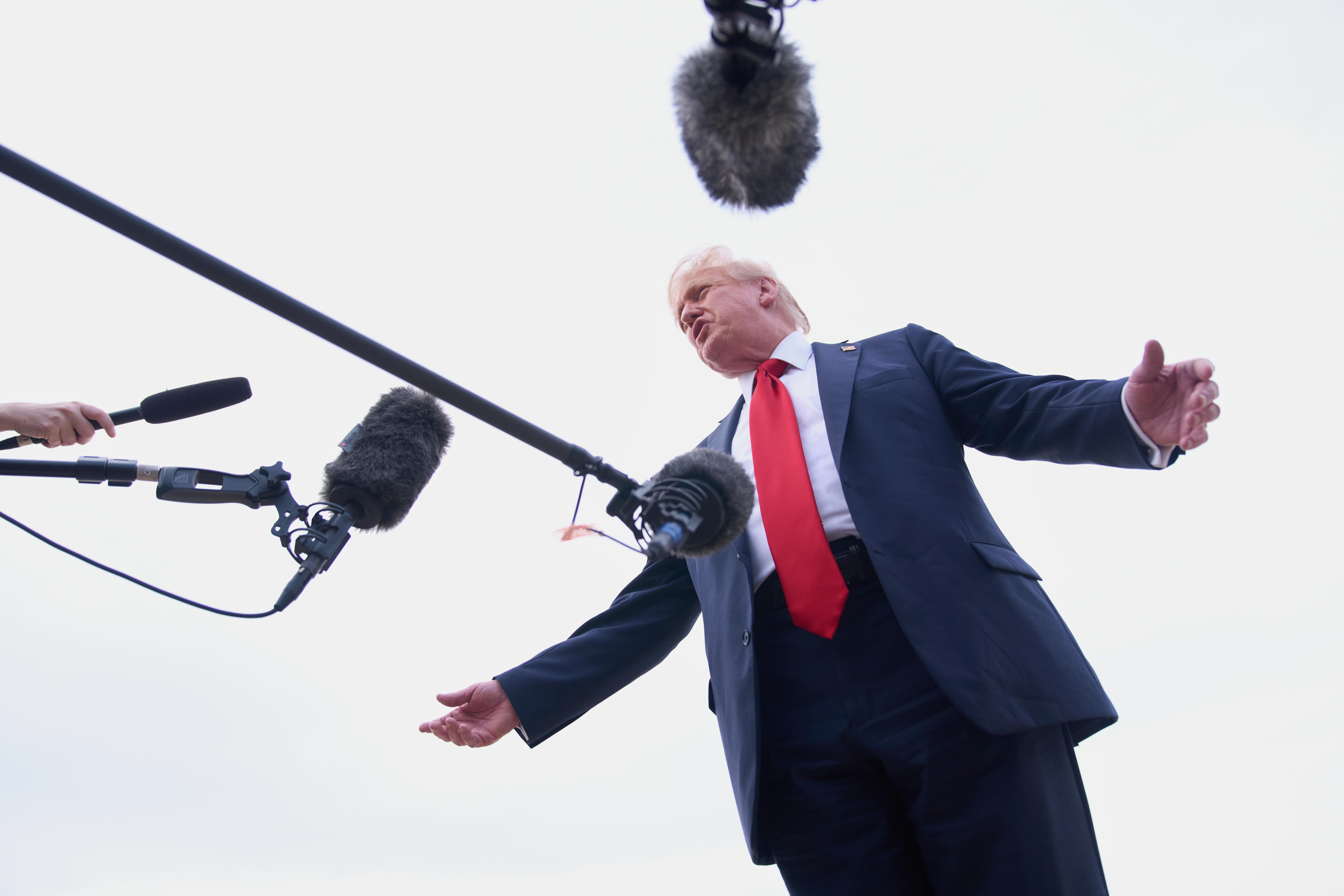
But Trump’s preference for unilateral action may not be healthy for US democracy, Updegrove warned.
The US government has long operated on a system of checks and balances, which limits executive power and forces the president to negotiate with other branches of government, most notably Congress.
Passing legislation, however, is often a slow process, and Trump has expressed frustration at having to call legislators to secure votes.
“Trump has relied more on EOs [executive orders] than going through the legislative process in Congress because he can make an EO happen with the stroke of a pen,” Updegrove said.
“He is not as interested in the legislative process, which is long and messy and requires patience, compromise, consensus and civility. He just wants to do things.”
That desire to act without restraint, Updegrove added, has fuelled accusations that Trump has an authoritarian bent.
But experts say Trump has gotten little resistance from the branches of government that would ordinarily serve as a bulwark against executive overreach.
The Supreme Court, for instance, has a six-to-three conservative majority, with three of its justices appointed by Trump himself. And both chambers of Congress are currently held by slim Republican majorities.
Having a “compliant court and a compliant Congress” has allowed Trump to push the limits of executive power beyond its established norms, according to Riley.
“Political norms are only constraints to these actions so long as there are hard legal barriers enforcing them,” Riley explained. “And those legal barriers are constraints only so far as the courts or the Congress are willing to impose them.”
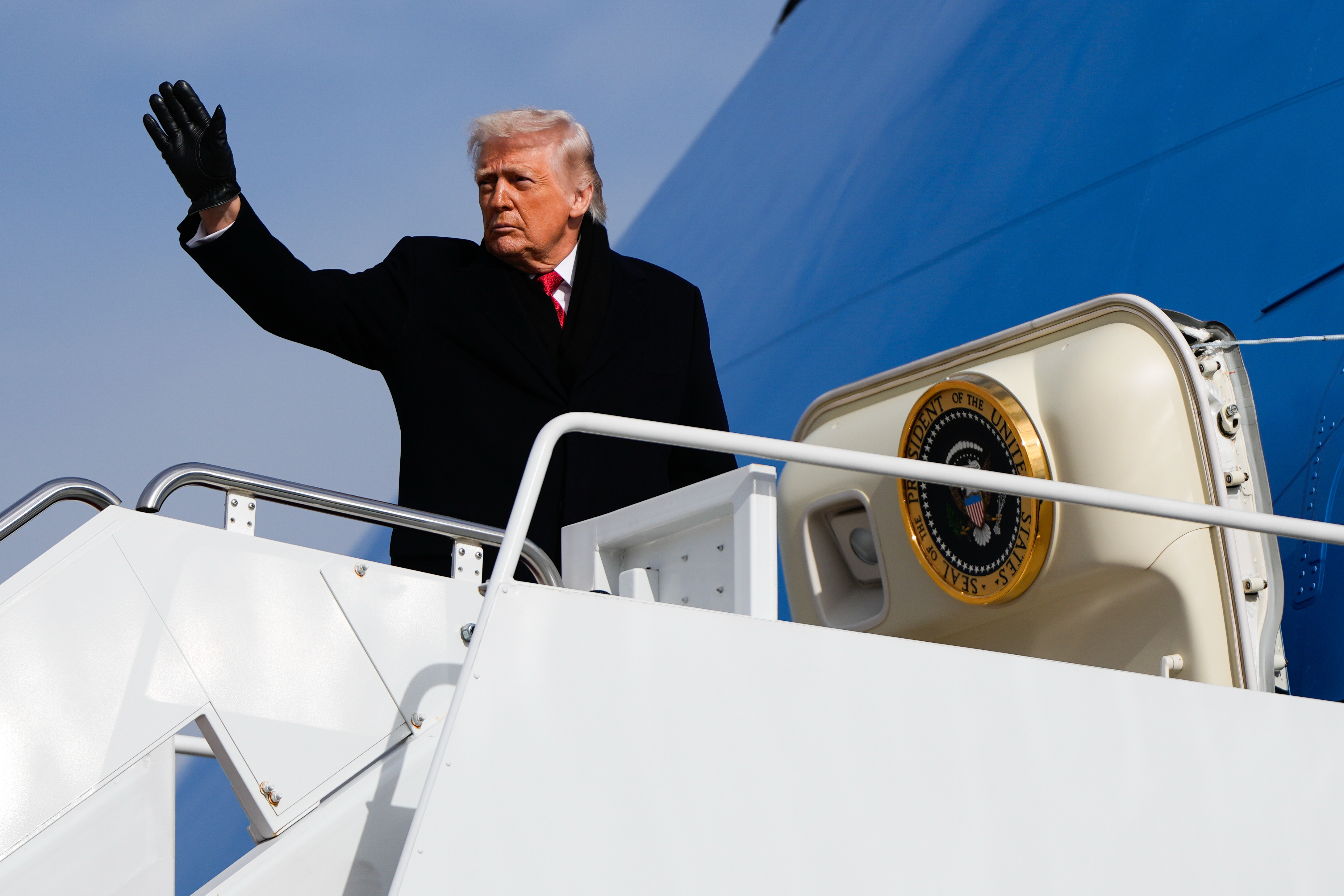

But not all of Trump’s changes are necessarily built to last. Already, Trump is bracing for this year’s midterm elections, which could result in one or both chambers of Congress switching party control.
“If we don’t win the midterms, I mean, they’ll find a reason to impeach me,” Trump told a gathering of Republican lawmakers earlier this month.
And while Trump has teased the prospect of running for an unconstitutional third term, the law limits him to only two. That opens the possibility that the presidency could change parties in 2028 as well.
“Assuming a Democratic administration follows the Trump administration, much of Trump's agenda and changes will be undone as quickly as possible,” Updegrove said.
“From executive orders to gold-leaf stencil on the White House walls, a lot of it can be undone.”
But there are downstream effects, the historian warned, that may not become apparent until well after Trump’s presidency. The speed of the change has rendered them somewhat invisible.
“When you think about this muzzle-velocity stuff, there are some things that we don't even realize has happened,” Updegrove said.
He pointed to the loss of institutional knowledge after Trump's widespread layoffs as an example of decisions with as-yet unseen consequences.
“Even the things that we know have gone through, we don't see the full effects and won't for many years.”
And yet, Updegrove speculates that a lack of velocity in one critical area may prove to be the downfall of Trumpism: economic growth.
The consumer prices repeatedly topped polls of voter concerns in the 2024 election, and Trump had promised that, “starting on day one”, he would “end inflation and make America affordable again”.
But Updegrove says average Americans are not seeing the promised turnaround in their pocketbooks.
“If we successfully turn the tide on Trump, I don't know that it will ultimately be driven by our fear of the erosion of our democracy, rather than a dissatisfaction with the pace of economic change,” he said.
“At the end of the day, we might see a revival of democracy due to the price of hamburger meat.”
