Starmer’s visit to China was not a reset, but a new way forward
The UK prime minister’s trip to Beijing reflects the realities of a new global order that has upended traditional alliances.

Diplomacy, much of the time, is about symbols rather than substance. And in the case of China, that can be particularly true.
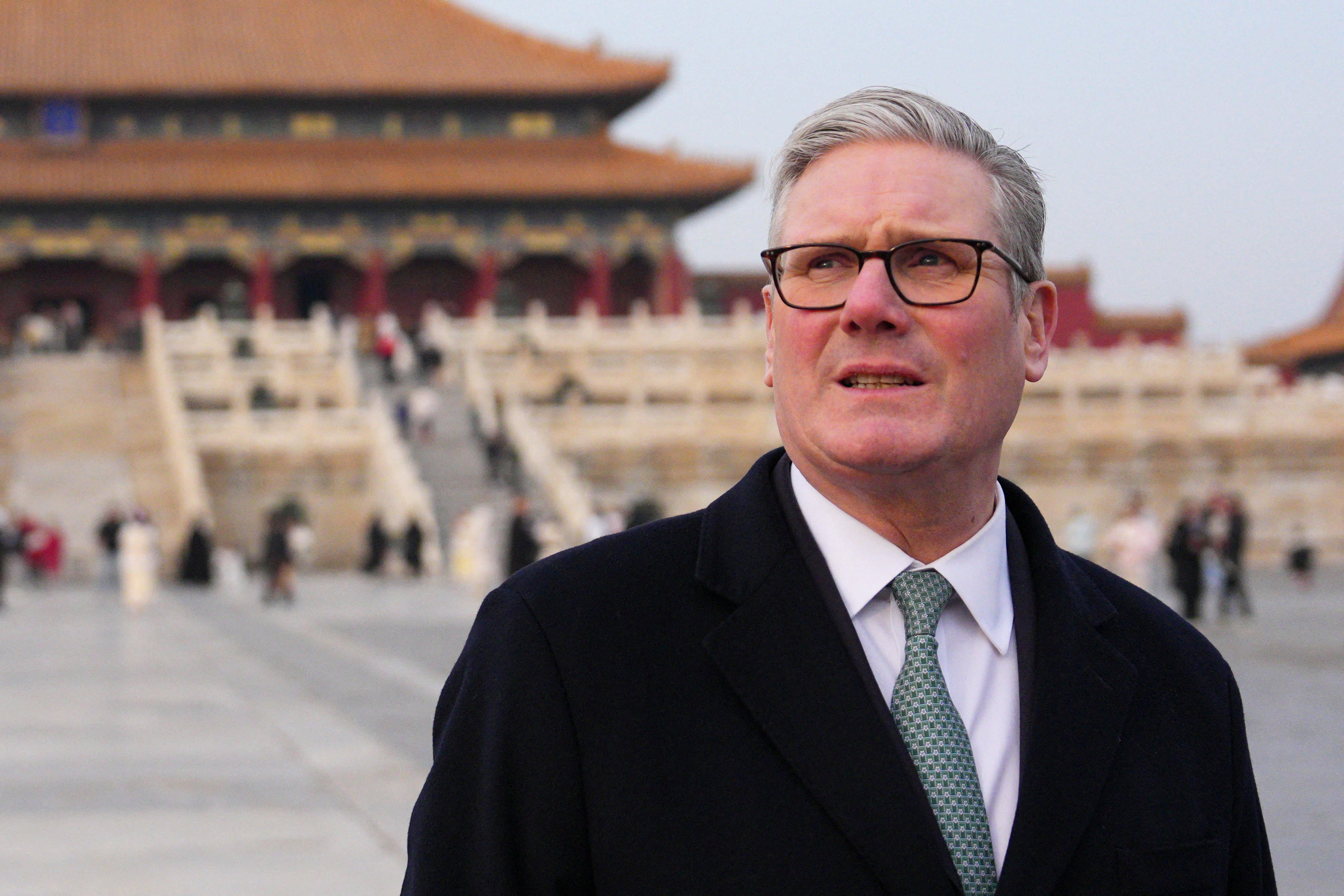
In this sense, what was important about British Prime Minister Keir Starmer’s visit to China at the end of January was that it happened at all. In recent years, there have been plenty of tensions between the two countries: the accusations against two British citizens of spying for China, the delay in the approval for the new Chinese embassy in London, the trial against democracy activist Jimmy Lai, etc.
The fact that Starmer made the trip to Beijing – the first one for a British prime minister in eight years – indicated that the arguments in favour of doing it outweighed the negatives of it. What certainly tipped the balance was the increased intensity with which the US administration is now turning on its traditional allies.
The visit did not reset relations, but it revealed that the world has entered a new era of global power dynamics, which is already reflected in diplomacy.
On January 23, just a week before his trip to China, Starmer summoned up a rare display of public anger, condemning US President Donald Trump’s remarks about British troops in Afghanistan.
This made the visit to Beijing very different from those of previous British prime ministers. In the past, there had never been a question about the alignment between the United Kingdom and the United States.
The US and the UK were close allies for decades. They acted in close coordination on the wars in the Middle East since 2001, and on combatting global terrorism and other threats. They shared intelligence through the Five Eyes arrangement and worked together as permanent members of the United Nations Security Council.
On China, moments of disagreement were brief. In 2004, the UK and its European partners attempted to lift the arms embargo imposed by them and the US on China after the 1989 Tiananmen Square massacre, on the grounds that all the equipment they forbade was restricted perfectly well by other legislation. The then Bush administration strongly opposed this, and the idea was dropped.
More than a decade later, during the first Trump administration, it looked like Europe might seek to forge its own trade deal with China to compensate for steel and other tariffs placed on it by the US. But in 2018, that receded too as the European Union ironed out a deal with Washington. Part of that was not to grow closer to the Chinese in terms of trade.
The pandemic pushed the US and Europe further towards aligning with each other against China, which they regarded as partially creating the problem by not announcing the appearance of the virus soon enough. By 2023, therefore, the UK and the US were almost vying with each other to be more hawkish, with then-Deputy Prime Minister Oliver Dowden declaring that the People’s Republic was Britain’s greatest “state-based threat”.
We are no longer in that world. Washington’s actions are raising fundamental questions about the alliance system around NATO and other security arrangements that it has sat at the heart of since the end of World War II.
We do not yet know the shape of the world we are heading into. It might take years for it to fully emerge. But for Starmer on his visit to Beijing, this shift meant he was talking to an interlocutor who is also trying to work out what the new situation means.
President Xi Jinping is not a security ally of the UK, but in the strange, topsy-turvy world we now inhabit, his administration is probably closer to the UK in terms of working out what to do about global warming or how to manage the risks of artificial intelligence (AI).
Both countries do not like the unpredictability of the current situation. They are all linked by having a problem with the US now, even if it is a different kind of problem.
This, of course, does not mean that a new kind of strategic alliance is in the making; there were no signs of that in the meeting. After all, culturally, politically and in terms of values, the UK and China disagree with each other too much for that to happen. This is regardless of Britain’s links with the US.
But that Starmer was able to announce restrictions on small engines that end up used in the boats bringing immigrants illegally across the seas around the UK was a telling sign of how, even in a deglobalising world, everything still connects, and that in a modest and indirect way, Britain needs to talk to China to address some aspects of what it sees as its own security priorities.
There were other announcements as well: the $15bn investment by British pharmaceutical company AstraZeneca, the 30-day visa-free access to China for British citizens and the lifting of sanctions against some UK Parliament members.
The groundwork was also laid for deeper economic engagement, with some steps being taken to improve trade and facilitate UK business access to the Chinese market.
Longer term, this visit could also pave the way for engagement that recognises the rise of China as a technology power. In environmental science, AI, quantum computing – indeed, in almost every area – China is outpacing not just the UK, but almost everyone else. It is producing ideas and innovations in medicine, renewable energy, etc which matter to the UK for its own good.
A single four-day visit did not reset the relationship. There are still many issues between the two countries. But at least it has allowed the possibility – now that the political blockages have been cleared – to work out strategically how the UK and others in Europe navigate the new geopolitics where there are no eternal friends or enemies, and how they react to a world where, for the first time in recent history, China has innovations, technologies and ideas that they might need and want.
The views expressed in this article are the author’s own and do not necessarily reflect Al Jazeera’s editorial policy.
