Mojtaba Khamenei’s rumoured injury or death won’t change Iran’s trajectory
His father, Ali Khamenei, built the office of the supreme leader into an institution that does not depend on a single leader.
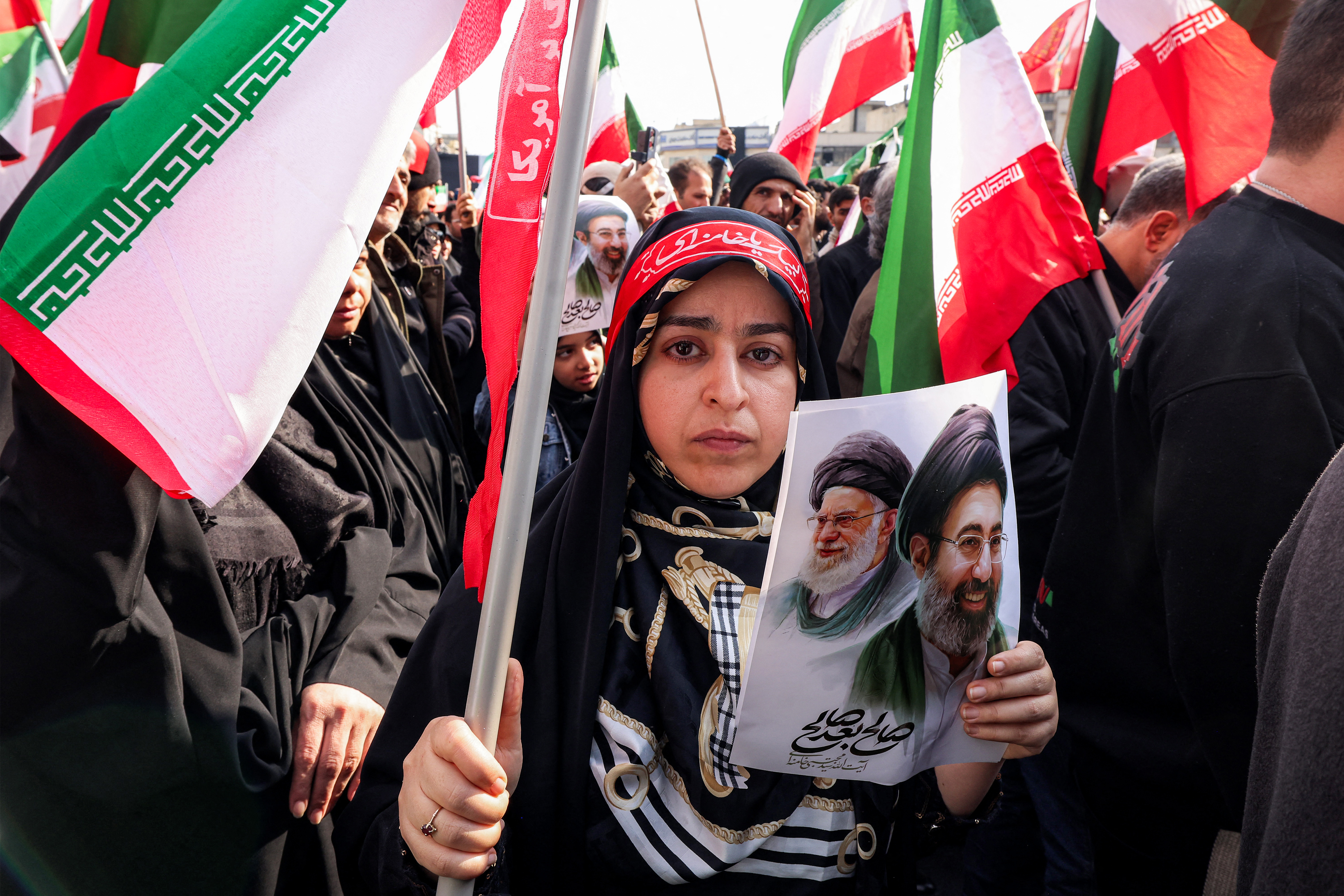
When Mojtaba Khamenei’s elevation as Iran’s new supreme leader was announced, many observers treated it chiefly as a confirmation of a new hardliner order in Tehran. Subsequent rumours about his injury or even death, sparked by his disappearance from public view, have fuelled speculations of what that may mean for the Iranian regime.
What many analyses fail to register is that the power consolidation under way in Iran is structural rather than personal. What the war has reinforced is a broader regime of securitised rule whose logic exceeds any one successor. This process will continue with or without Mojtaba Khamenei at the helm.
Economic restructuring
To grasp the ongoing transformation in Iran, one has to move beyond succession intrigue and return to political economy. After the end of the war with Iraq in 1989, Iran went through a protracted phase of “market-oriented restructuring”. Under the banners of privatisation and economic development, the state did not simply retreat; it was reorganised.
Public assets were transferred into the hands of quasi-state conglomerates, parastatal foundations, and politically connected institutions. What emerged was not less statism, but a different configuration of state power: less accountable and more deeply entangled with mechanisms of upward redistribution.
It was on this terrain that what I call the military-bonyad complex took shape. Following the amendment of Article 44 of the 1979 Constitution, which authorised “public and non-governmental entities” to acquire up to 80 percent of shares in major state industries, the years after 2006 saw a large-scale transfer of assets from government ministries to firms affiliated with the Islamic Revolutionary Guard Corps (IRGC) and the religious-revolutionary foundations (bonyads), including the Mostazafan Foundation, Setad, the Astan Quds Razavi Foundation, and the Martyrs’ Foundation.
Security-linked conglomerates were thus among the chief beneficiaries of market-oriented restructuring. By the end of the 2000s, this process had produced a dense bloc linking coercive institutions to parastatal capital: a nexus that came to dominate major sectors of the economy while extending its reach across the unelected core of the state.
Sanctions and consolidation of power
After four rounds of United Nations Security Council sanctions from 2006 to 2010, the United States shifted its strategy to impose sweeping unilateral and extraterritorial measures targeting Iran’s oil exports, financial system, and access to international banking. Sanctions expanded again after US President Donald Trump’s administration withdrew from the nuclear deal with Iran in 2018.
These sanctions did not reverse the transformation in the state; they deepened it. Contrary to the common view of sanctions as instruments for weakening authoritarian states from the outside, their effects in Iran have been far more uneven and perverse.
They inflicted immense damage on the broader economy, while selectively empowering the very actors best positioned to operate through opacity, coercion, and sanctions evasion. As access to formal trade and finance narrowed, shadow networks, protected channels, and security-linked conglomerates and intermediaries acquired greater strategic and economic value.
The result was not simply a weaker state, but a more securitised one. The costs of this order were socialised downward, borne by ordinary Iranians through inflation, unemployment, precarious labour, subsidy retrenchment, rising inequality, and deepening political exclusion.
This is the broader setting in which the uprisings of the past decade must be situated, from the protests of 2017 and 2019 to the Women, Life, Freedom revolt and the January 2026 unrest that preceded the present war.
These mobilisations did not emerge out of nothing, nor can they be reduced to a simple struggle over economic and social freedoms. They were rooted in a compound crisis of livelihood, legitimacy, and representation. They expressed anger not only at repression, but at a political order whose exclusions had become increasingly material as well as juridical: an order that fused neoliberal dispossession and sanctions management with intensifying authoritarian closure.
War and a narrowing political horizon
The uprising that Washington and Tel Aviv called for at the start of the war has not materialised. Instead, Iran’s national police chief, Ahmad-Reza Radan, has declared that the state now views “all our issues” through the prism of war, warning that those who take to the streets will be treated not as protesters but as enemies.
When he added that the security forces had “their fingers on the triggers”, the meaning was unmistakable: this was a direct warning that any domestic dissent would be met with armed force under wartime conditions.
This does not imply that the Islamic Republic was, before the war, somehow more restrained in its treatment of dissent. On the contrary, the regime had long met popular revolt with extraordinary violence. Over the past decade, protests had become more geographically extensive, more socially heterogeneous, and more explicitly anti-systemic. The state’s response had escalated accordingly.
What the war has changed is not the fact of repression, but its political logic and legitimating language. External conflict has given the regime a new framework through which domestic dissent can be criminalised, militarised, and pre-emptively crushed. The distinction between foreign enemy and domestic opponent is being deliberately collapsed.
What is at stake, then, is more than a quantitative increase in coercion. The war has accelerated a shift in the political grammar of rule: towards a martial logic in which society appears primarily as an object of surveillance, discipline, and threat management. War, in this sense, does not simply harden foreign policy. It restructures the domestic field, expanding the authority of those institutions most invested in governing through emergency, securitisation, and force.
Iran with or without Mojtaba Khamenei
This is why the significance of Mojtaba Khamenei’s election as supreme leader lies not in novelty but in the continuation of already established trends. If the rumours of his death prove true, that trajectory is unlikely to change in any fundamental way.
Over the course of his father Ali Khamenei’s rule, the Office of the Supreme Leader was transformed from a relatively modest clerical secretariat into the regime’s central institutional command post, with reach across security, finance, communications, the seminaries, and the wider unelected state.
This was not simply an administrative expansion. It was a political response to an authority deficit. Compared to Iran’s first supreme leader, Ruhollah Khomeini, Ali Khamenei lacked the same level of charisma and clerical standing. He compensated not through personal authority alone, but by building up the office around him.
The result is that the office now matters more than the individual who occupies it. If Mojtaba is gone, his replacement will most likely come from the same clerical-security constellation and remain closely aligned with the military-bonyad complex that now dominates the Islamic Republic’s coercive and economic core.
Even if a new successor initially lacks Mojtaba’s political positioning or Ali Khamenei’s accumulated authority, the structure of the office itself is designed to consolidate power over time. The religious dimension of the system would remain important, but increasingly as a source of legitimacy for an order whose real centre of gravity lies in the security apparatus and the institutions clustered around the supreme leader’s office.
What a post-war Iran is likely to produce, then, is not a system moving beyond supreme leadership, but a more tightly securitised Islamic Republic. In practice, that means a political order that is harder, narrower, and more militarised than before. Rather than opening the way to transformation, war is more likely to deepen the trends already under way: a shrinking political field, greater reliance on coercion, and an even more opaque system of rule.
The views expressed in this article are the author’s own and do not necessarily reflect Al Jazeera’s editorial stance.
