The Parallels of Ancient Cultures
How the early Chinese civilisations and the classical world are being studied to broaden knowledge, come up with answers to the world’s problems and rediscover our common humanity.
In a field in western Greece, history is being made. Archaeologists from Greece have teamed up with experts from China to uncover the remains of a Bronze Age city which dates from the era of the Trojan Wars more than three thousand years ago.
That is history in the making all by itself. But this dig at Angelokastro, in Aetolia-Acarnania, is being jointly carried out by Greece's Ministry of Culture, the local Office of Antiquities, and, in a crucial first for Greece, the Chinese School of Classical Studies at Athens. It is Greece and China's first joint field project in archaeology.
They’re searching for the ancient city of Konopi, later renamed Arsinoe. And both Chinese and Greek academics feel they have a lot to learn.
Fotini Saranti, the Director of the Office of Antiquities, Aetolia-Acarnania and Lefkada, says: “Here the remains of this ancient city are located, and to this day they have never been systematically excavated.”
The archaeologists hope to map the city, study its remains, and understand its place in the broader ancient world.
Li Xinwei, Director, Chinese School of Classical Studies at Athens: “The site's location near a river suggests it may have served as a key transportation hub. We hope to uncover clues about early long-distance trade networks"
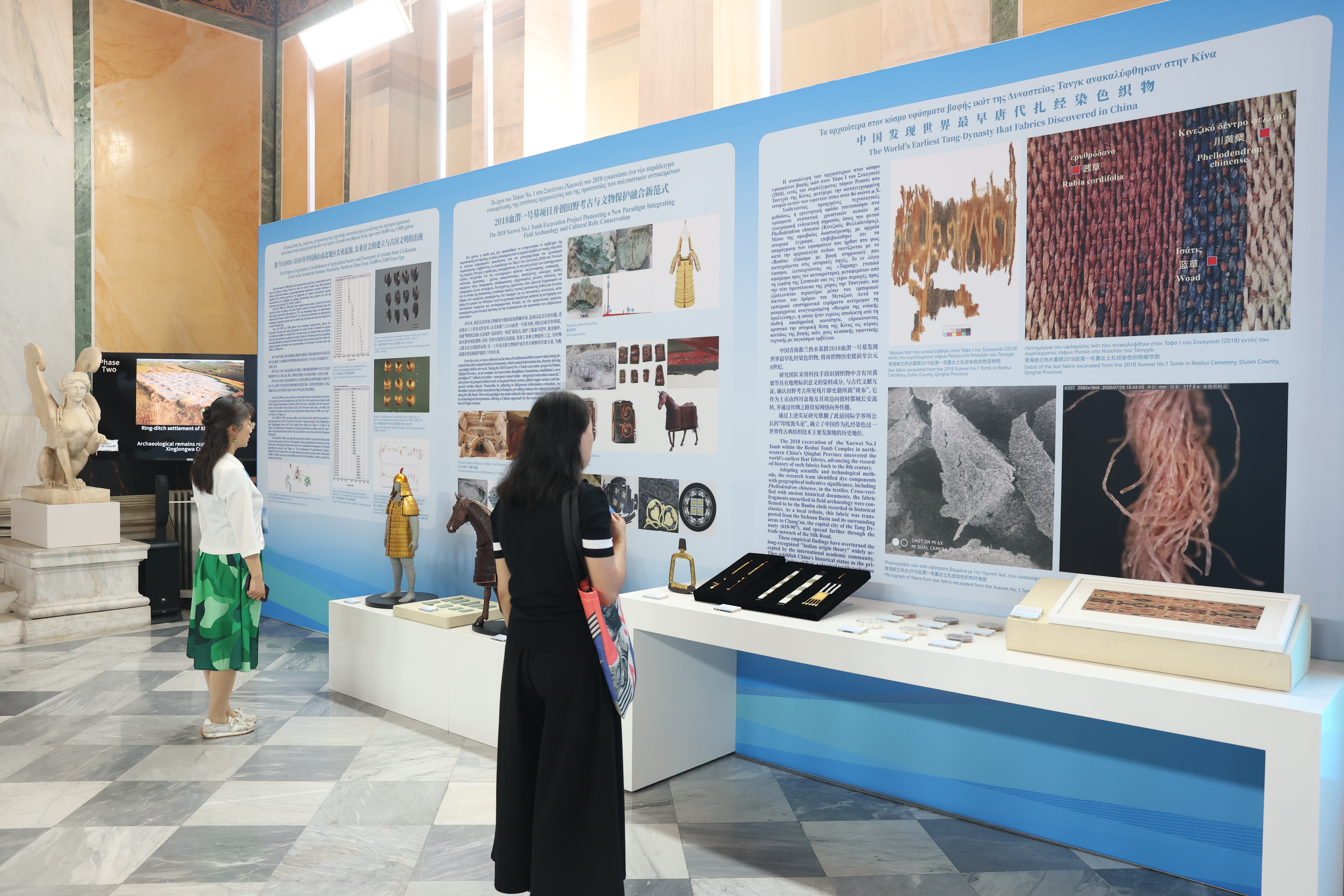
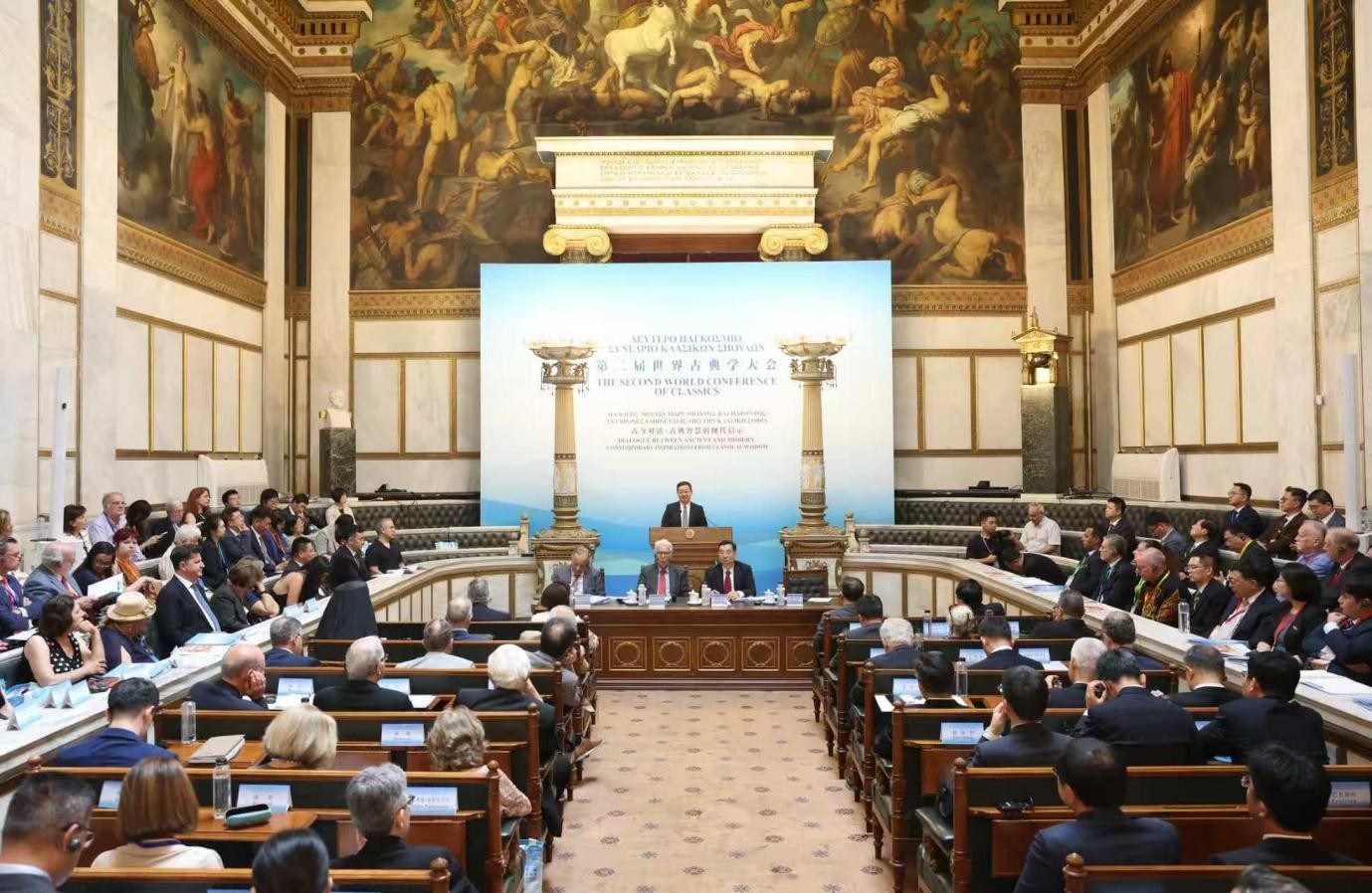
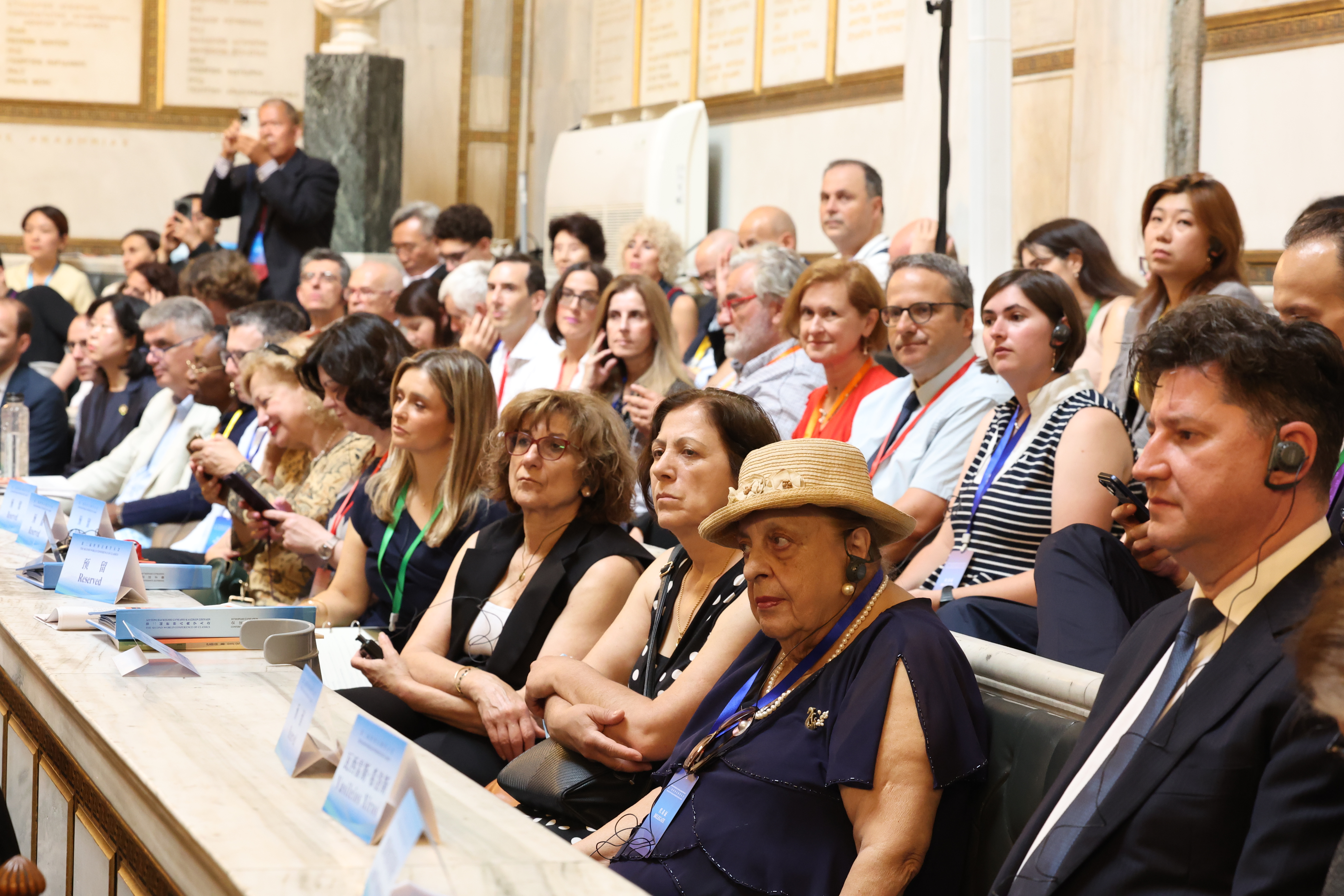
And this dig is only one effort to build on academic relations between the ancient cultures of Greece and China. In Athens more than 200 academics from China and around the world were invited to the Second World Conference of Classics with the aim of building relationships and discussing the relevance in our world of classical knowledge, wisdom written centuries ago by two cultures separated by half the globe.
More than 20 countries were represented, providing specialists in classical studies, philosophy, archaeology, history, literature, and intercultural studies. And the subjects they discussed had very contemporary themes – peace and order, friendship community, as well as technology and civilisation. The organisers’ aim is to strengthen international cooperation in classical studies and to advance mutual learning.
These are big themes and behind them lie big ambitions.
He Fangying from the Chinese Academy of Social Sciences says: “We actually hope that classical studies can safeguard the future of human civilisation. We are offering a new perspective to society and to the whole world. We need to sit down together again, to communicate, to be friends.”
It was organised by the Chinese Academy of Social Sciences, the Ministry of Education of the People's Republic of China, the Ministry of Culture and Tourism of the People's Republic of China, the Ministry of Culture of Greece and the Academy of Athens. Between them they created an environment to encourage the building of academic relationships and rediscover what the philosophies of China and the ancient Greek world have in common.
Hans Van Ess is the director of the Institute of Sinology at the University of Munich. He says: “Human beings across the world are quite the same. It’s also very reassuring to find, when reading ancient Chinese texts, that there are also a great many similarities with Western culture.”
Throughout, these experts were using their knowledge of the past to add context to the political and environmental problems we are facing today.
Timothy Burns, from the department of political science in Baylor University in Texas, says: “What I’m seeing at this conference and what I saw at the first conference was Chinese scholars, and other scholars from around the world, approaching the texts with the assumption that these are great texts by great thinkers, and that means they’re very carefully written, and it’s likely that if we see a problem they saw it, and they’ve addressed it.”
Back at the dig in Angelokastro, Fotini Saranti drives home what can be achieved and how much both the Chinese and the Greeks can learn from their ancestors. “We share this common point,” she says: “China and Greece both have extremely ancient civilizations. And of course, each side appreciates that in the other.”
The First World Conference of Classics was held in Beijing in November 2024. Again, a major talking point was the dialogue between Chinese and Western philosophies – and the future of humanity. Now the delegates are looking forward to the third conference.
Roger Ames, the Humanities Chair at Peking University in Beijing, says: “Maybe at the next one we need to bring the academics and the policy makers together. Maybe we have to say ‘Let’s stop talking and let’s start doing something. How do we go about changing the world?’
“What we have to do is we have to activate our cultures in order to make a difference in the world.”
The Chinese and Greek archaeologists in the field at Angelokastro are also looking for answers. Recent surveys have revealed a well-organised urban layout and possible traces of an ancient theatre. Continued digging will deepen their understanding of the past, and maybe even reveal new ways to see our place in the world – in Greece, China and everywhere in between. Now and in the future. What is already clear is that co-operation between these two ancient civilizations, whether at a dig site or around a conference table, is creating a better understanding of our shared humanity.
